Peerless Tire Chains: Size Chart, Part Number Lookup & Install Guide
Everything drivers need to pick the right Peerless tire chains, read the size chart, and install them safely before the next snowstorm.
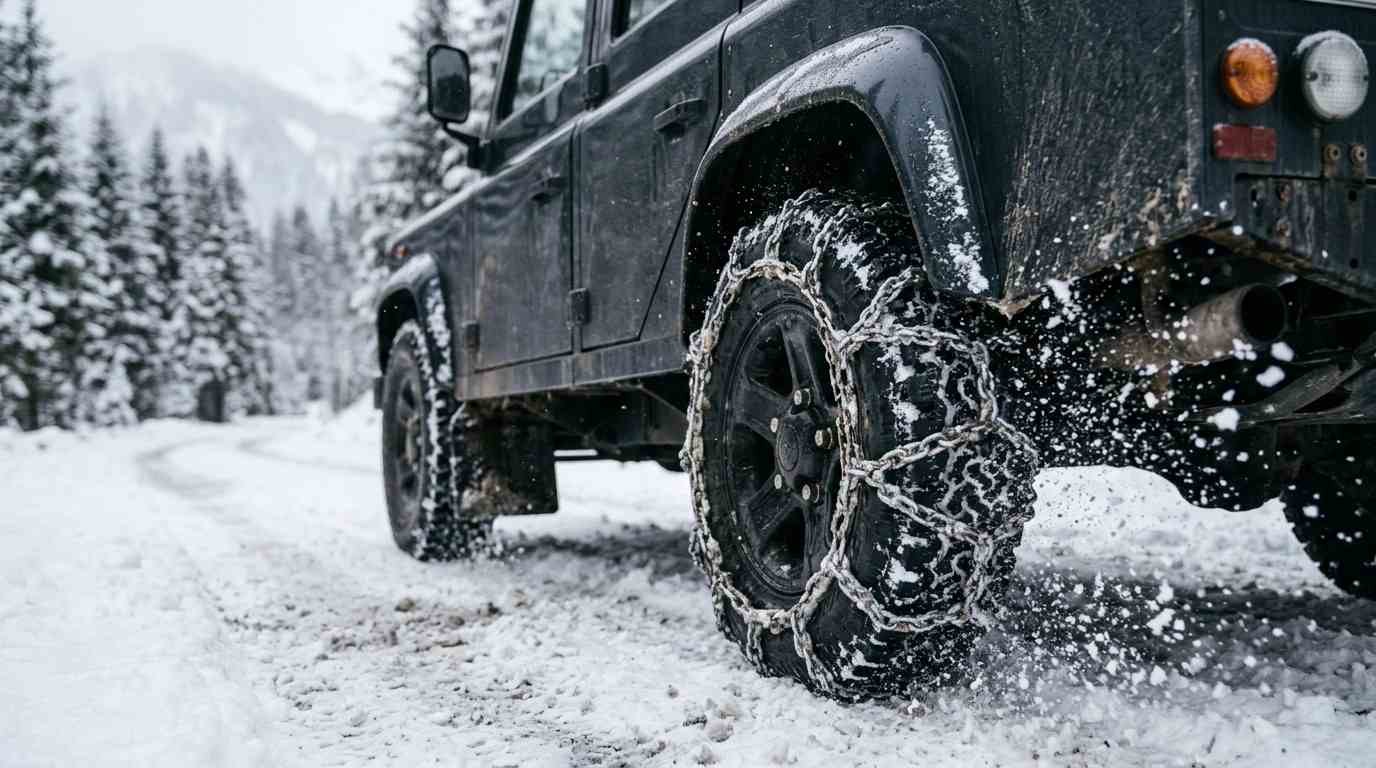
A surprise snowstorm is a bad time to find out your chains don’t fit. Peerless tire chains are among the best-known traction devices in North America, but picking the right set still confuses many drivers. Between size charts, long part numbers, and different chain styles, it’s easy to order the wrong set.
This guide fixes that. It explains how to read your tire size, how to use a Peerless tire chains look up guide, what the common part numbers mean, how the main chain types compare, and how to install them correctly.
- Find your tire size on the sidewall (for example, 235/60R18).
- Enter it into the official Peerless tire chain finder or match it to the size chart.
- Check your vehicle’s clearance rules in the owner’s manual.
- Choose a chain style (cable, link, or self-tensioning) that suits your driving.
- Practice installing them at home before you need them.
What Are Peerless Tire Chains?
Peerless Chain Company is a long-established American maker of traction products. Its range covers passenger cars, SUVs, light trucks, commercial trucks, and even small equipment tires. In simple terms, tire chains wrap around the drive tires and bite into snow and ice, so the car can grip, accelerate, and stop more reliably.
Traction matters because winter roads are dangerous. The Federal Highway Administration reports that more than 1,000 people die and over 100,000 are injured every year in crashes on snowy, slushy, or icy pavement. Chains don’t make a vehicle invincible, but they add grip where tires alone struggle.
Who Peerless Tire Chains Are Best For
- Mountain and ski travelers who may face chain-control checkpoints.
- Rural and snow-belt residents with steep or unplowed roads.
- Truck and fleet operators who need heavy-duty options.
- Emergency-kit planners who want chains in the trunk “just in case.”
Peerless Tire Chains Size Chart: How to Find Your Size
Most wrong-size orders happen at this step. Chains are matched to your tire size, not your car model, so it pays to read the sidewall carefully.
Step 1: Read Your Tire Size
Look for a code like 235/60R18 on the tire sidewall:
- 235 is the tire width in millimeters.
- 60 is the aspect ratio (sidewall height as a percent of width).
- R means radial construction.
- 18 is the wheel diameter in inches.
Not sure what your numbers mean in real-world dimensions? Our size guides for 275, 295 and 315 tires convert millimeters to inches.
Step 2: Use a Peerless Tire Chains Look Up Guide
The most reliable method is the manufacturer’s own tire chain finder. You can search by tire size, and the tool returns the part numbers made for that size. A paper or PDF size chart works too, as long as you confirm it’s the current version.
Step 3: Understand Part Numbers
Many shoppers search by part number, such as 0155505, 0232605, 0222930, or older codes like SZ339. These numbers identify a specific chain model for a range of tire sizes. Treat them as shortcuts, not guarantees.
- Part numbers can be replaced or updated over time. An old “SZ” number may now map to a newer item.
- Retail listings occasionally contain errors, so confirm the number against your tire size in the official finder.
- If a listing says “replacement for” an older number, check that the new product lists your exact tire size.
| Step | What to check | Where to find it |
|---|---|---|
| 1 | Tire size (e.g., 235/60R18) | Tire sidewall |
| 2 | Drive axle (front, rear, or all) | Owner’s manual |
| 3 | Chain clearance requirement | Owner’s manual (look for “Class S”) |
| 4 | Matching part number | Official Peerless finder or size chart |
| 5 | Price, return policy, availability | Retailer listing |
Small and Unusual Sizes (Example: 20 x 10.00 x 8)
Not every set is for cars. Sizes written like 20 x 10.00 x 8 use a different format. They commonly refer to garden tractor, lawn, ATV, or utility tires, where the numbers are overall height, section width, and rim diameter in inches. Always use a chain made for that tire format, and never try to adapt a passenger-car set.
Replacement Chains and Cross-References
If you’re replacing a worn set, match the tire size, not just the old part number. Brands update product lines, and tire sizes on your vehicle may have changed.
Types of Peerless Tire Chains Compared
Peerless offers several styles. Here is how the main categories generally compare. Always check the specific product page for exact specs.
| Type | Best For | Strengths | Trade-offs |
|---|---|---|---|
| Cable chains | Cars and crossovers with tight wheel wells | Lower profile, smoother ride, lighter, easier to handle | Typically wear faster; less grip than heavy link chains on deep ice |
| Link (twist-link) chains | Trucks, SUVs, steep or icy roads | Strong grip, durable, great for demanding conditions | Rougher ride, heavier, may need more clearance |
| Self-tensioning chains | Drivers who want fast, easier fitting | Automatically adjust tightness, convenient for beginners | Usually cost more than basic options |
| Commercial truck chains | Semis, buses, fleets | Built for heavy loads and mandated chain-ups | Specialty fitment; not for cars |
| Small tire chains | Garden tractors, ATVs | Add traction for equipment in snow | Size-specific; not interchangeable |
How to Choose
- Tight clearance? Choose a low-profile style rated for your car.
- Mostly emergency use? Prioritize easy installation.
- Heavy winter use? Prioritize durability.
How to Put On Peerless Tire Chains (Step by Step)

Installing chains in a snowstorm is stressful. Practicing once at home, in daylight, makes a big difference.
Before You Start
- Park on flat ground, well away from traffic, with hazard lights on.
- Set the parking brake and turn the engine off.
- Wear gloves and bring a flashlight and a mat or old towel for kneeling.
- Read the instruction sheet that comes with your chains.
Installation Steps
- Identify the drive wheels. Front-wheel-drive vehicles use the front axle, and rear-wheel-drive vehicles use the rear. For AWD or 4WD, follow your manual’s guidance.
- Lay the chains flat and untangle them. Make sure the cross-links face outward.
- Drape the chain over the tire, centering it so the same amount hangs on each side.
- Reach behind the tire and connect the inner fastener first.
- Connect the outer fastener and pull the chain snug.
- Tighten or adjust according to the model’s instructions.
- Drive forward a short distance, stop, and re-check tension. Chains often loosen after settling.
- Repeat on the other drive wheel. Always chain both wheels on the axle.
Common Mistakes to Avoid
- Skipping the practice run. The first install should never be on a roadside in a storm.
- Leaving chains loose. Loose chains can damage the tire, fender, or brake lines.
- Driving too fast. Most chain makers recommend a low maximum speed, often around 30 mph. Check your set’s instructions.
- Using chains on bare pavement. This wears them out quickly and can damage the road and your tires.
Prefer visual instruction? Pair this section with a manufacturer install video, then rehearse with your own vehicle.
Driving With Tire Chains: Rules and Safety
Know Local Chain Laws
Many mountain states require chains or traction devices under certain conditions. California, for example, uses chain-control levels (R1, R2, and R3) that describe what vehicles must carry or use. Rules differ by state, route, and vehicle type, so check your state’s transportation department before a trip. You can also browse our state-by-state tire resources for local information.
What “Class S” Means
Some vehicles have very limited space around the wheels. Manufacturers may specify SAE Class S clearance, meaning only low-profile traction devices should be used. If your owner’s manual mentions this, buy chains that explicitly state they meet Class S.
Safe Driving Tips
- Drive slowly and avoid sudden braking or sharp turns.
- Stop and retighten if you hear slapping or clanking.
- Remove chains when you reach clear pavement.
- Inspect them after every use for broken links or damage.
Where to Buy Peerless Tire Chains
Drivers searching for “Peerless tire chains for sale” or “near me” usually have a few options:
- Official Peerless site: best for the fitment finder and complete product range.
- Big-box retailers such as Walmart: convenient pickup, limited selection.
- Online marketplaces such as Amazon: wide selection and reviews, but double-check seller and part numbers.
- Tire retailers such as America’s Tire: helpful for matching chains to your tires.
- Local tire shops: useful for advice, and some will help with fitment questions.
| Source | Pros | Watch Out For |
|---|---|---|
| Manufacturer site | Accurate fitment tool | May cost more than sale pricing |
| Big-box store | Fast, in-store pickup | Limited sizes in stock |
| Online marketplace | Many options, quick shipping | Wrong-fit listings, third-party sellers |
| Local tire shop | Expert help | Stock varies by season |
Looking for a nearby shop? Visit our Tire Near Me Hub, browse our tire services, or explore tire brands. Many shops are closed during busy winter weekends, so also see tire shops open on Sunday. Shop owners can submit their business here.
Peerless Tire Chains Reviews, Value and Care Tips
Online reviews of Peerless tire chains tend to praise sturdy construction and recognizable brand quality. The most common complaints involve fit mistakes, such as wrong sizes ordered or confusion over part numbers, not the chain itself. That’s why the size check above matters so much.
Is It Worth the Price?
Chains are inexpensive insurance compared with a tow, a collision, or a missed trip. Spending a bit more on easier installation or better durability often pays off if you drive in snow regularly.
How to Make Chains Last
- Rinse off salt and road grime after use.
- Dry them completely before storing to prevent rust.
- Store them in their case in a dry spot.
- Replace any chain with broken or badly worn links.
Tire Health Still Matters
Chains work best on healthy tires. Check your tread, pressure, and tire age. Our guides on how to tell tire age and the DOT tire date code help you spot aging rubber. If you need new tires or a spare, check how much a new tire costs and how much a spare tire costs.
Winter Maintenance Resources
- Valvoline tire rotation cost
- Discount Tire TPMS replacement cost
- Discount Tire mount and balance cost
- Discount Tire installation charges
- Does Discount Tire patch tires for free?
- Costco tire warranty and Michelin tire warranty
- Michelin Defender tire, Nitto NT555 RII, Cooper tire reviews, and Toyota tire sale
For more winter and tire advice, browse our full tire blog.
Frequently Asked Questions About Peerless Tire Chains
1. How do I find the right size Peerless tire chains?
Read the size on your tire sidewall (for example, 235/60R18), then enter it into the official Peerless tire chain finder or compare it to the size chart. Confirm the part number before you buy.
2. Is there a Peerless tire chains size chart PDF?
Peerless provides charts and a lookup tool on its website. If you use a PDF, make sure it’s the latest version, because part numbers and applications change.
3. How do I put on Peerless tire chains?
Park on level ground, lay the chains flat, drape them over the drive tire, connect the inner and outer fasteners, tighten them, drive a short distance, and re-check tension. Repeat for the second drive wheel.
4. Can I use Peerless tire chains on any vehicle?
No. Chains must match your tire size and your vehicle’s clearance limits. Some cars require low-profile or Class S chains, so check your owner’s manual first.
5. How fast can I drive with tire chains?
Most manufacturers recommend a low speed, often around 30 mph or less. Follow the instructions packaged with your specific chains and slow down further in poor conditions.
Conclusion
Peerless tire chains can turn a stressful winter drive into a manageable one, but only when they’re chosen and installed correctly. Start with your tire size, confirm it in the official finder or size chart, and double-check any part number before you order. Pick the chain type that matches your vehicle’s clearance and your driving needs, then practice installing them before the first storm.
Follow local chain laws, drive slowly, remove the chains on clear pavement, and store them dry. With the right preparation, your chains will be ready when the roads turn white.