315 Tire Size in Inches: Complete Conversion Guide With Chart
Shopping for big truck or SUV tires often brings up the same question: what is the 315 tire size in inches? Tire shops list sizes in millimeters, while most drivers think in inches, and that mismatch causes real confusion.
This guide gives the quick answer first. Then it walks through the math, a full size chart, fitment rules, and common mistakes, so a buyer can choose with confidence.
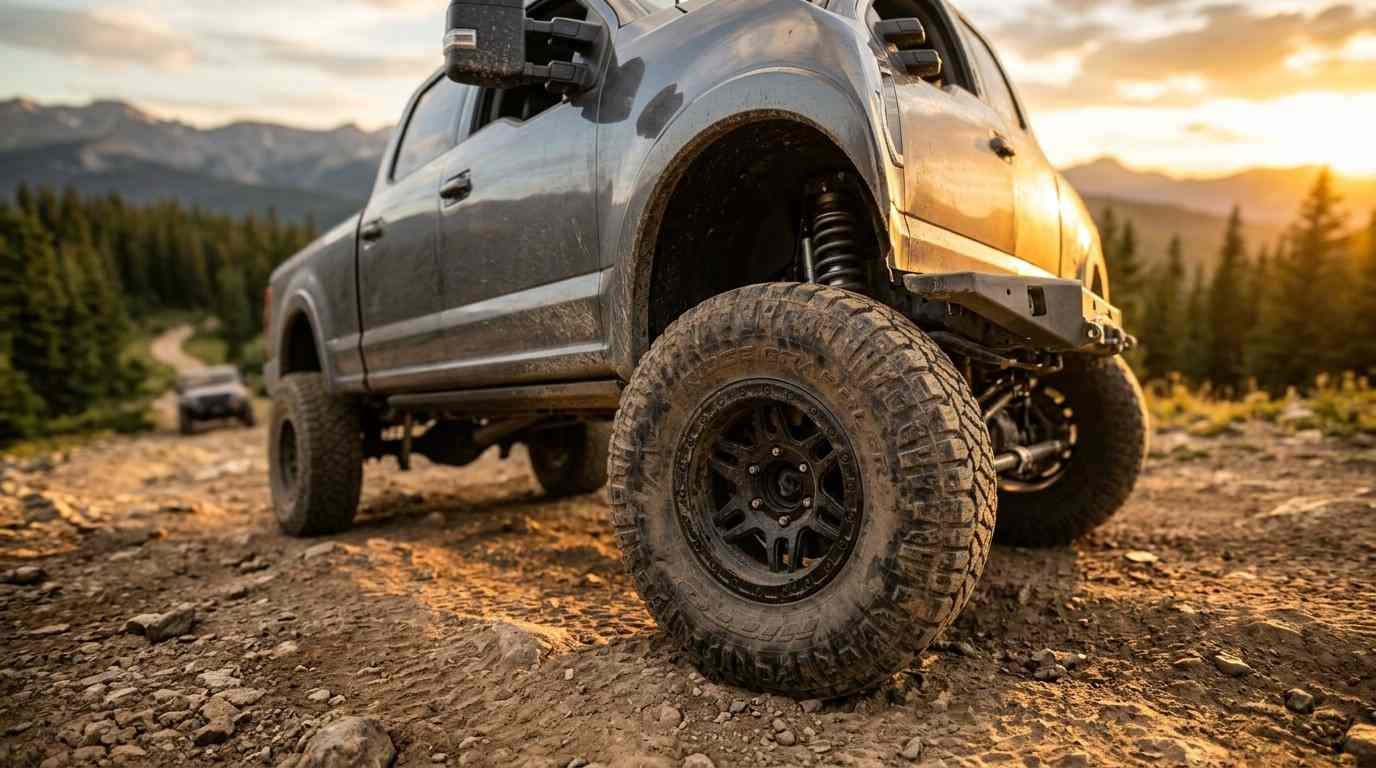
A 315 tire is 315 millimeters wide, which equals about 12.4 inches. The overall height depends on the rest of the size code. For example, a 315/70R17 is roughly 34.4 inches tall, which is why many people call it a “35-inch tire.”
What Does “315” Mean on a Tire?
The number 315 is the section width. It measures the tire from one sidewall to the other, in millimeters. It does not describe the height or the wheel size.
Here is how a full code such as 315/70R17 breaks down:
- 315: section width in millimeters (about 12.4 in).
- 70: aspect ratio. The sidewall height equals 70% of the width.
- R: radial construction, used on nearly all modern tires.
- 17: wheel diameter in inches.
Only the wheel diameter is already in inches. Everything else needs a conversion, which is where most searchers get stuck.
How to Convert a 315 Tire Size to Inches
The math takes four steps and works for any metric tire.
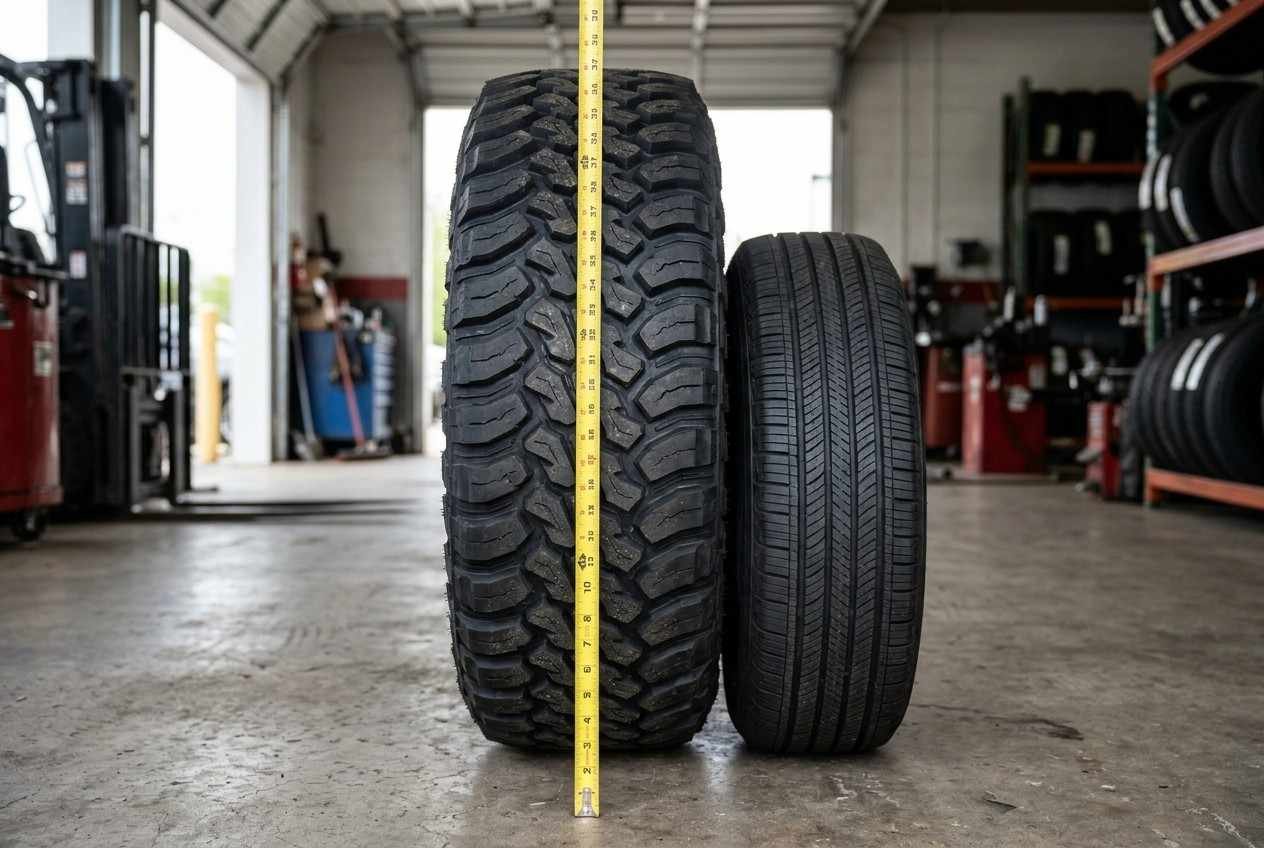
Step 1: Convert the Width
Divide 315 mm by 25.4 (millimeters per inch).
315 ÷ 25.4 = 12.4 inches wide.
Step 2: Find the Sidewall Height
Multiply the width by the aspect ratio. For a 315/70 tire:
315 × 0.70 = 220.5 mm, which is about 8.7 inches.
Step 3: Add the Wheel Diameter
The overall diameter equals the wheel size plus two sidewalls (top and bottom).
17 in + (2 × 8.68 in) = about 34.4 inches.
Step 4: Check the Circumference
Multiply the diameter by π (3.1416). A 34.4-inch tire has a circumference near 108 inches, or about 587 revolutions per mile.
Diameter (in) = (Width × Aspect Ratio × 2 ÷ 2540) + Wheel Size
Note that the formula uses 2540 because 25.4 mm × 100 converts the percentage into a ratio.
315 Tire Size Chart in Inches
The table below lists common 315-width sizes. All values are calculated from the standard formula and rounded to one decimal place.
| Tire Size | Width (in) | Sidewall (in) | Overall Diameter (in) | Typical Nickname |
|---|---|---|---|---|
| 315/70R17 | 12.4 | 8.7 | 34.4 | 35×12.50R17 |
| 315/75R16 | 12.4 | 9.3 | 34.6 | 35×12.50R16 |
| 315/65R18 | 12.4 | 8.1 | 34.1 | 34-inch class |
| 315/70R18 | 12.4 | 8.7 | 35.4 | 35-inch class |
| 315/60R20 | 12.4 | 7.4 | 34.9 | 35-inch class |
| 315/55R20 | 12.4 | 6.8 | 33.6 | 33-inch class |
| 315/50R20 | 12.4 | 6.2 | 32.4 | 32-inch class |
| 315/40R21 | 12.4 | 4.96 | 30.9 | Performance |
| 315/35R20 | 12.4 | 4.3 | 28.7 | Performance |
The width stays at 12.4 inches in every row. Only the aspect ratio and wheel size change the height. That is why two “315” tires can look completely different on the same truck.
315/70R17: The Most Popular 315 Tire Size
Among 315 tires, the 315/70R17 gets the most searches, mainly from owners of lifted pickups and off-road SUVs. Truck forums and fitment calculators such as the Tacoma World tire calculator discuss it as the metric twin of the 35×12.50R17.
315/70R17 Specifications
Width
315 mm = 12.4 in
Overall Diameter
About 34.4 in
Sidewall Height
About 8.7 in
Circumference
About 108 in
Revs per Mile
About 587
Wheel Size
17 in
Typical Load and Construction
Many 315/70R17 tires are Load Range E truck tires. A common load index is 121, which supports roughly 3,197 lb per tire at maximum pressure. Exact ratings differ by model, so read the sidewall of the tire you plan to buy.
Wheel Width Guidance
Tire makers publish an approved rim range for each model. A 315 tire generally works best on wider wheels, often in the 9 to 10 inch range. Check the specific manufacturer’s data sheet, such as the Pirelli catalog page for this size, before mounting.
Best Vehicles for 315/70R17
- Lifted Toyota Tacoma, 4Runner, and Tundra builds
- Jeep Wrangler and Gladiator with a lift and wheel offset changes
- Ford Bronco with a suspension upgrade
- Full-size pickups such as the F-150, Silverado 1500, and Ram 1500
Most of these need a lift, trimming, or regearing to run a tire this tall without rubbing.
315 vs 285 vs 295 Tires: Comparison
Drivers often debate whether to step up to a 315 or stay with a narrower tire. Here is a side-by-side look at 17-inch options with a 70 aspect ratio.
| Size | Width (in) | Diameter (in) | Rubber on Road | Best For |
|---|---|---|---|---|
| 265/70R17 | 10.4 | 31.6 | Standard | Stock trucks and SUVs |
| 285/70R17 | 11.2 | 32.7 | Wider | Mild lift, 33-inch look |
| 295/70R17 | 11.6 | 33.2 | Wider | Light off-road use |
| 315/70R17 | 12.4 | 34.4 | Widest | Lifted rigs, 35-inch look |
Pros of a 315 Tire
- Larger contact patch for grip on sand, mud, and loose rock
- Extra ground clearance from the taller diameter
- A bold, aggressive stance
Cons of a 315 Tire
- More weight, which can reduce fuel economy and acceleration
- Higher chance of rubbing without a lift
- Higher purchase price than narrower sizes
- May require regearing and speedometer recalibration
Budget matters here, since big tires cost more. Readers can compare prices in our guide on how much a new tire costs.
Will a 315 Tire Fit Your Vehicle?
Fit depends on more than the size code. These factors decide whether a 315 tire clears the fenders and suspension.
1. Lift Height
A tire close to 35 inches tall usually pairs with a suspension lift. Many owners of mid-size trucks add a lift of about 3 inches or more, though requirements vary by vehicle. Confirm with a vehicle-specific forum or a trusted installer.
2. Wheel Offset and Backspacing
Offset moves the tire in or out. A wide 315 on a high-offset wheel can scrape the control arms. A lower offset can push the tire into the fender.
3. Fender Trimming and Bumper Clearance
At full steering lock and full suspension compression, the tire should clear every part of the body. Test this before final installation.
4. Brake and Axle Strength
Heavy tires add rotational mass and stress steering parts, ball joints, and axles. Plan to inspect these parts more often.
How a 315 Tire Changes Your Speedometer and Gearing
Larger tires cover more ground per rotation. The speedometer, however, still counts rotations based on the stock size.
Speedometer Error Example
Suppose a truck came with 265/70R17 tires (about 31.6 in tall). After switching to 315/70R17 (about 34.4 in tall), the tire is roughly 8.7% larger. The speedometer then reads low. When it shows 60 mph, the real speed is closer to 65 mph.
| Speedometer Shows | Approx. Actual Speed |
|---|---|
| 30 mph | 32.6 mph |
| 45 mph | 48.9 mph |
| 60 mph | 65.2 mph |
| 70 mph | 76.1 mph |
Gearing and Performance
A taller tire acts like a taller gear ratio. Expect softer acceleration, more strain while towing, and a lower mpg figure. Trucks with stock 3.73 gears often need regearing to restore performance.
Practical Tips for Buying 315 Tires
- Confirm the real diameter. Brands differ by a few tenths of an inch. Look at the published spec, not just the nickname.
- Match the load rating to the job. Heavy trucks and trailers need adequate load index and load range.
- Pick the tread for your terrain. All-terrain tires suit mixed driving. Mud-terrain tires suit trails but are louder on pavement. For a well-known all-terrain option, see our review of the Nitto NT555 RII.
- Check the tire’s age. Even new tires can sit in storage for years. Learn how in our guides on how to tell tire age and the DOT tire date code.
- Read the warranty. Compare tread-life and road-hazard coverage. Our pages on the Michelin tire warranty and the Costco tire warranty are good starting points.
- Budget for installation. Big tires cost more to mount and balance. See typical charges in Discount Tire mount and balance cost.
- Do not forget the spare. A 315 spare is large and heavy. Learn about costs in how much a spare tire is.
- Plan sensor updates. New wheels may need TPMS service. Read about the TPMS replacement cost.
Maintenance After Installation
- Check pressure monthly and use the vehicle placard as a starting point, adjusting for load per the tire maker’s guidance.
- Rotate regularly. See the Valvoline tire rotation cost for typical pricing.
- Ask about free repairs. Some shops handle simple punctures at no charge, as covered in does Discount Tire patch tires for free.
For official safety guidance on tire labels and maintenance, the NHTSA tire safety page is a reliable reference. Size standards are published by groups like the Tire and Rim Association.
Common Mistakes When Reading Tire Sizes
- Treating 315 as inches. It is millimeters. Dividing by 25.4 gives the width in inches.
- Assuming equal width means equal height. A 315/55R20 and a 315/70R17 share a width but differ by almost an inch in diameter.
- Ignoring the wheel. The tire must match the wheel diameter and an approved rim width.
- Skipping the speedometer fix. Larger tires change the reading.
- Buying by nickname only. “35-inch” tires can measure anywhere near 34 to 35.5 inches.
Frequently Asked Questions About 315 Tire Size in Inches
What is 315 tire size in inches?
A 315 tire is 315 millimeters wide, which equals about 12.4 inches. The overall height depends on the aspect ratio and wheel size. For a 315/70R17, the diameter is about 34.4 inches.
Is a 315/70R17 the same as a 35-inch tire?
It is very close. A 315/70R17 measures about 34.4 inches by calculation, and it is widely treated as the metric equivalent of the 35×12.50R17. Exact diameter varies by brand, so check the manufacturer’s specification.
How do you convert a metric tire size to inches?
Divide the width by 25.4 for width in inches. Multiply the width by the aspect ratio, divide by 25.4 for the sidewall, double it, and add the wheel diameter to get the overall height.
What lift do I need for 315 tires?
It depends on the vehicle. Many trucks and SUVs need a lift of several inches, plus possible trimming and wheel offset changes, to run a tire near 35 inches tall without rubbing. Ask an installer or check vehicle-specific fitment guides.
Will 315 tires affect my speedometer?
Yes, if they are larger than the stock size. Moving from a 265/70R17 to a 315/70R17 makes the speedometer read about 8% to 9% low. Recalibrating the speedometer corrects the readout.
Conclusion
The 315 tire size in inches comes down to one simple conversion: 315 mm equals about 12.4 inches of width. Height is where it gets interesting. A 315/70R17 stands near 34.4 inches, close to the popular 35-inch class, while other 315 sizes range from about 29 to 35 inches.
Before buying, confirm the manufacturer’s real diameter, check wheel width and offset, plan for lift and gearing, and recalibrate the speedometer. With those steps, a 315 tire can deliver strong grip, extra clearance, and an aggressive look without surprises.
Find trusted tire shops and services near you.
Find Tire Shops by State