Best Tire Chains for Snow and Ice: 2026 Buyer’s Guide for Cars, SUVs and Trucks
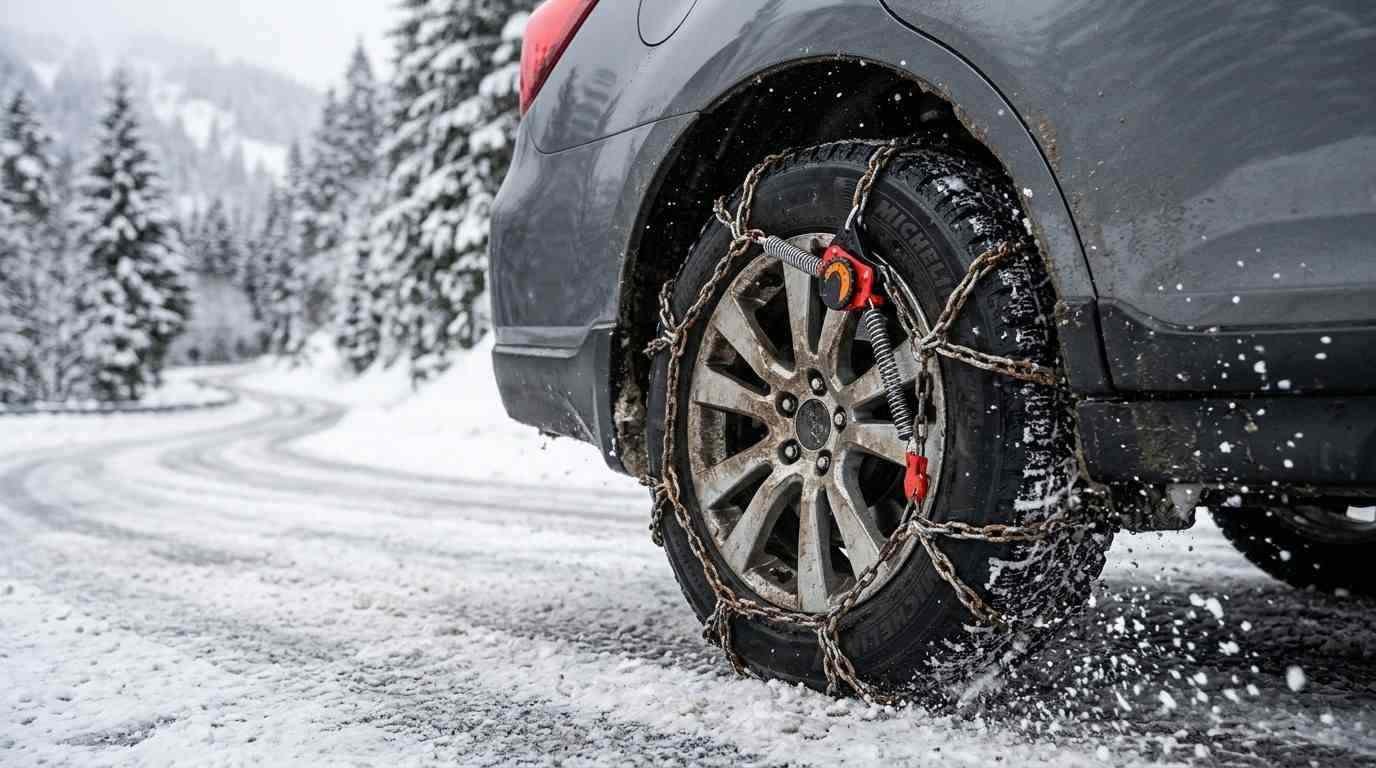
Winter has a way of showing up before the shopping list is done. A mountain pass closes behind a plow, a road turns to glare ice, and suddenly the best tire chains become the most important thing in the trunk.
This guide helps drivers pick the right set the first time. It covers chain types, sizing, vehicle-specific picks, chain laws, installation, and the mistakes that ruin chains (and sometimes fenders). It is written for everyday drivers, pickup owners, and anyone who runs heavier rigs.
Best Tire Chains at a Glance
Several established brands appear again and again in published winter-gear roundups from outlets such as GearJunkie, Popular Science, AutoGuide, and The Drive. The table below groups the most frequently recommended options by what they do best.
| Category | Pick | Chain style | Best for |
|---|---|---|---|
| Best overall | Peerless Auto-Trac | Self-tightening link/cable hybrid | Cars, crossovers, light-truck SUVs |
| Best budget | Security Chain Company Super Z6 | Z-pattern cable | Occasional use, emergency kit |
| Best low clearance | Glacier cable chains | Thin cable | Modern sedans with tight wheel wells |
| Best for trucks | Security Chain Company Quik Grip | Square link | Pickups and larger tire sizes |
| Best for big tires | König XG-12 Pro | Link, diamond pattern | Larger SUVs and 4x4s |
| Best chain alternative | AutoSock | Fabric traction cover | Quick installs, very tight clearance |
How These Picks Were Evaluated
This article is a research-based buying guide. It does not claim lab testing. The recommendations combine manufacturer specifications, published expert reviews, and the standards that matter in real winter driving.
- Fit and clearance: A chain that rubs the suspension or body is dangerous, no matter how strong it is.
- Ease of installation: Most failures happen because the chain was hard to mount in the cold, so it was mounted loosely.
- Self-tightening design: Reviewers consistently rank chains that adjust their own tension above those that need manual re-tightening.
- Traction type: Link chains bite harder, cable chains run smoother and quieter.
- Durability and legal compliance: Chains must meet the local rules where they will be used.
Tire chains have been around since the early 1900s, and the core idea has not changed: metal or textile surfaces dig into snow and ice where rubber alone slides. What has changed is the engineering around fit, clearance, and speed of installation.
Types of Tire Chains Compared
Choosing the right style matters more than choosing the right brand. Here is how each type behaves on the road.
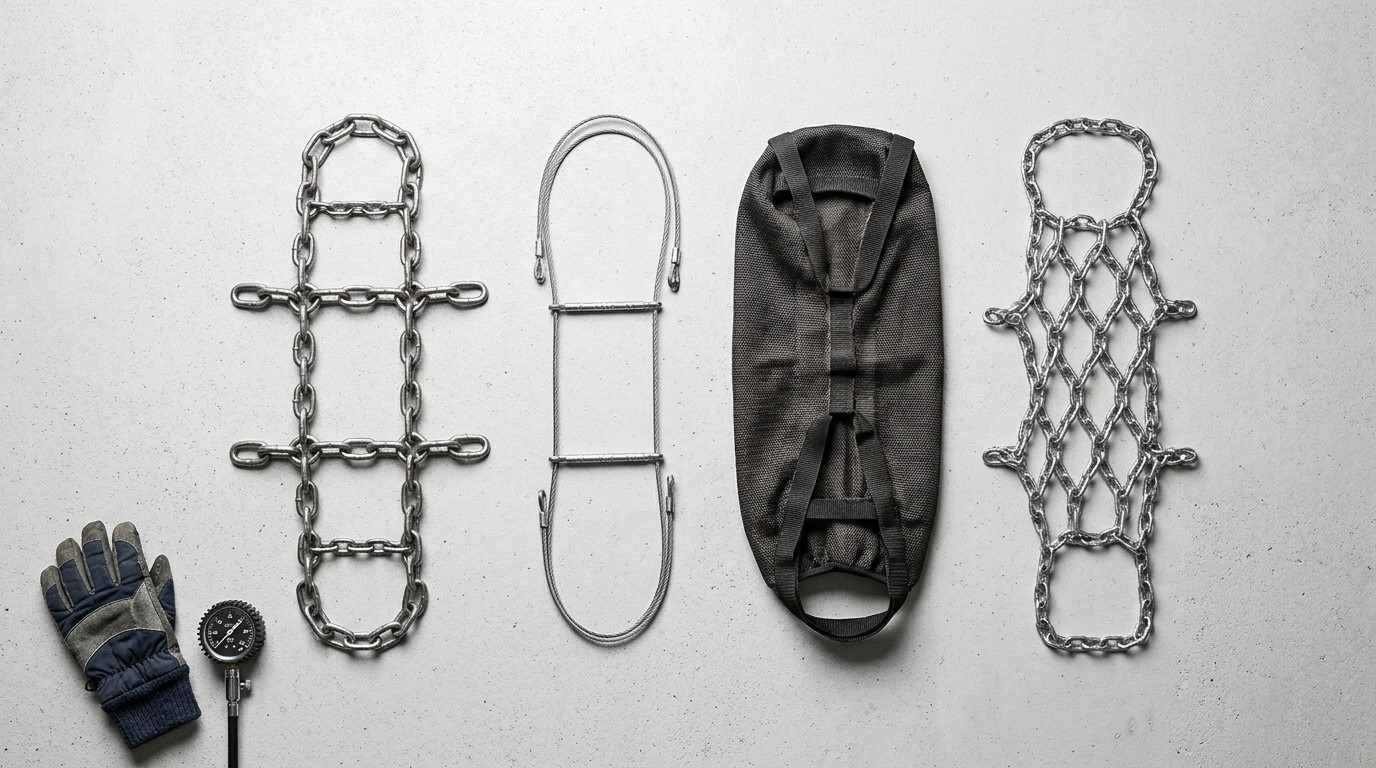
Link Chains (Ladder and Diamond)
Heavy steel links wrap the tread. Diamond patterns spread the grip in more directions and ride more smoothly than basic ladder patterns.
Pros: Best bite on ice and packed snow, long life.
Cons: Needs more clearance, rougher ride.
Cable Chains
Steel cables with small cross-pieces sit closer to the tire, which suits many modern cars.
Pros: Lower profile, quieter, usually cheaper.
Cons: Wear faster, less aggressive grip on hard ice.
Self-Tightening Chains
Spring or ratchet tensioners keep the chain centered and snug as the wheel turns, so there is little or no stopping to retighten.
Pros: Fast on, fewer mistakes.
Cons: Costs more.
Textile Socks
Fabric covers slip over the tire and grip snow well, especially where chains will not fit.
Pros: Light, simple, very low clearance.
Cons: Shorter life, not for long bare-pavement stretches.
What Is SAE Class S?
Many newer vehicles leave only a small gap between the tire and the wheel well. Chains rated as SAE Class S are made for that tight space. If an owner’s manual says that only Class S traction devices are allowed, a standard link chain is not a safe substitute.
Best Tire Chains by Vehicle and Situation
Best Tire Chains for Cars and Sedans
Passenger cars usually need low-profile cable chains or textile socks. The Peerless Auto-Trac is a frequent top choice because it mounts without jacking up the car and fits many low-clearance wheel wells. Security Chain’s Super Z6 cable chain is a frequent budget recommendation.
Best Tire Chains for SUVs and Crossovers
Crossovers often share the clearance limits of cars, while larger SUVs can take sturdier chains. Check the manual first. If the vehicle is all-wheel drive, many manufacturers have specific instructions on which axle to chain, and some recommend all four.
Best Tire Chains for Pickup Trucks
Pickups have more clearance, so square-link or diamond-link chains are a good match. These give strong traction when towing, climbing grades, or driving on unplowed roads. Look for models sized for light-truck (LT) tires, since the sizing is different from passenger tires.
Best Tire Chains for Semi Trucks and Commercial Vehicles
Commercial trucks usually need heavy-duty link chains made for dual wheels. Rules are stricter, too: many mountain states require commercial vehicles to carry chains and to use them on posted roads, often on multiple drive tires. Carry the correct number of sets and know the required chain pattern before the trip.
Best Tire Chains for Ice
For glare ice, closer cross-chain spacing and a diamond pattern help most. Studded chain variants exist, but check local rules first, because some roads and jurisdictions limit them.
Best Tire Chains for Tractors and Utility Vehicles
Tractors use specialized agricultural chains built for large lugged tires. These are sized to the tractor tire, not to passenger charts, so match them against the tire sidewall or the implement manual.
Best Tire Chains for Emergency Situations
For a vehicle that rarely sees snow but may cross a pass once a year, a budget cable set is a smart emergency kit. Practice mounting it at home. In a storm, a set that is easy to install beats a stronger set that stays in the box.
How to Find the Right Tire Chain Size
Chains are sold by tire size. A wrong size is the most common reason chains fail, loosen, or damage a car.
Step 1: Read the Tire Sidewall
Look for a code like 225/65R17. The first number (225) is the width in millimeters. The second (65) is the aspect ratio, which tells you how tall the sidewall is relative to the width. The last number (17) is the wheel diameter in inches. Our guide on how to read the DOT tire date code explains more of the sidewall.
Step 2: Check Your Owner’s Manual
The manual says whether chains are allowed, which chain class to use, and which wheels should carry them. Some vehicles prohibit chains entirely. Others only allow cable chains or textile devices.
Step 3: Know Your Drive Type
Chains normally go on the drive wheels. Front-wheel-drive vehicles get them in front, and rear-wheel-drive vehicles get them in the back. All-wheel-drive systems vary, so follow the manual.
Step 4: Match the Chain Chart
Match your width, aspect ratio, and wheel size to the manufacturer’s chart on the box or website. Peerless, for example, offers a tire chain finder that makes this step easier.
Tire age and condition also matter. Cracked or badly worn tires are a poor base for chains. Use the tire age guide to see if your tires are still in good shape, and review how much a new tire costs if replacement is due.
Chain Laws and Requirements
Rules differ by state, province, and country, and they can change with the weather. Always check the transportation agency for the route you plan to drive.
Example: California Chain Controls
California’s Caltrans uses three levels. Under R1, chains are required except for qualifying passenger vehicles and light trucks with snow tires on drive wheels, and chains must be carried. Under R2, chains are required on all vehicles except four-wheel or all-wheel-drive vehicles with snow-tread tires on all four wheels. Under R3, chains are required on every vehicle with no exceptions.
Example: Colorado
Colorado also uses two levels. At the lower level, single-axle vehicles must use chains and commercial vehicles must have snow tires or chains. At the higher level, commercial vehicles must chain all drive tires.
Outside the United States
Drivers in countries such as France, Spain, Germany, and the Netherlands may meet mandatory-equipment signs in mountain areas, and rules for rental cars can differ. Check the local road authority and the rental company before a winter trip, since requirements change by region and by season.
Not sure where your trip will take you? Browse our state-by-state tire resources for local tire shops that can help with winter gear.
Installation and Safe Driving Tips
Practice Before You Need Them
Install the chains once in a dry garage. This confirms the fit and teaches the steps when your hands are warm.
Basic Installation Steps
- Pull over somewhere flat and safe, turn on the hazard lights, and set the parking brake.
- Lay the chain flat and untangle it so that the cross-links face the tread.
- Drape the chain over the tire, feed it behind the tire as far as you can reach, and connect the inner side.
- Connect the outer fasteners and apply the tensioner as the manufacturer directs.
- Drive a short distance, stop, and recheck the tension unless the chain is self-tightening.
Driving With Chains
- Keep your speed low: Most manufacturers recommend around 30 mph (48 km/h) at most. Follow the limit printed in your chain’s instructions.
- Brake early and gently: Chains improve traction, not stopping distance on glare ice.
- Avoid spinning the wheels: Smooth throttle protects the chain and the drivetrain.
- Remove them on bare pavement: Dry roads wear out chains fast and can damage the road and your tires.
- Listen for slapping: A noise from a wheel well means a loose link. Stop and fix it right away.
Cleaning and Storage
Rinse off road salt, let the chain dry fully, and store it in its bag. Rust shortens life and can weaken links. Replace any chain with broken cross-pieces or stretched fasteners.
Tire Chains vs. Snow Tires vs. Socks
Chains are one tool among several. The best setup depends on how often you see snow.
| Option | Strength | Limit | Best for |
|---|---|---|---|
| Tire chains | Best grip on deep snow and ice | Low speed, install effort, not for bare roads | Mountain passes, steep grades, emergencies |
| Snow tires | Better traction and braking all winter | Cost, seasonal swap and storage | Regular winter commuters |
| All-weather tires | Year-round convenience | Less grip than dedicated snow tires in severe conditions | Moderate winters |
| Textile socks | Easy, light, fits tight wheel wells | Short lifespan | Occasional use on low-clearance cars |
Drivers who live in snowy regions often combine good tires with chains in the trunk. If you are comparing tires, look at the Michelin CrossClimate 2 all-weather tire and the Michelin Defender for year-round options, and see the Michelin tire warranty before you buy.
Why It Matters: Winter Crash Data
According to the U.S. Federal Highway Administration, roughly one quarter of weather-related crashes happen on snowy, slushy, or icy pavement. Better traction cannot remove all risk, but the right equipment and slower speeds help.
Common Mistakes to Avoid
- Buying by price alone and ignoring clearance.
- Mounting chains on the wrong axle.
- Driving fast because the chains “feel” grippy.
- Leaving chains on after the snow ends.
- Not carrying a spare tire kit. See how much a spare tire costs and keep a repair plan ready. Many shops patch tires for free, so see whether Discount Tire patches tires for free.
- Ignoring rotation. Heavy winter use is easier on tires that are rotated on schedule, and the Valvoline tire rotation cost guide shows what to expect.
Website Page Links (Edit URLs Here)
- Tire Near Me Hub: Home
- Tire Guides and Blog
- Tire Services
- Find Tire Shops by State
- Tire Brands
- Submit Your Tire Business
Related Article Links (Edit URLs Here)
- Costco Tire Warranty
- How Much Is a Spare Tire?
- Discount Tire TPMS Replacement Cost
- Michelin Defender Tire
- Tire Shops Open on Sunday
- How Much Is a New Tire?
- Discount Tire Mount and Balance Cost
- Nitto NT555 RII Tire
- Valvoline Tire Rotation Cost
- Michelin CrossClimate 2 Tire
- Does Discount Tire Patch Tires for Free?
- Michelin Tire Warranty
- How to Tell Tire Age
- DOT Tire Date Code
Frequently Asked Questions About the Best Tire Chains
What are the best tire chains for snow and ice?
Self-tightening chains with a diamond or close-spaced pattern usually do best on mixed snow and ice. Peerless Auto-Trac is a frequent top pick for cars and light SUVs, while heavier link chains suit trucks and deep snow. Always confirm the size and clearance for your vehicle.
Are cable chains as good as link chains?
Cable chains are lighter, quieter, and fit tighter wheel wells, but they usually wear faster and bite less on hard ice. Link chains give stronger traction and last longer, but they need more clearance and ride rougher.
Do I need chains on all four tires?
Not usually. Chains go on the drive wheels, which means the front for front-wheel drive and the rear for rear-wheel drive. For all-wheel drive, follow the owner’s manual, and note that some regulations or manufacturers call for four chains.
How fast can I drive with tire chains?
Most manufacturers advise staying near or below 30 mph (48 km/h). Higher speeds can break the chain and damage the vehicle. Check the printed limit that came with your set.
Can I use tire chains on a car with low clearance?
Only if the vehicle allows it. Look for SAE Class S cable chains or textile socks, and confirm in the owner’s manual. If the manual bans chains, use socks or winter tires instead.
Conclusion: Choosing the Best Tire Chains
The best tire chains are the ones that fit your exact tire, clear your wheel well, and go on quickly in bad weather. For most drivers, that means a self-tightening cable or low-profile chain such as the Peerless Auto-Trac. Budget-minded drivers can start with a Super Z6 cable set, truck owners should look at heavier square or diamond link chains, and tight-clearance cars may do better with Class S cables or textile socks.
Before the first storm, confirm the size, practice the install, learn the local chain law, and keep your speed low. Combine chains with good tires and regular maintenance, and winter roads become far more manageable. For more help, visit the Tire Near Me Hub blog or find a local shop through the services page.