How to Tell Tire Age: Read the DOT Code in 3 Easy Steps
Updated guide for drivers, buyers and DIY car owners
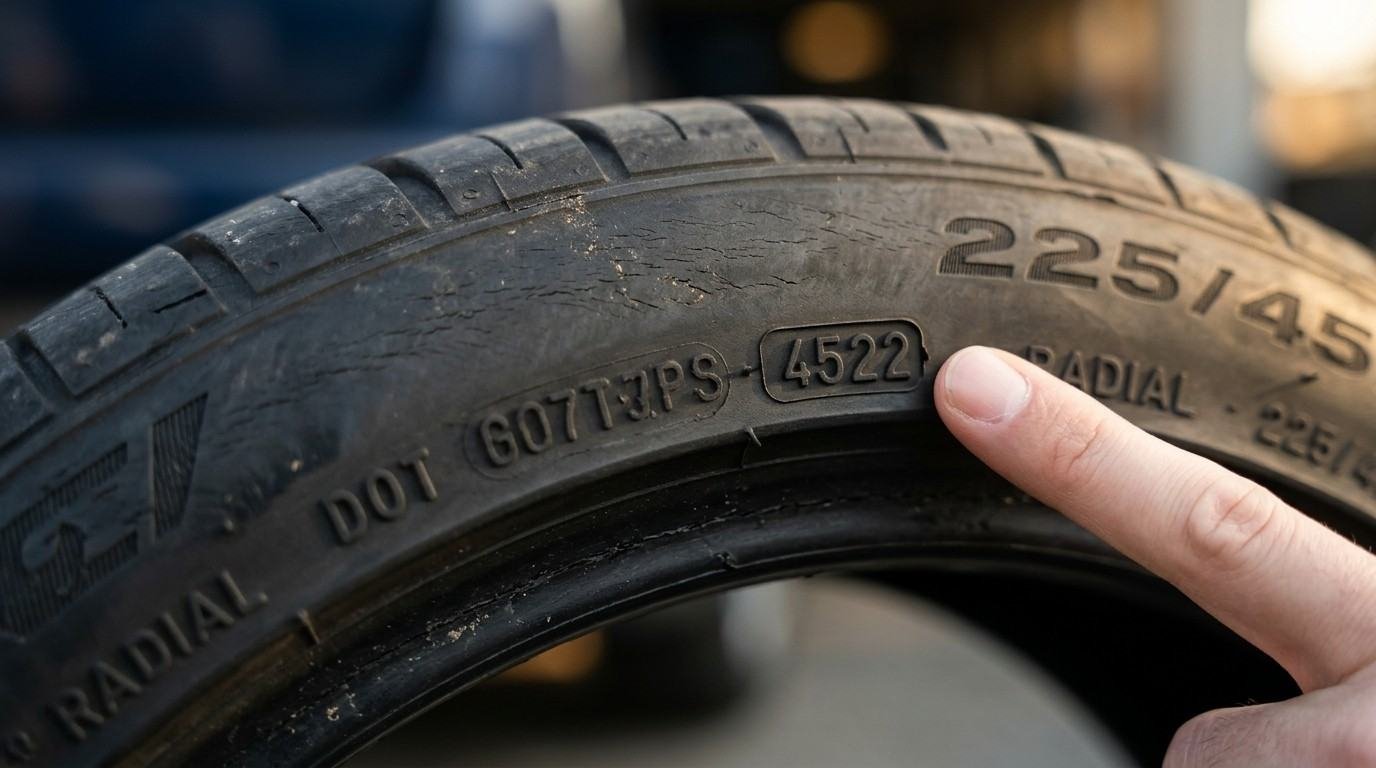
Many drivers check tread depth and air pressure but never ask a simple question: how old are these tires? Rubber ages even when the car sits in a garage, so a tire with deep tread can still be unsafe.
The good news is that learning how to tell tire age takes about 30 seconds. Every tire carries a small code on the sidewall that shows exactly when it was made. This guide explains how to find it, how to read it, and when an older tire should be replaced.
Find the letters DOT on the tire sidewall. Look at the last four digits of that code. The first two digits are the week and the last two are the year of manufacture. For example, 3623 means the 36th week of 2023 (early September 2023).
Why Tire Age Matters More Than Most Drivers Think
A tire is a mix of rubber compounds, steel and fabric. Over time, heat, sunlight, ozone and oxygen slowly break the rubber down. The tire becomes harder and less flexible, and the layers inside can start to separate.
That is why tire age and tread wear are two different things. A tire can have plenty of tread and still be past its safe service life. The U.S. National Highway Traffic Safety Administration (NHTSA) links tire problems to roughly 11,000 crashes every year, which is one reason it urges drivers to check tires regularly.
What Does DOT Mean on a Tire?
DOT stands for the U.S. Department of Transportation. The letters show that the manufacturer certifies the tire meets federal safety standards. The characters after “DOT” form the Tire Identification Number (TIN), which works like a serial number.
What Information Does the TIN Contain?
- Plant code: two or three characters that identify the factory.
- Tire size code: a short code for the mold or size.
- Manufacturer’s option code: optional characters used for the brand’s own tracking.
- Date code: four digits showing the week and year the tire was made.
Only the date code matters when checking age, so the rest can be ignored.
How to Tell Tire Age: 3 Simple Steps
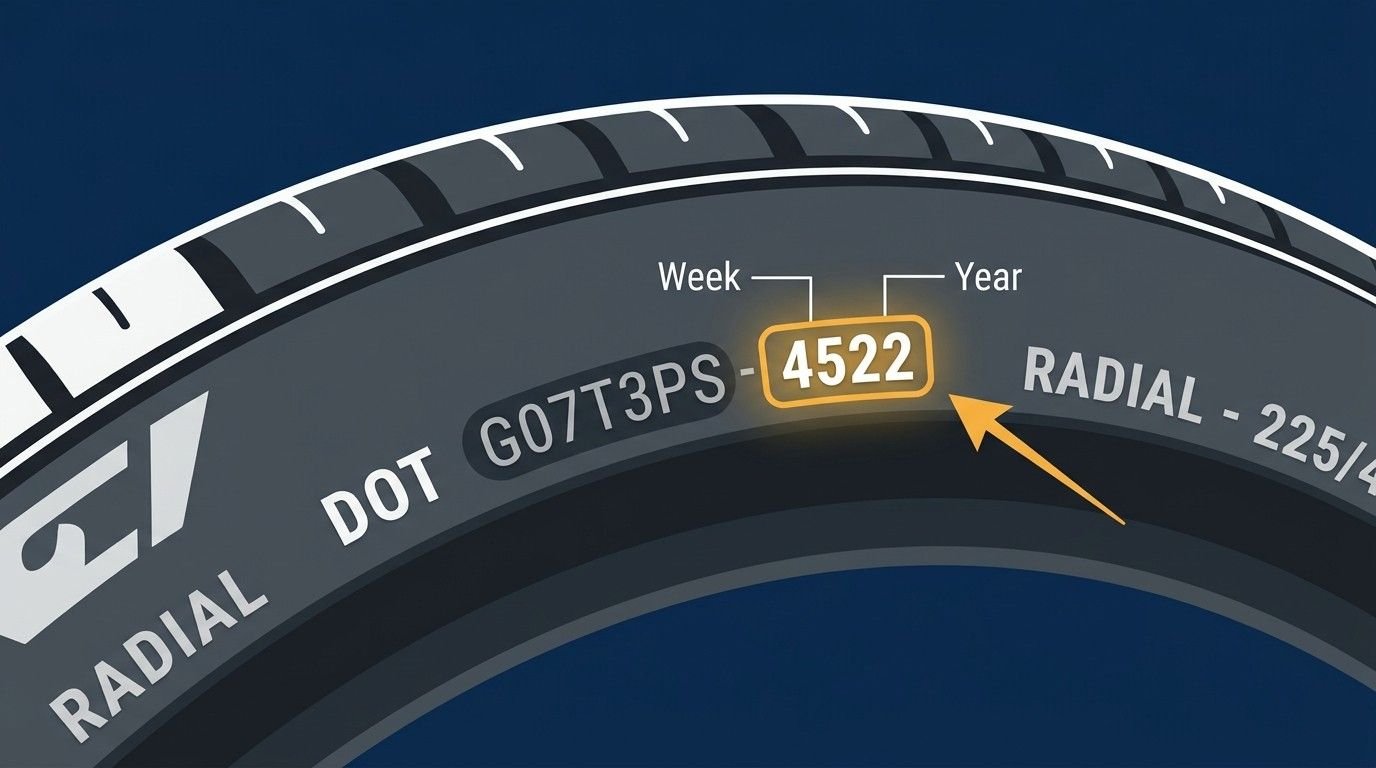
Step 1: Find the DOT Code on the Sidewall
Look at the side of the tire for the letters “DOT” followed by a string of letters and numbers. The characters are molded into the rubber, so a flashlight helps. Wiping the sidewall with a damp cloth also makes the text easier to read.
What if the Date Code Is Missing?
Do not panic. Manufacturers often mold the full code on only one sidewall. The other side may show a shorter DOT code that stops before the date. Check the opposite sidewall. On a mounted tire, that side may face inward, so a quick look under the car or removing the wheel may be needed.
Step 2: Locate the Last Four Digits
On tires made in 2000 or later, the date code is the final four digits. It is usually inside a small oval or sits right at the end of the DOT string.
Step 3: Decode the Week and Year
- First two digits: week of the year (01 to 52).
- Last two digits: the year of manufacture.
So 2223 means the tire was made in the 22nd week of 2023, around late May. Compare that with today’s date to get the tire’s age.
Take a photo of the date code with your phone and note it in your calendar. Set a reminder for the tire’s fifth birthday so an inspection is never forgotten.
How to Tell Tire Age by DOT Number
Looking up how to tell tire age by DOT number is really just a matter of knowing which format the tire uses. The format depends on when it was made.
| Manufacture Period | Date Code Format | Example | Meaning |
|---|---|---|---|
| 2000 to present | 4 digits (WWYY) | 4521 | Week 45 of 2021 |
| 1990s | 3 digits plus a small triangle (▼) | 329▼ | Week 32 of 1999 |
| Before 1990 | 3 digits, no triangle | 329 | Week 32 of 1989 (or 1979) |
A three-digit code means the tire is at least 20 years old, which is far too old to use on the road. If one turns up on a “new” tire, do not buy it. Old spare tires are the most common place to find these.
Quick Week-to-Month Chart
| Week Number | Approximate Month |
|---|---|
| 01 to 04 | January |
| 05 to 09 | February |
| 10 to 13 | March |
| 14 to 17 | April |
| 18 to 22 | May |
| 23 to 26 | June |
| 27 to 30 | July |
| 31 to 35 | August |
| 36 to 39 | September |
| 40 to 44 | October |
| 45 to 48 | November |
| 49 to 52 | December |
Does the Method Change by Brand?
No. The DOT date code is a federal format, so the same rule applies to every tire sold in the United States. Only the position of the code and the plant letters differ.
How to Tell Tire Age on a Michelin
For how to tell tire age Michelin owners often ask about, the process is identical. Find “DOT” on the sidewall, then read the last four digits. Michelin tires, including popular lines such as the Michelin Defender, may show the full code on only one side, so check both sidewalls. Michelin advises having tires inspected at least once a year after the fifth year and has stated that 10 years is the maximum for any tire, regardless of appearance.
How to Tell Tire Age on a BFGoodrich
The same applies to how to tell tire age BFGoodrich shoppers search for. BFGoodrich is part of the Michelin Group and uses the standard DOT format. Look for the four-digit code at the end of the DOT string on the sidewall. Many BFGoodrich all-terrain tires are installed on trucks that sit for long periods, so checking age is especially useful for them.
Tire Age Guidance by Source
| Source | General Guidance |
|---|---|
| Several automakers (for example Ford and Mercedes-Benz) | Replace tires at around 6 years, no matter the tread |
| Michelin | Inspect yearly after year 5; replace at 10 years at the latest |
| Tire manufacturers in general | Replace at 10 years even if the tire looks fine |
| NHTSA | No fixed legal limit; check your owner’s manual and inspect often |
Always follow your vehicle owner’s manual first, then the tire maker’s guidance.
How Old Is Too Old for a Tire?
There is no federal law that sets a maximum tire age in the United States. Instead, safety groups and manufacturers offer guidelines:
- 0 to 5 years: normally fine if tread and condition are good.
- 5 to 6 years: get a professional inspection every year.
- 6 to 10 years: replacement is wise, especially for vehicles that carry heavy loads or drive at highway speeds.
- 10+ years: replace immediately, including the spare.
Heat speeds up aging. Drivers in hot states such as Arizona, Texas and Florida may need to replace tires sooner than drivers in cooler climates. Low mileage does not slow the clock either: a car driven rarely can have tires that age out before the tread wears down.
Do Spare Tires Expire Too?
Yes. A spare tire ages just like the four on the road, even though it never touches the pavement. Many drivers forget it until they have a flat. Check the date code on the spare at the same time as the others. If a replacement is needed, see how much a spare tire costs before shopping.
Signs of an Aging Tire Besides the Date Code
The date is a guide, not a verdict. Inspect the tire visually too. Replace it right away if any of these appear:
- Sidewall cracks: fine lines or deep splits, often called dry rot.
- Bulges or bubbles: a sign that the internal structure is damaged.
- Tread separation: the tread peeling or lifting from the body.
- Worn tread: at or below 2/32 inch (about 1.6 mm). Use the penny test: if the top of Lincoln’s head is visible, the tire is worn out.
- Vibration or uneven wear: may point to internal damage or alignment issues.
- Hardened, faded rubber: a dull gray or brown surface shows chemical breakdown.
Tire Age vs. Tread Wear
| Factor | Tire Age | Tread Wear |
|---|---|---|
| Caused by | Time, heat, UV, ozone | Miles driven, alignment, road type |
| How to check | DOT date code | Penny test or tread depth gauge |
| Can be seen easily? | No, requires reading the code | Yes, visible on the tread |
| Main risk | Sudden failure or separation | Poor grip, longer braking |
How to Make Tires Last Longer
- Keep tires inflated to the pressure on the driver’s door sticker.
- Rotate them about every 5,000 to 7,500 miles.
- Park in shade or a garage when possible.
- Clean them with mild soap, not petroleum-based products.
- Check the date code once a year as a habit.
How to Check Tire Age Before Buying New or Used Tires
Tires do not leave the factory fresh forever. A “new” tire can sit in a warehouse for a year or more. When shopping, ask to see the date code before you pay.
Buying New Tires
- Aim for tires made within the past 12 to 24 months.
- Ask the shop to confirm the date code on the invoice or the tire itself.
- Compare options and pricing first. This guide on how much a new tire costs can help set a budget.
- Ask about extras such as mounting and balancing costs and TPMS replacement costs.
- Review the Costco tire warranty or the warranty of any retailer you choose.
Buying Used Tires
Used tires are riskier because the history is unknown. If you consider them, insist on a tire made within the past six years, with no repairs near the sidewall and no cracking. For most drivers, new tires are the safer long-term value.
Use our directory to find a nearby tire service, browse your state, or check tire shops open on Sunday for weekend help.
Explore More on Tire Near Me Hub
Website page links (replace or edit as needed):
Related article links:
- Costco Tire Warranty
- How Much Is a Spare Tire?
- Discount Tire TPMS Replacement Cost
- Michelin Defender Tire
- Tire Shops Open on Sunday
- How Much Is a New Tire?
- Mount and Balance Cost
Suggested authority sources: NHTSA • Michelin Tires • BFGoodrich Tires • Tire Industry Association
Frequently Asked Questions About How to Tell Tire Age
How do you tell how old a tire is?
Find the DOT code on the sidewall and read the last four digits. The first two show the week and the last two show the year of manufacture. For example, 1022 means week 10 of 2022.
How long do tires last before they expire?
Most tires should be inspected yearly after five years and replaced by 10 years at the latest. Some automakers recommend replacement at about six years. Hot climates and poor storage can shorten that.
Where is the date code on a tire?
It is the last four digits of the DOT code on the sidewall, often inside an oval. It may appear on only one side, so check the inner sidewall if the outer side shows a shorter code.
Is a 5-year-old tire safe to drive on?
Often yes, if it has no cracks, bulges or low tread and has been stored and maintained well. Have a professional inspect it every year from the fifth birthday onward.
Do unused or spare tires age?
Yes. Rubber breaks down over time whether or not the tire is used. Spares and tires stored in a garage should be checked and replaced by the same age guidelines.
Conclusion: Make Checking Tire Age a Habit
Knowing how to tell tire age is one of the easiest safety checks a driver can do. Find the DOT code, read the last four digits, and compare the week and year with today’s date. The same method works on Michelin, BFGoodrich and every other brand.
Remember the key rules: inspect yearly after five years, strongly consider replacement at six, and retire any tire at ten. Combine the date check with a look for cracks, bulges and worn tread. When it is time for new rubber, browse tire brands or find a trusted shop on Tire Near Me Hub.