Discount Tire Mount and Balance Cost: 2026 Per-Tire Price Guide
What it costs, what is included, and how to avoid surprise fees
Shopping for new tires usually starts with the tire price. It rarely ends there. The discount tire mount and balance cost is the line item that quietly decides whether a “great deal” is actually great, because labor, valve stems, sensors and disposal can add a surprising amount to the final bill.
This guide breaks down what drivers typically pay, what the official installation charge covers, which extras can show up, and how the numbers compare with Walmart, Costco, Sam’s Club and other chains. It also includes simple ways to keep the total down.
Public price reports and customer posts put the Discount Tire mount and balance cost at roughly $16 to $22 per tire for carry-in tires. That is about $64 to $88 for a set of four before extras such as TPMS service kits, old-tire disposal or state recycling fees. When tires are bought at Discount Tire, installation is a one-time charge that also includes Life of Tire Maintenance.
What Mounting and Balancing Actually Mean
Many shoppers treat “mount and balance” as one fuzzy charge. It is really two separate jobs that happen back to back, and understanding them makes any quote easier to read.
What Is Tire Mounting?
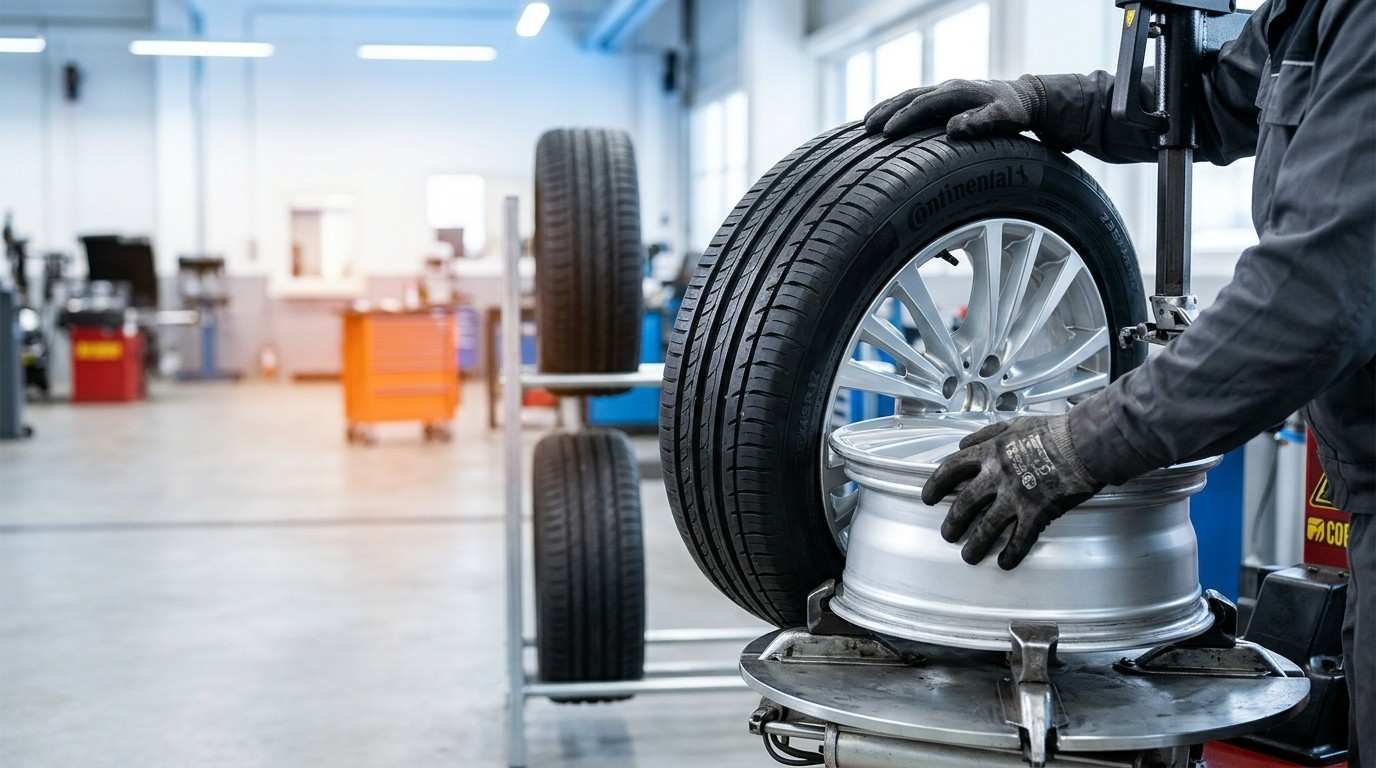
Mounting is the process of fitting a tire onto a wheel. A technician removes the old tire, cleans the wheel, installs the valve stem or TPMS service kit, seats the new tire’s bead against the rim and inflates it. Modern shops use a tire changer for this, and careful technicians protect the wheel finish while they work.
What Is Tire Balancing?
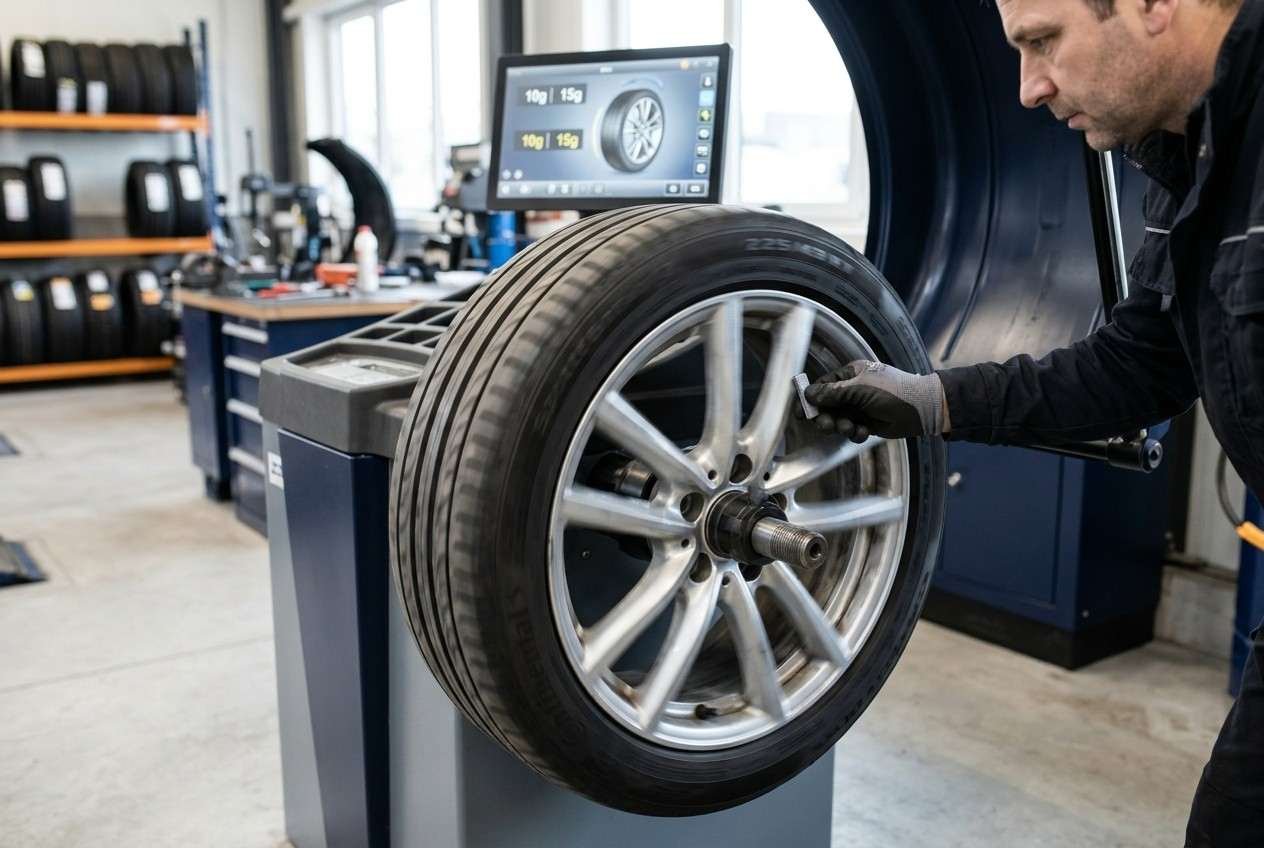
No tire and wheel are perfectly uniform. Balancing spins the assembly on a machine to find heavy spots, then adds small wheel weights to even things out. A well-balanced wheel rolls smoothly. An unbalanced one can cause steering wheel shake, seat vibration and uneven tread wear.
Balancing vs. alignment
The two are often confused. Balancing corrects weight distribution inside one wheel assembly. Alignment adjusts suspension angles so all four wheels point the right way. For a deeper comparison, see this guide on tire balancing vs alignment, or read whether Discount Tire does alignments.
Discount Tire Mount and Balance Cost in 2026
Here is the practical picture for drivers searching for the discount tire mount and balance cost per tire this year. Treat these as planning ranges, not guaranteed quotes.
Typical Cost Per Tire
Customer reports for carry-in tires commonly land between $16 and $22 per tire. Some owners report paying about $16, others around $18 to $19, and one price guide uses $22 as a working example. The spread usually comes down to store region and wheel type.
Typical Cost for a Set of Four
| Scenario (illustrative) | Per-Tire Math | Estimated Total for 4 |
|---|---|---|
| Base mount and balance only | $16 to $22 | $64 to $88 |
| Base + TPMS service kit + disposal | About $18 + $5 + $2.75 | About $103 |
| Large or low-profile wheel with all extras | About $22 + $8 + $3 | About $132 |
The middle and bottom rows use sample numbers drawn from the ranges drivers report. Real totals depend on the store and the tires.
Does the Discount Tire Mount and Balance Cost Change in 2026?
Prices at tire shops tend to drift up slowly with labor and supply costs. Searching for the discount tire mount and balance cost 2026 mostly turns up the same $16 to $22 neighborhood seen in recent years, plus a few outliers. The safest move is to request an out-the-door quote that lists every line item.
What Is Included in the Installation Charge
According to Discount Tire’s own installation page, buying tires with installation covers a one-time charge that bundles several services. The company lists these items:
- Labor
- Valve stems or TPMS rebuild kits
- Mounting
- Balancing
- Tire disposal fees
- A visual inspection
- Life of Tire Maintenance
Life of Tire Maintenance
This is the part that separates a bundled installation from a bare mount-and-balance job. For as long as the customer owns the covered tires, the program includes:
Tire Rotations
Regular rotation to help wear stay even.
Rebalancing
Fixes vibration without a new charge.
Flat Repairs
Eligible punctures repaired at no extra fee.
Inspections
Safety checks and air pressure checks.
Road Hazard
Free prorated road hazard protection.
For policy details, the Discount Tire warranty policy guide and the free air check guide explain how these perks work day to day. Eligible flat repairs are worth knowing about too, since a flat tire repair at other shops is often a separate charge.
Extra Fees That Can Appear on the Quote
The base charge is rarely the whole story. These are the add-ons that most often change the final total.
| Possible Extra | What It Is | Reported Range |
|---|---|---|
| TPMS service kit | Replacement parts that keep the tire pressure sensor sealed and working | Roughly $3 to $8 per wheel |
| Tire disposal | Recycling of the old tire | A few dollars per tire (about $2.75 in some reports) |
| State recycling or environmental fee | Local government fee on new tires | Varies by state |
| Road hazard warranty | Coverage for damage from road debris | Often tied to tire price; ask the store |
| Specialty wheel handling | Extra care for custom, oversized or fragile wheels | Quote-dependent |
Why TPMS Kits Matter
Tire pressure monitoring systems have been standard on new US passenger vehicles since the 2008 model year. Each sensor needs fresh seals during a tire change. Skipping that step can cause slow leaks or a stubborn warning light. If a dash light misbehaves afterward, this explainer on how tire pressure sensors work is a helpful read.
Discount Tire vs Other Tire Shops
Context helps. The table below sets typical reported prices side by side. These numbers come from third-party price guides and customer posts of mixed dates, so use them to compare, not to budget to the dollar.
| Shop | Reported Mount and Balance | Often Bundled |
|---|---|---|
| Discount Tire | About $16 to $22 per tire | Valve stems or TPMS kits, disposal, inspection, Life of Tire Maintenance (when installed with purchase) |
| Walmart | About $18 per tire for tires bought there (older reports as low as about $10 for mounting alone) | Lifetime balance and rotation, valve stem or service pack |
| Costco | About $14 to $19 per tire in reports | Members-only; includes services such as rotation and balancing |
| Sam’s Club | About $15 to $20 per tire (Premium Tire Installation Package listed at $20) | Membership-based packages |
| Mavis Discount Tire | About $20 per tire | Varies by location |
| Firestone Complete Auto Care | About $23 per tire | Varies by location |
| Independent shops and dealerships | Roughly $12 to $50 per tire | Often priced per service |
Reading the Comparison Fairly
A lower sticker price is not always a lower total. Walmart’s package, for example, pairs mounting with lifetime balancing and rotation. Costco and Sam’s Club require memberships. Independent shops can be very cheap or very expensive depending on the market.
For more side-by-side detail, these guides cover Costco’s tire warranty, the Sam’s Club tire center, Mavis Discount Tire and Firestone Complete Auto Care. Shoppers also compare the Tire Rack installation cost when buying online.
Buying Tires Online and Installing at Discount Tire
A common scenario: tires ordered from an online retailer, then taken to a local store. Discount Tire states that tires purchased elsewhere can be mounted and balanced for a per-tire charge that depends on the store region. Some customers who ordered through Discount Tire Direct report still paying roughly $16 per tire at a local store, so it pays to ask before assuming installation is free.
What Changes the Price
Two drivers can walk into the same store and get different quotes. The reasons are usually practical.
- Wheel size and tire profile. Larger wheels and low-profile tires take more time and care. Performance models such as a Pirelli P Zero are a typical example.
- Run-flat construction. Stiff sidewalls are harder to mount. See this guide to run-flat tires.
- Vehicle type. Trucks, SUVs and dually setups can cost more than small sedans.
- TPMS equipment. Sensors add parts and labor.
- Store region. Local labor and fee rules move the number.
- Where the tires were bought. Tires purchased at the shop usually get the full bundled package.
Tire age matters too. Before any installation, it helps to know how to read tire date codes, so brand-new tires are not actually years old.
Is the Life of Tire Maintenance Worth It?
For most drivers, bundled maintenance is where the real value sits. A quick example shows why.
- Rotations are commonly recommended every 5,000 to 7,500 miles.
- Over a 50,000-mile tire life, that means roughly seven to ten rotation visits.
- If rotations, rebalancing and eligible flat repairs were each billed separately, small charges would add up quickly.
Included services also create a reason to return. Regular rotations help tires wear evenly, and uneven wear is one of the quieter ways money leaks out of a tire budget. This breakdown of uneven tire wear causes explains why.
How to Lower the Bill
- Buy tires and installation together. Bundled installation includes extras that would otherwise cost more later.
- Request the out-the-door price. Compare the full total, not just the tire price.
- Check for the Low Price Guarantee. Discount Tire advertises a Low Price Guarantee, so ask how it applies to your purchase.
- Watch seasonal sales. Holiday events can cut tire prices. See the Discount Tire Black Friday guide and these Mavis tire coupons.
- Spread out large purchases. Options like wheel and tire financing or a Tire Plus credit card can ease cash flow. Read the terms and interest rates first.
- Ask about sensors early. Confirm TPMS kit pricing before the work starts.
- Compare nearby shops. Use the state directory and tire services pages to find options close to home.
Should Anyone Mount and Balance Tires at Home?
It is possible with a tire changer, bead lubricant and a balancer, but the equipment cost and learning curve rarely beat a $16 to $22 shop charge. A mishandled bead or a poor balance can also hurt ride quality. For most drivers, professional mounting is the better deal.
What Happens During the Appointment
Typical Service Steps
- The vehicle is lifted and the wheels are removed.
- Old tires are taken off the wheels and set aside for disposal.
- Valve stems or TPMS service kits are installed.
- New tires are mounted and inflated to the correct pressure.
- Each assembly is balanced with small wheel weights.
- Wheels go back on the vehicle and lug nuts are tightened to spec.
- A visual inspection and final pressure check wrap things up.
After the Visit: Quick Checks
- Confirm the receipt lists mounting, balancing and any extras.
- Ask when the first rotation is due.
- Recheck lug nuts after the first stretch of driving if the shop recommends it.
- Report any steering wheel vibration promptly. Rebalancing is part of Life of Tire Maintenance when installation was done at Discount Tire.
Drivers who prefer to learn about newer designs before their next purchase may also enjoy this look at the airless tire, and winter drivers can browse truck tire chains. Shoppers choosing a long-lasting set can start with the Goodyear Assurance tire overview or the full list of tire brands.
Frequently Asked Questions
How much does Discount Tire charge to mount and balance a tire?
Public price reports put the Discount Tire mount and balance cost at roughly $16 to $22 per tire for carry-in tires, before extras like TPMS kits and disposal. Prices vary by store region, so confirm with a local store.
Is mounting and balancing free at Discount Tire?
Not exactly. When tires are bought at Discount Tire, installation is a one-time charge that covers mounting, balancing, valve stems or TPMS rebuild kits, disposal, a visual inspection and Life of Tire Maintenance.
Does Discount Tire mount and balance tires bought elsewhere?
Yes. The company states that tires purchased elsewhere can be mounted and balanced for a per-tire charge that depends on the store region. Ask about TPMS kits and disposal too.
What is included in Discount Tire installation?
Labor, valve stems or TPMS rebuild kits, mounting, balancing, disposal fees, a visual inspection and Life of Tire Maintenance. That program covers rotations, rebalancing, flat repairs, safety inspections, air pressure checks and prorated road hazard protection.
How often do tires need to be balanced?
Tires are balanced whenever they are mounted, after some flat repairs and whenever vibration shows up at highway speeds. Many drivers also have them rebalanced during rotations, commonly every 5,000 to 7,500 miles.
Conclusion
The discount tire mount and balance cost typically falls around $16 to $22 per tire for carry-in tires, or about $64 to $88 for a set of four before extras. TPMS kits, disposal and state fees can push the total higher, which is why an out-the-door quote is the smartest first step.
For shoppers who buy tires at Discount Tire, the bundled installation charge is the bigger story. It rolls mounting, balancing, valve stems or TPMS kits, disposal, a visual inspection and Life of Tire Maintenance into one up-front price. Compared with paying for rotations and rebalancing separately, that can be a solid value over the life of a set of tires.
Before booking, compare a couple of nearby shops, ask about sensors, and confirm what the receipt will list. Then explore the rest of the Tire Near Me Hub blog for more cost guides and shop comparisons.
Explore More on Tire Near Me Hub
Website Pages
- Tire Near Me Hub Home
- Tire Blog
- Tire Services
- Find Tire Shops by State
- Tire Brands
- List Your Tire Business