Tire Care Guide
How Long Do Tires Last? Years, Miles & When to Replace Them
A practical guide to tire lifespan: what mileage and age limits really mean, how climate and vehicle type change the answer, and which warning signs matter most.
Few car expenses arrive with as little warning as a new set of tires, which is why one question comes up in nearly every garage: how long do tires last? The short answer is about three to six years, or roughly 25,000 to 60,000 miles. The real number depends on the tire type, the vehicle, the climate, and how well the tires are maintained.
Rubber also ages on the calendar, not just on the odometer. A set that looks fine can still be unsafe, and a set with plenty of miles left on paper can be too old to trust. This guide explains both clocks, compares typical lifespans for cars, trucks, and electric vehicles, and lists the checks that show when a set is finished.
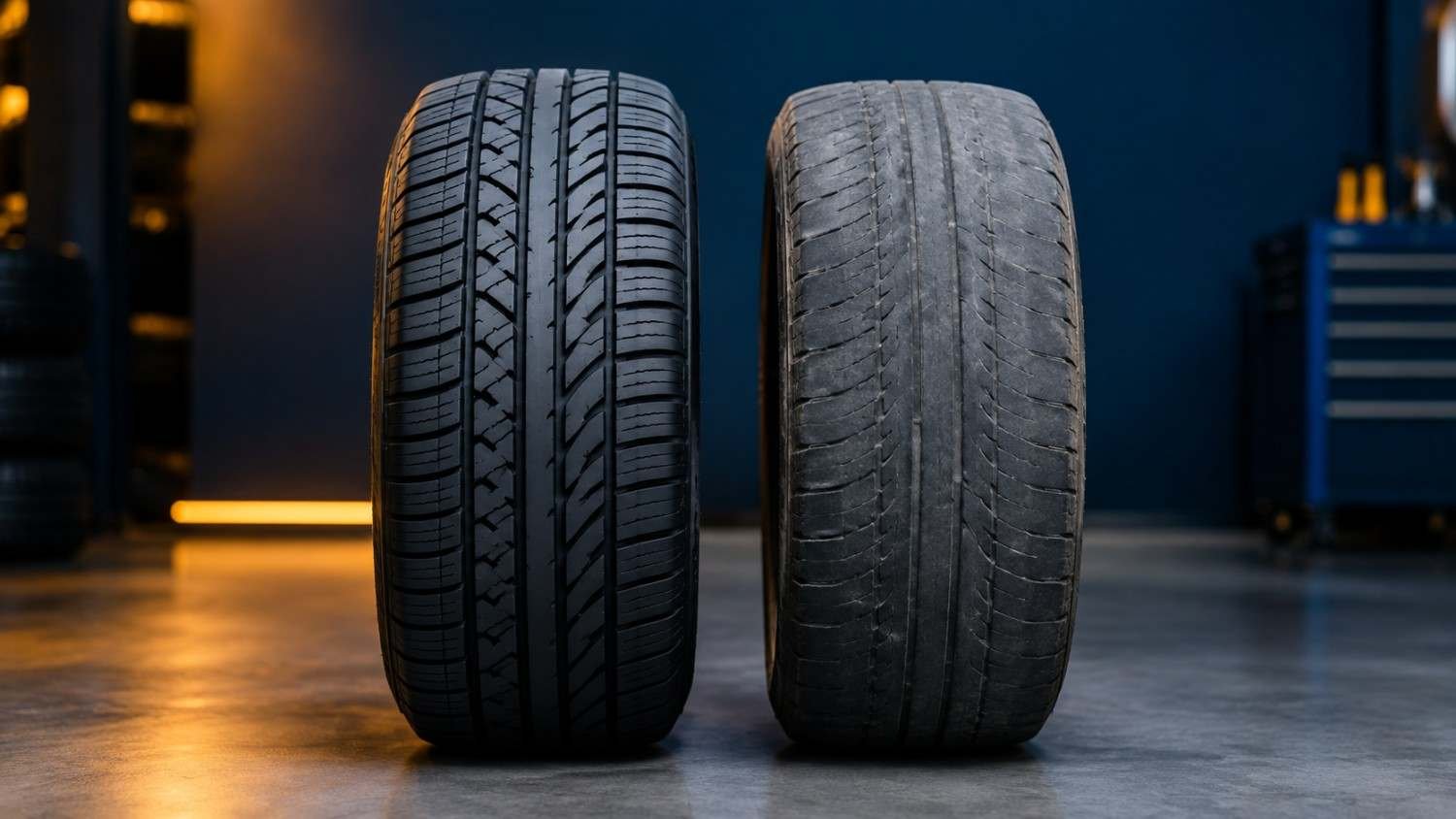
How Long Do Tires Last? The Short Answer
Most tires last 3 to 6 years, or roughly 25,000 to 60,000 miles, depending on the tire type, driving habits, climate, and maintenance. Tires should be inspected once they reach five or six years old and replaced by ten years from the manufacture date, even when the tread still looks good.
Those two numbers describe two separate clocks. One runs on the odometer and tracks how much tread has worn away. The other runs on the calendar and tracks how much the rubber has aged. Whichever clock runs out first decides when a set needs replacing.
Tire lifespan in years
Rubber compounds slowly harden and crack under heat, sunlight, oxygen, and ozone. Most drivers reach the end of their tread life somewhere between year three and year six. Drivers who log fewer miles can reach year six or beyond with tread to spare, and at that point age becomes the deciding factor.
The U.S. National Highway Traffic Safety Administration (NHTSA) does not set a fixed age limit for tires. It defers to vehicle and tire manufacturers, whose guidance generally falls between six and ten years.
Tire lifespan in miles
Mileage varies far more than age. Consumer Reports treadwear testing has found that family-car all-season tires can readily last 70,000 miles or more. In the same program, some ultra-high-performance tires wore in a way that projected just 25,000 to 30,000 miles.
The typical U.S. driver covers roughly 13,000 to 14,000 miles a year. At that pace, a 40,000-mile tire is worn out in about three years, and a 60,000-mile tire in about four and a half.
How Long Do Tires Last by Tire Type?
Tire design is a trade-off. Softer compounds grip better but wear faster, while harder compounds last longer and give up some grip. That is why the same car can see very different results from two sets of tires. The table below shows general ranges for common categories.
| Tire type | Typical mileage | What to know |
|---|---|---|
| Touring all-season | 50,000–70,000 miles | Built for longevity and comfort. Top models in independent testing can pass 70,000 miles. |
| Standard all-season | 40,000–60,000 miles | The most common choice for sedans and crossovers. Rotation makes a big difference. |
| Performance all-season | 35,000–60,000 miles | More grip and sharper handling, with a wider spread in lifespan between models. |
| Summer / ultra-high-performance | 20,000–40,000 miles | Soft compounds wear quickly. Many do not carry mileage warranties. |
| Winter / snow | 30,000–40,000 miles (about 3–5 seasons) | Soft rubber wears fast on warm pavement, so most drivers swap them out in spring. |
| All-terrain / light truck | 40,000–60,000 miles | Towing, heavy loads, and off-road use can shorten life considerably. |
| Run-flat | Varies; often shorter than standard equivalents | Stiffer sidewalls change wear and ride. See the run-flat tires guide. |
Mileage warranties are a helpful starting point, but they are not a promise. They are usually prorated, and they can require proof of regular rotations. Drivers comparing options can start with the best all-season tires of 2026 and check each model against the tire speed rating chart, since a higher speed rating often points to a softer, faster-wearing compound.
Brand matters too. Premium lines from makers such as Goodyear are often engineered for longer tread life, and the full tire brands directory makes side-by-side comparison easier.
How Long Do Tires Last in Years? Understanding Tire Age
Tread depth is easy to measure. Rubber aging is not. Tires can deteriorate internally, weakening the bond between the rubber and the steel belts, without any obvious outward sign. That is why age guidance exists at all.
The six-year checkpoint
Several automakers, including Ford, Nissan, and Mercedes-Benz, have advised owners to replace tires around six years after production, regardless of tread. Tire makers tend to be less strict. Michelin, for example, recommends a professional inspection every year after the fifth year. Industry trade groups have argued that a single six-year rule is arbitrary, which explains why advice varies.
The practical takeaway is simple. At year five or six, a tire deserves a closer look every year.
The ten-year limit
Continental and Michelin advise taking tires out of service by ten years from the manufacture date, and other major makers give similar guidance. The same rule applies to spares. Healthy-looking tread is not proof of a healthy tire at that age.
How to read the DOT date code
Every tire carries a DOT Tire Identification Number molded into the sidewall. The last four digits reveal when it was made: the first two are the week, and the last two are the year.
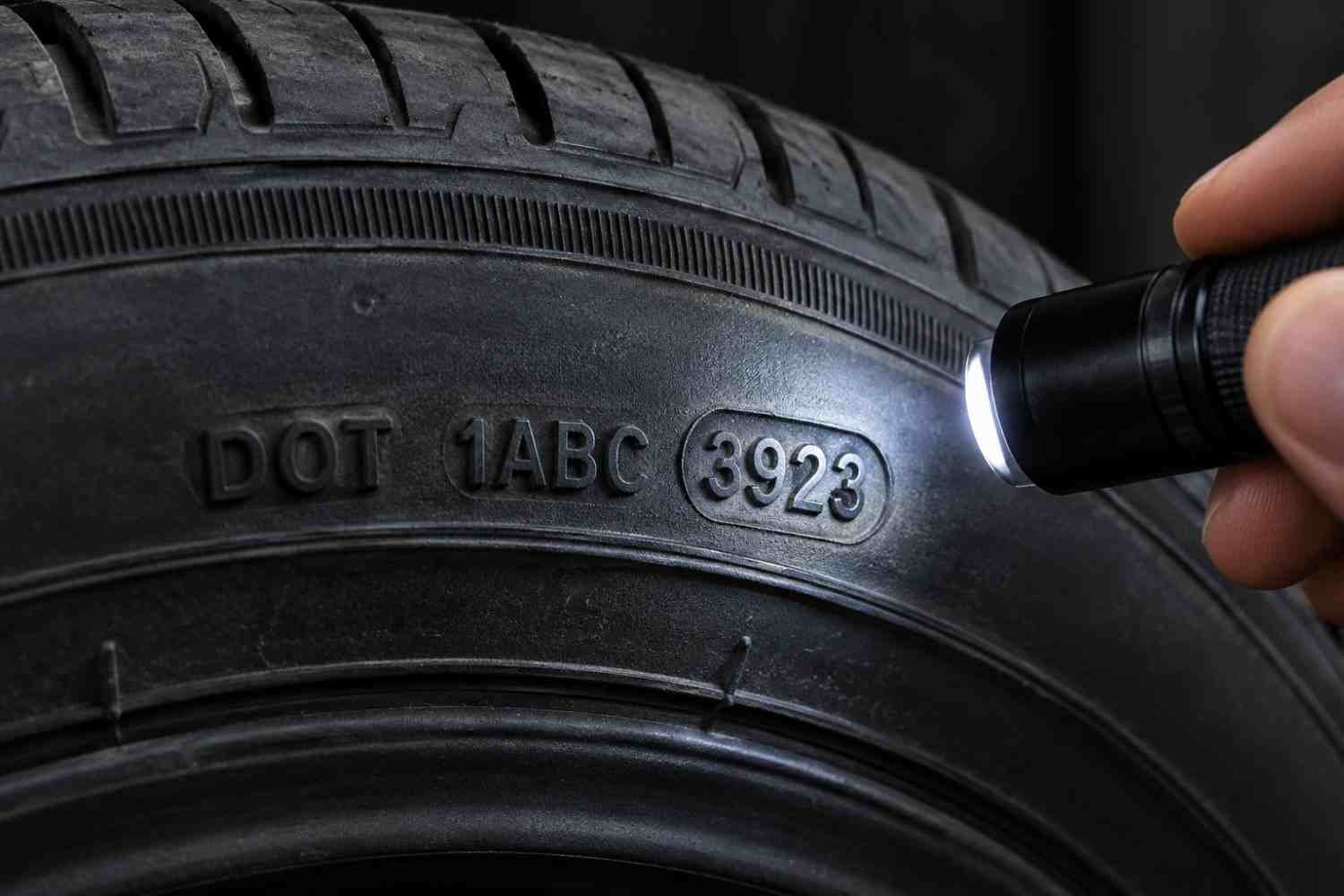
Example
A code ending in 3422 means the tire was made in the 34th week of 2022, around late August. In 2026, that tire is about four years old.
Where to look
The full number sometimes appears on only one sidewall, often the inner one facing the vehicle. Drivers may need to check both sides, or use a flashlight and look from behind the wheel.
New tires can sit in a warehouse for a year or more. Buyers can ask for a recent date code, and anyone shopping for used tires near me should decode the date first, since a used tire with an unknown history can be older than it looks.

The mileage clock
- Measures tread worn away
- Driven by miles, driving style, and alignment
- Checked with a gauge or the penny test
- Usually decides for daily commuters
The age clock
- Measures rubber aging over time
- Driven by heat, sunlight, and storage
- Checked with the DOT date and a sidewall inspection
- Usually decides for low-mileage drivers
How Long Do Tires Last with Low Mileage vs. High Mileage?
How long do tires last with low mileage?
Low-mileage drivers face the opposite problem from commuters. A driver who covers 5,000 miles a year would need eight years to wear out a 40,000-mile tire, which is past the point where many makers advise replacement. For these drivers, age sets the limit.
Yearly inspections from year five, a DOT date check, and a close look for sidewall cracking matter more than a tread gauge. Cars parked outdoors in strong sun also age their tires faster than garaged ones.
How long do tires last with high mileage?
Commuters, rideshare drivers, and delivery workers wear tread down long before age becomes an issue. A driver covering 20,000 miles a year can burn through a 60,000-mile tire in three years. For these drivers, rotation every 5,000 to 7,500 miles, monthly pressure checks, and alignment are the biggest levers. Steady highway miles are gentler on tires than stop-and-go driving with hard braking and cornering.
| Factor | Low mileage | High mileage |
|---|---|---|
| Usual limiting factor | Tire age | Tread wear |
| Main risk | Dry rot, cracking, hidden internal aging | Worn tread, uneven wear |
| Best habit | Yearly inspection from year five | Rotation every 5,000–7,500 miles |
| Typical replacement timing | 6–10 years | 3–5 years |
How long do tires last on a new car?
Original-equipment tires are chosen to balance ride comfort, noise, fuel economy, and cost for the automaker. Because of that, they often wear out sooner than premium replacement tires. New-car owners are sometimes surprised when factory tires need replacing earlier than expected, and the first replacement is a good time to compare longer-lasting options.
How Long Do Tires Last on Cars, Trucks, and Electric Vehicles?
How long do tires last on a car?
On a typical sedan or crossover with all-season tires, 40,000 to 60,000 miles is a realistic range when rotation and pressure checks are kept up. Front-wheel-drive cars usually wear front tires faster because those tires steer, brake, and drive at the same time.
How long do tires last on a truck?
Trucks carry heavier loads, tow trailers, and often run larger tires with aggressive tread. All-terrain tires commonly deliver 40,000 to 60,000 miles, but towing, hauling, and rough roads pull that number down. Truck tires also need pressure adjusted for load, so the door-jamb placard and the owner’s manual matter.
How long do tires last on electric cars?
Electric vehicles are heavier than comparable gas models because of their battery packs, and instant torque adds stress at the contact patch. Many EV owners find their tires wear faster than on a similar combustion vehicle. EV-specific tires use reinforced construction and low-rolling-resistance compounds to help.
How long do tires last on a Tesla Model Y?
Owner reports for the Model Y vary widely, commonly falling between 20,000 and 40,000 miles depending on the tire, wheel size, alignment, and driving style. Heavy acceleration shortens that range. Owners can stretch it with on-schedule rotations, correct pressure, and alignment checks after hitting curbs or potholes.
How Long Do Tires Last in Hot and Cold Climates?
Climate quietly changes the answer. NHTSA research has found that tires age more quickly in warmer climates, since heat speeds up the chemical changes that harden rubber.
How long do tires last in Florida?
Florida combines intense heat, strong UV exposure, and heavy rain. Sun-baked rubber ages quickly, and wet roads make good tread depth important. Drivers there often benefit from checking the DOT date by year four or five, replacing tires closer to 4/32 inch, and parking in shade whenever possible.
How long do tires last in Arizona?
Summer pavement in Arizona can be far hotter than the air, which raises tire temperature and pressure and accelerates wear. Checking pressure when tires are cold, avoiding long stretches parked in direct sun, and watching for sidewall cracking are the best defenses. Early-stage cracking is often the first sign of tire dry rot.
What about cold weather?
Cold temperatures lower tire pressure and stiffen all-season compounds, which reduces grip on ice and snow. Drivers in snowy regions often run a dedicated winter set and switch back in spring, which spreads wear across two sets and extends the life of both.
Local tire shops and conditions vary a lot from place to place. Drivers can browse the tire shop directory by state to find nearby options.
How Long Do Tires Last in Storage or If Not Used?
Tires do not stop aging when they stop rolling. Age is counted from the manufacture date on the sidewall, not from the day they were installed. That applies to spare tires, seasonal sets, and old stock sitting in a garage.
Tips for storing tires
- Clean tires and let them dry fully before storing.
- Choose a cool, dry, dark space away from direct sunlight.
- Keep tires away from electric motors, which can produce ozone, and from oil or solvents.
- Use tire bags to slow oxygen and moisture exposure.
- Store unmounted tires upright, and stack mounted tires flat or hang them.
Good storage slows aging, but it does not stop it. A tire that has sat for eight years should still be inspected, and one that has passed ten years is generally best retired.
What Affects How Long Tires Last?
Two identical sets can end up years apart in lifespan. These are the main reasons.
- Driving style: hard braking, fast cornering, and rapid acceleration wear tread quickly.
- Tire pressure: under-inflation overheats sidewalls and wears the outer edges, while over-inflation wears the center.
- Alignment and suspension: misalignment scrubs tread unevenly, sometimes ruining a tire in a few thousand miles.
- Rotation and balance: skipped rotations let the same tires do the hardest work for too long.
- Load: extra weight raises heat and wear, especially on trucks and SUVs.
- Road and climate: rough or hot pavement, potholes, and strong sun all take a toll.
- Tire quality: compound, construction, and treadwear rating set the baseline.
Signs Tires Need Replacing
Check tread depth
New passenger tires usually start around 10/32 to 11/32 inch of tread. Most U.S. states set the legal minimum at 2/32 inch, but braking on wet roads is noticeably weaker well before that point. A tire tread depth gauge gives an exact reading, and coins offer a quick check.
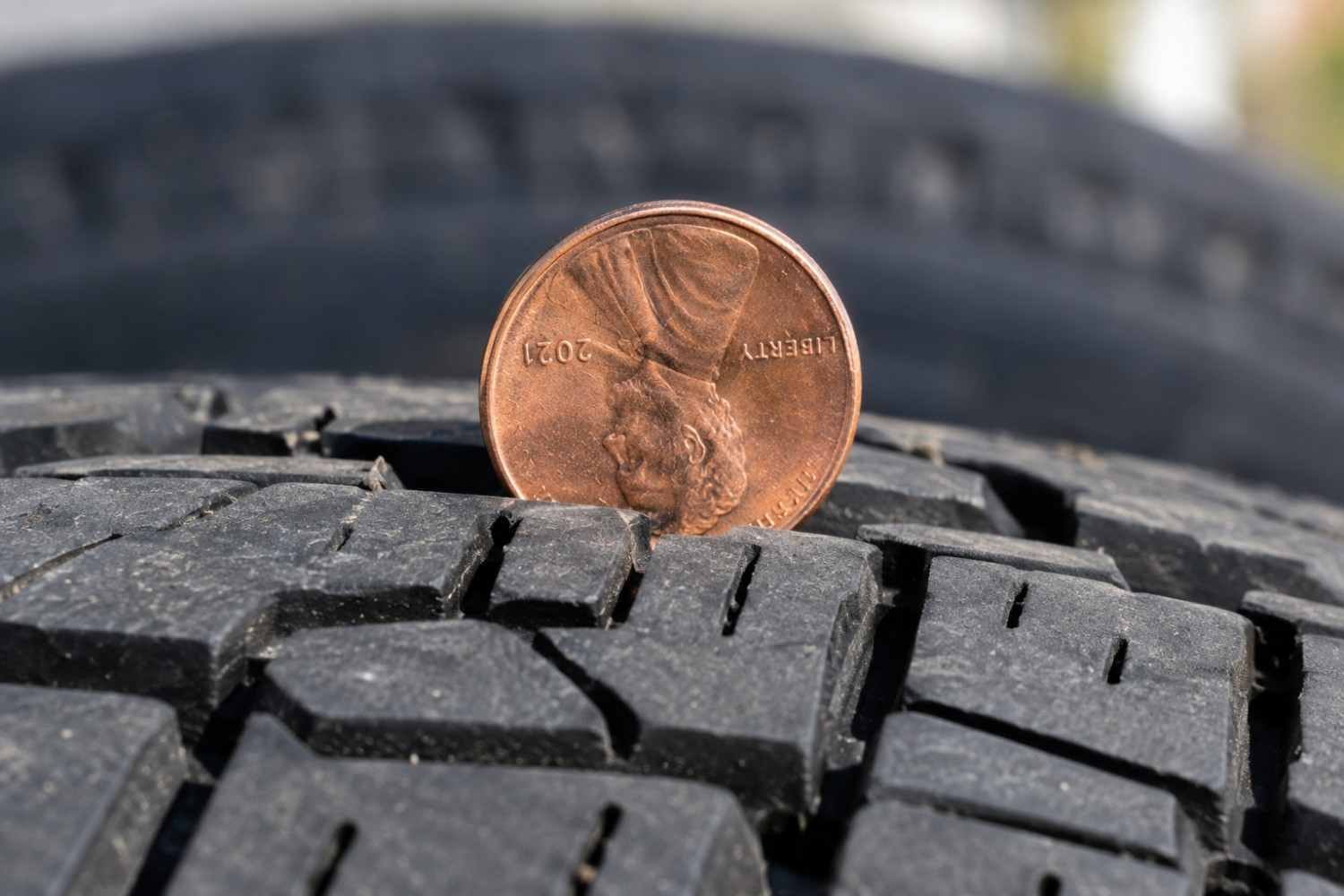
| Test | How it works | What it means |
|---|---|---|
| Penny test | Insert a penny into a groove with Lincoln’s head down. | If his whole head is visible, tread is below 2/32 inch. Replace now. |
| Quarter test | Insert a quarter with Washington’s head down. | If the top of his head is fully visible, tread is below 4/32 inch. Plan to replace soon. |
| Wear bars | Look for raised bars across the grooves. | If the bars are level with the tread, the tire has reached 2/32 inch. |
Look for other warning signs
- Cracks in the sidewall or tread grooves, a common sign of aging rubber.
- Bulges or blisters, which point to internal damage.
- Vibration or pulling, which can signal balance, alignment, or belt problems.
- Uneven wear, often caused by pressure or alignment issues.
- Frequent pressure loss, which may indicate a slow leak or damaged bead.
A bulging sidewall can fail suddenly. The tire should be replaced right away, not repaired.
Punctures in the tread are a different case. Many can be repaired safely if the damage is small and away from the sidewall. The guide to tire plug vs. patch explains which repair is proper, and the flat tire repair cost breakdown shows what to expect at the shop.
How to Make Tires Last Longer
Good habits can add thousands of miles and reduce the chance of a roadside failure.
- Check pressure monthly. Use a gauge on cold tires and follow the vehicle door-jamb placard, not the maximum pressure printed on the sidewall.
- Rotate on schedule. Every 5,000 to 7,500 miles, or as the owner’s manual advises, keeps wear even.
- Get an alignment check. Do this yearly, after suspension work, or after a hard curb or pothole hit.
- Balance the wheels. Balancing prevents vibration and uneven wear.
- Drive smoothly. Gentle acceleration, early braking, and moderate cornering reduce tread loss.
- Respect load limits. Avoid overloading, and adjust pressure for heavy loads as the manual directs.
- Inspect regularly. A monthly walk-around catches nails, cracks, and bulges early.
- Protect from sun. Garage or shade parking slows rubber aging, especially in hot states.
- Replace in the right pattern. When replacing only two tires, many tire makers advise installing the new pair on the rear axle for stability.
Under-inflation is one of the most common and most preventable causes of early wear. A five-minute pressure check each month costs nothing and protects the whole set.
Buying Replacement Tires: Where to Start
When a set is worn or aged out, price is only part of the decision. Tread life, warranty terms, speed rating, and the installer’s reputation all shape the real cost per mile. Comparing a few providers usually pays off.
- National chains: read about Discount Tire Direct, Firestone Complete Auto Care, and Pep Boys tire prices and deals.
- Regional favorites: the Les Schwab Tire Center guide covers a popular western chain.
- Savings: check current Simple Tire coupon codes before ordering online.
- Budget options: vetted used tires can work for short-term needs, provided the DOT date and tread are checked.
Find the right tire help near you
Tire Near Me Hub helps drivers compare shops, brands, and services in one place.
Browse by state See tire services Explore tire brands
Shop owners can submit a business listing, and readers can find more guides on the Tire Near Me Hub blog or start at the homepage.
Frequently Asked Questions About How Long Tires Last
How long do tires last in years?
Most tires last between 3 and 6 years, depending on mileage, climate, and care. Tires should be inspected annually once they are 5 or 6 years old, and most manufacturers advise replacing them by 10 years from the date of manufacture, even if the tread still looks good.
How many miles do tires last on average?
Most passenger tires last roughly 25,000 to 60,000 miles. Touring all-season tires can exceed 60,000 or even 70,000 miles, while summer and ultra-high-performance tires often last 20,000 to 40,000 miles.
Do tires expire if they are not used?
Yes. Tire rubber ages even when tires sit unused, because heat, oxygen, and ozone gradually harden it. Age is counted from the manufacture date on the sidewall, so unused spares and stored tires still need to be inspected and generally replaced by 10 years.
How long do tires last on electric cars?
Tires on electric cars often wear faster than on similar gas vehicles because EVs are heavier and deliver instant torque. Lifespan varies widely by tire, vehicle, and driving style, so regular rotation, correct pressure, and alignment checks are especially important.
How long do tires last with low mileage?
With low mileage, age usually limits tire life before tread does. Drivers covering only a few thousand miles a year should check the DOT date code, inspect for sidewall cracking every year after year five, and plan to replace tires by about 10 years.
Conclusion: How Long Do Tires Last, and What to Do Next
So, how long do tires last? For most drivers, the answer is three to six years, or about 25,000 to 60,000 miles, with touring all-season tires at the long end and summer performance tires at the short end. Age matters as much as tread, which is why the DOT date code, a yearly inspection from year five, and a ten-year ceiling belong in every tire routine.
Climate, vehicle type, storage, and maintenance shift the numbers in both directions. Monthly pressure checks, regular rotation, and timely alignment are the simplest ways to get full value from a set. When the tread nears 4/32 inch, the rubber shows cracks, or the sidewall bulges, replacement is the safe choice.
Drivers who are ready to shop can compare options on the state directory, read the latest tire guides, and choose a set that matches how, where, and how much they drive.
This guide is for general information only. Tire life depends on the tire, the vehicle, and how it is used. Drivers should follow the vehicle owner’s manual and tire manufacturer guidance, and have a qualified tire professional inspect tires that show damage, cracking, or age concerns. Sources referenced include NHTSA tire safety information, Consumer Reports treadwear testing, and published guidance from tire and vehicle manufacturers.