Tire Brand Guide 2026
Goodyear Tires: Prices, Reviews, Best Models & Where to Buy Near You
An honest, data-backed buyer’s guide to Goodyear tires — what they cost, how long they last, and which model fits the vehicle in the driveway.
Written by Muhammad Naseem • Last Updated: • Reading time: 11 minutes
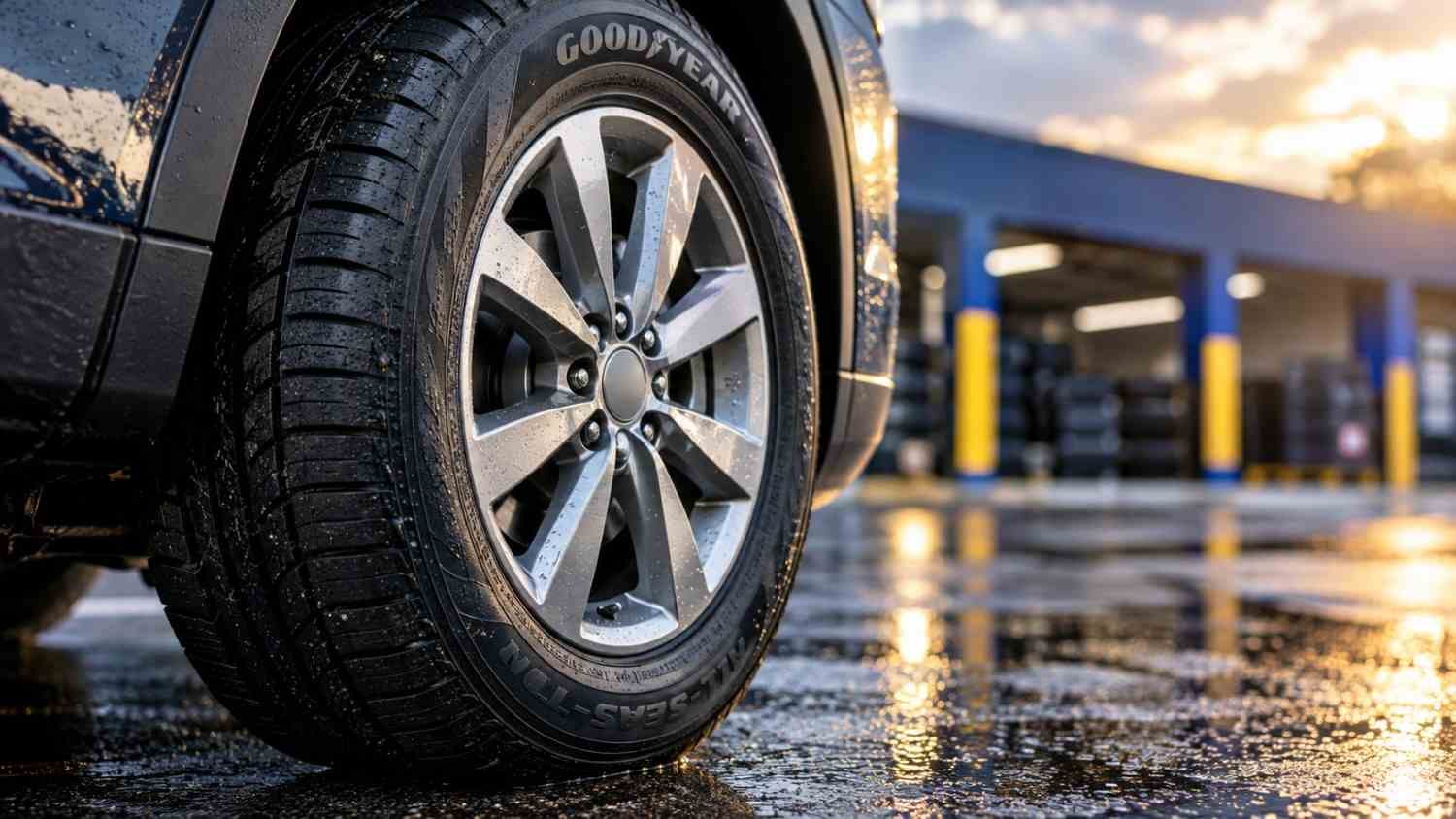
Few tire names carry as much weight in an American garage as Goodyear. The blimp, the winged-foot logo, the NASCAR pit lane — the brand is woven into the country’s driving culture. But recognition alone never kept a car planted on a wet highway ramp.
Drivers shopping today want harder answers: Are Goodyear tires actually worth the premium? What do they cost in 2026? Which model belongs on a Highlander, a Silverado, or a Model Y? And where can a set be bought and installed without overpaying?
This guide answers all of it in plain language — model by model, price by price — so the next set bought is the right one, not just the familiar one.
Quick answer: Goodyear tires are a premium, American-engineered choice that generally deliver strong wet grip, long treadwear warranties (45,000–85,000 miles depending on model), and wide availability. Expect to pay roughly $120–$320 per tire for most passenger and light-truck sizes in 2026.
Who Makes Goodyear Tires? A Quick Company Snapshot
Goodyear is not a badge licensed out to an overseas factory. The Goodyear Tire & Rubber Company was founded on August 29, 1898 in Akron, Ohio by Frank Seiberling, and it still runs its headquarters from Akron today. The name honors Charles Goodyear, the inventor of vulcanized rubber, though he had no direct involvement with the business.
Scale matters when a warranty claim is filed years later. Goodyear reported roughly $18.9 billion in revenue in 2024 and employs about 68,000 people worldwide, manufacturing across dozens of facilities in more than 20 countries with innovation centers in Akron, Ohio and Colmar-Berg, Luxembourg.
Where Are Goodyear Tires Made?
This is one of the most searched questions about the brand — and the honest answer is it depends on the model and size.
- United States: Goodyear operates several domestic plants, including Akron (OH), Lawton (OK), Topeka (KS), Fayetteville (NC), Danville (VA), and Gadsden-region operations in the Southeast.
- International: Additional production runs in Mexico, Canada, Germany, Poland, Brazil, China, and elsewhere.
- Cooper Tire: Acquired by Goodyear in 2021, adding U.S. plants in Findlay, Ohio and Texarkana, Arkansas.
Pro tip: To verify where a specific tire was built, read the DOT code on the sidewall. The first two characters after “DOT” identify the manufacturing plant, and the final four digits show the week and year of production — for example, 2226 means the 22nd week of 2026.
Are Goodyear Tires Good? An Honest Assessment
Goodyear sits in the premium tier alongside Michelin, Bridgestone, and Continental. That placement is earned in some areas and merely inherited in others. Here is the balanced view.
Where Goodyear Genuinely Excels
- Wet and winter traction. The Assurance WeatherReady family is built for four-season confidence. The Assurance WeatherReady 2 carries the Three-Peak Mountain Snowflake designation for severe snow service and a 60,000-mile tread life limited warranty, using a soybean-oil-infused compound that stays flexible in subfreezing temperatures and a built-in wear gauge for easy tread checks.
- Truck and off-road credibility. The Wrangler line — DuraTrac RT, Territory, Steadfast HT — has decades of real-world use behind it on work trucks and overlanding rigs.
- Availability and service network. Goodyear tires are stocked almost everywhere, which matters enormously when a tire fails 400 miles from home.
- Long treadwear warranties. Assurance MaxLife is backed by an 85,000-mile warranty, among the longest offered on a mainstream all-season tire.
Where the Brand Falls Short
- Price at the top of the range. Flagship Eagle and Wrangler sizes can cost 20–35% more than strong mid-tier rivals.
- Uneven lineup. Goodyear is a broad catalog, not a single quality level. Entry-level Assurance models are competent but not class-leading.
- Road noise on aggressive treads. The DuraTrac family trades quiet cruising for bite — expected, but worth knowing before purchase.
The verdict: Goodyear is a reliably good choice, and an excellent one when the right model is matched to the right driving conditions. Buying on the logo alone is where drivers get disappointed.
Best Goodyear Tires by Model (2026 Comparison)
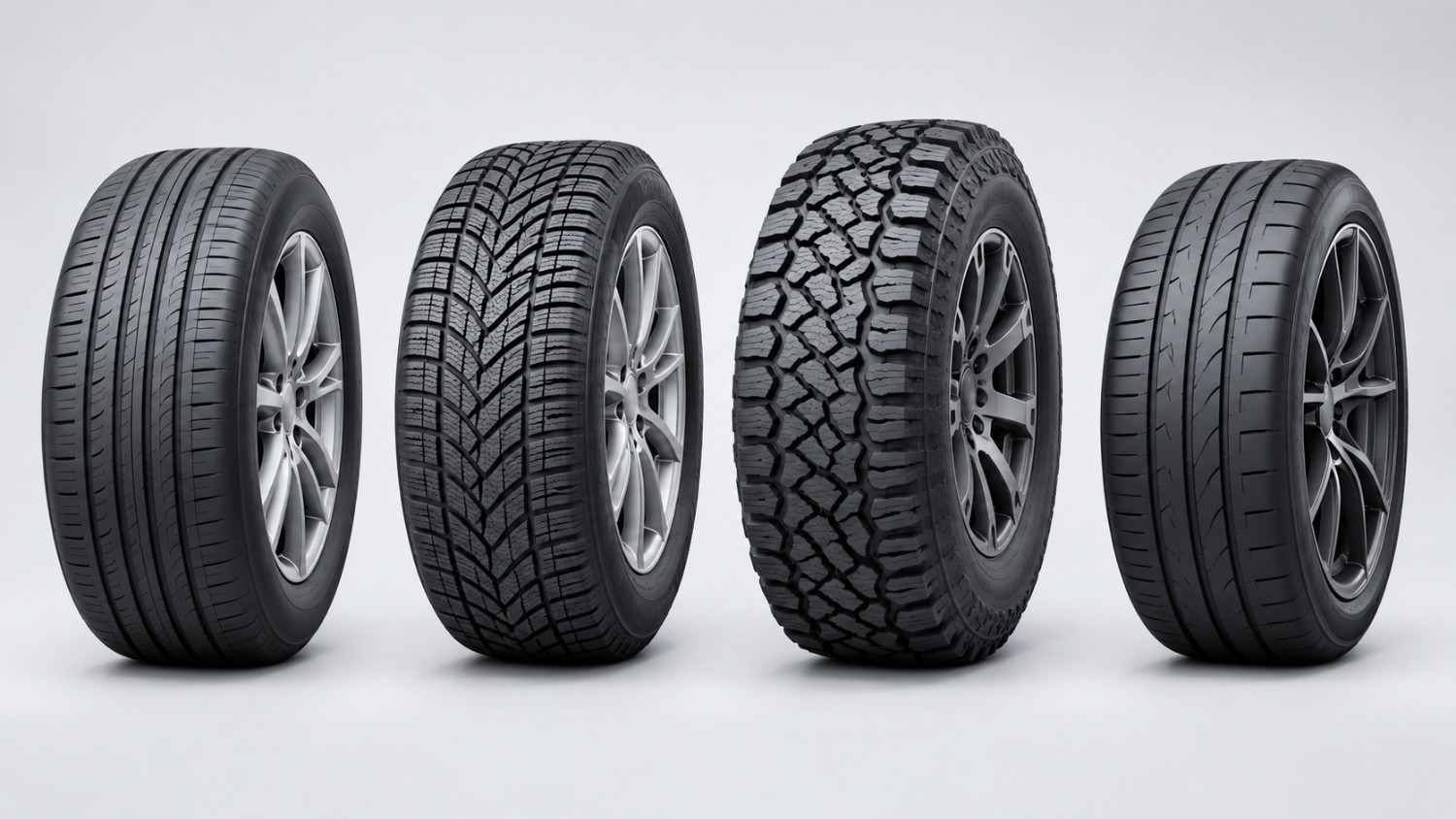
The table below compares the models drivers shop most often. Warranty figures reflect Goodyear’s published replacement-tire coverage; prices are typical U.S. retail ranges for common sizes and vary by size, retailer, and season.
| Model | Best For | Type | Treadwear Warranty | Typical Price |
|---|---|---|---|---|
| Assurance WeatherReady 2 | Snow-belt commuters, crossovers | All-weather (3PMSF) | 60,000 miles | $165–$255 |
| Assurance MaxLife | High-mileage commuters | All-season | 85,000 miles | $140–$230 |
| Assurance ComfortDrive | Quiet ride, luxury sedans | All-season touring | 60,000 miles | $160–$270 |
| Eagle Exhilarate | Sport sedans, enthusiasts | Ultra-high performance A/S | 45,000 miles | $185–$320 |
| Wrangler Steadfast HT | Daily-driven trucks & SUVs | Highway all-season | 70,000 miles | $170–$265 |
| Wrangler Territory AT | Mixed pavement + gravel | All-terrain | 60,000 miles | $180–$285 |
| Wrangler DuraTrac RT | Off-road, mud, job sites | Rugged terrain | 50,000 miles | $230–$390 |
| ElectricDrive 2 | EVs (Tesla, Ioniq, Mach-E) | EV-specific all-season | 50,000 miles | $210–$340 |
Matching tip: Warranty mileage is a proxy for compound hardness. An 85,000-mile tire lasts longer but grips slightly less at the limit; a 45,000-mile performance tire does the opposite. Drivers should choose based on how they actually drive, not on which number looks biggest.
Goodyear Tires Prices in 2026: What to Budget
Tire pricing is driven far more by size and load rating than by brand loyalty. A 16-inch sedan tire and a 20-inch truck tire from the same family can differ by $180 each.
| Vehicle Type | Common Size | Per Tire | Set of 4 Installed* |
|---|---|---|---|
| Compact car | 195/65R15 | $110–$155 | $540–$720 |
| Midsize sedan | 215/60R16 | $135–$195 | $640–$860 |
| Crossover / SUV | 235/60R18 | $175–$255 | $800–$1,120 |
| Half-ton pickup | 275/60R20 | $225–$340 | $1,000–$1,460 |
| Electric vehicle | 235/45R18 | $210–$310 | $940–$1,340 |
*Installed totals include typical mounting, balancing, valve stems, and disposal fees of roughly $25–$40 per tire.
How to Find Goodyear Tires for Sale at the Best Price
- Stack the rebate. Goodyear runs national rebate promotions several times a year — typically spring and late fall — often worth $80–$200 on a set of four, sometimes doubled on a branded credit card.
- Compare online before walking in. Independent retailers frequently price-match. Reviewing catalogs such as SimpleTire’s pricing and coupon codes gives a realistic baseline number to negotiate against.
- Check the big chains individually. Quotes vary by region — see current pricing at Discount Tire Direct, Firestone Complete Auto Care, and Pep Boys.
- Buy in the slow season. Late winter (February) and midsummer (July) usually bring the softest pricing.
- Ask what’s bundled. Free lifetime rotation, balancing, and road-hazard coverage can be worth $150+ over the tire’s life. Les Schwab is known for including several of these services.
Where to Buy Goodyear Tires Near Me
Goodyear distributes through four main channels, and each suits a different kind of buyer.
| Channel | Strength | Trade-off |
|---|---|---|
| Goodyear Auto Service / Just Tires | Full warranty support, factory rebates | Rarely the cheapest sticker price |
| National chains | Deep inventory, nationwide service | Upsell pressure on add-ons |
| Online retailers | Lowest unit pricing, easy comparison | Installation arranged separately |
| Independent local shops | Personal service, flexible labor rates | Limited stock on rare sizes |
Shoppers comparing local options can browse installers by region through the state-by-state tire shop directory, review the full tire brand library, or check available tire services such as rotation, alignment, and TPMS resets.
Shop owners: Independent tire businesses can be listed free in the directory through the business submission page.
How to Make Goodyear Tires Last Longer
Real-world owner reports on the Assurance line commonly describe even wear well past 30,000 miles when maintenance is kept up. The difference between hitting a warranty figure and falling 20,000 miles short usually comes down to five habits.
- Check pressure monthly, cold. Underinflation of just 6 PSI can raise rolling resistance measurably and accelerate shoulder wear. Use the placard value on the driver’s door jamb, never the maximum molded on the sidewall.
- Rotate every 5,000–7,500 miles. Front tires on a front-wheel-drive car carry both steering and drive loads, and can wear roughly twice as fast as the rears if left in place.
- Align after any hard impact. A pothole strike at 40 mph can knock toe out of spec and scrub away thousands of miles of tread in a single season.
- Use the built-in wear gauge. WeatherReady models include a visual indicator that makes tread depth easy to monitor without tools.
- Replace at 4/32″, not 2/32″. Wet stopping distance degrades sharply below 4/32″ of tread, long before a tire is legally bald.
Example: A commuter in Denver running Assurance WeatherReady 2 tires on a Subaru Outback, rotating every 6,000 miles and checking pressure monthly, can reasonably expect to reach the full 60,000-mile warranty window. The same driver skipping rotations entirely often sees the front pair finished near 38,000 miles — an expensive difference of roughly $400.
Drivers wanting to keep sidewalls looking new between services can also review this tire care and maintenance blog for seasonal checklists.
Goodyear vs Michelin vs Bridgestone: A Fair Comparison
| Factor | Goodyear | Michelin | Bridgestone |
|---|---|---|---|
| Price | Premium, frequent rebates | Highest overall | Premium, similar to Goodyear |
| Treadlife | Very good (up to 85k) | Class-leading | Good |
| Winter capability | Excellent (WeatherReady) | Excellent (CrossClimate) | Good |
| Truck/off-road range | Strongest of the three | Limited | Strong |
| Availability | Excellent nationwide | Excellent | Very good |
Bottom line: Michelin usually wins on outright treadlife, Bridgestone on refinement in touring sizes, and Goodyear on truck breadth, winter-capable all-weather options, and rebate-adjusted value.
Frequently Asked Questions About Goodyear Tires
Are Goodyear tires good quality?
Yes. Goodyear is a premium tire brand with strong wet traction, competitive treadwear warranties ranging from 45,000 to 85,000 miles, and a wide service network. Quality varies by model, so matching the specific tire to driving conditions matters more than the brand name alone.
How much do Goodyear tires cost?
Most Goodyear tires cost between $110 and $340 per tire in 2026, depending on size and model. A typical installed set of four runs about $640 to $1,460 including mounting, balancing, and fees.
Where are Goodyear tires made?
Goodyear manufactures across dozens of plants in more than 20 countries, including several U.S. facilities in Ohio, Oklahoma, Kansas, North Carolina, and Virginia. The DOT code on the sidewall identifies the exact plant and production week of any individual tire.
How long do Goodyear tires last?
Most Goodyear tires last between 45,000 and 85,000 miles depending on the model, with Assurance MaxLife at the top of that range. Regardless of tread depth, tires should generally be replaced after six to ten years due to rubber aging.
Which Goodyear tire is best for snow?
The Assurance WeatherReady 2 is Goodyear’s strongest year-round choice for winter conditions. It carries the Three-Peak Mountain Snowflake rating for severe snow service, making it a practical alternative to seasonal tire swaps in moderate snow regions. For severe winters, dedicated winter tires such as the Ultra Grip line still perform better.
Final Thoughts: Are Goodyear Tires the Right Choice?
Goodyear has earned its place in the premium tier through more than a century of engineering — not marketing alone. For most American drivers, the brand delivers a dependable balance of safety, longevity, and nationwide support at a price that becomes genuinely competitive once seasonal rebates are applied.
The real decision is not whether to buy Goodyear, but which Goodyear to buy:
- Long commute, mild climate → Assurance MaxLife
- Snow and rain year-round → Assurance WeatherReady 2
- Truck used for work and towing → Wrangler Steadfast HT or Territory AT
- Serious off-road use → Wrangler DuraTrac RT
- Spirited driving → Eagle Exhilarate
- Electric vehicle → ElectricDrive 2
Before buying, drivers should confirm the correct size on the door placard, compare at least three local quotes, ask what services are bundled, and check whether an active rebate is running. That short routine routinely saves $150 or more per set — and puts the right rubber under the car.
Ready to compare tire shops in your area?
Find Tire Shops Near You →Further reading from official sources: the Goodyear official tire catalog, tire safety and maintenance guidance from NHTSA, and industry data from the U.S. Tire Manufacturers Association.
About the Author
MUHAMMAD NASEEM
Muhammad Naseem is an SEO strategist and content specialist with hands-on experience in search optimization, AI-assisted content systems, and digital marketing. He focuses on building topically authoritative, E-E-A-T-aligned content for automotive and local-service brands, helping publishers earn durable organic visibility through research-driven writing rather than shortcuts.
Last Updated: | Reviewed for accuracy against manufacturer-published specifications.