Tire Near Me Hub • Tire Technology Guide
Run Flat Tires: What They Are, How They Work, Costs & Whether They’re Worth It (2026 Guide)
Everything drivers need to know about run flat tires — from BMW factory fitments to Bridgestone, Michelin, Pirelli, Continental, and Goodyear options.
Quick Answer
Run flat tires are tires built with reinforced sidewalls that let a vehicle keep driving — usually up to 50 miles at 50 mph — after a puncture, so drivers can reach a repair shop instead of changing a tire on the roadside.
Anyone who has ever felt a tire go soft on a highway shoulder at night knows the feeling of dread that follows. Run flat tires exist to remove that moment of panic. They’re standard equipment on many BMW, Mini, and Mercedes-Benz models, and they’ve quietly become one of the most searched tire topics for drivers who are shopping for replacements or trying to understand a warning light on the dashboard.
This guide breaks down what run flat tires actually are, how the technology works, what they cost, which brands make them, and — most importantly — whether they’re worth choosing for a daily driver.
In This Guide
What Are Run Flat Tires?
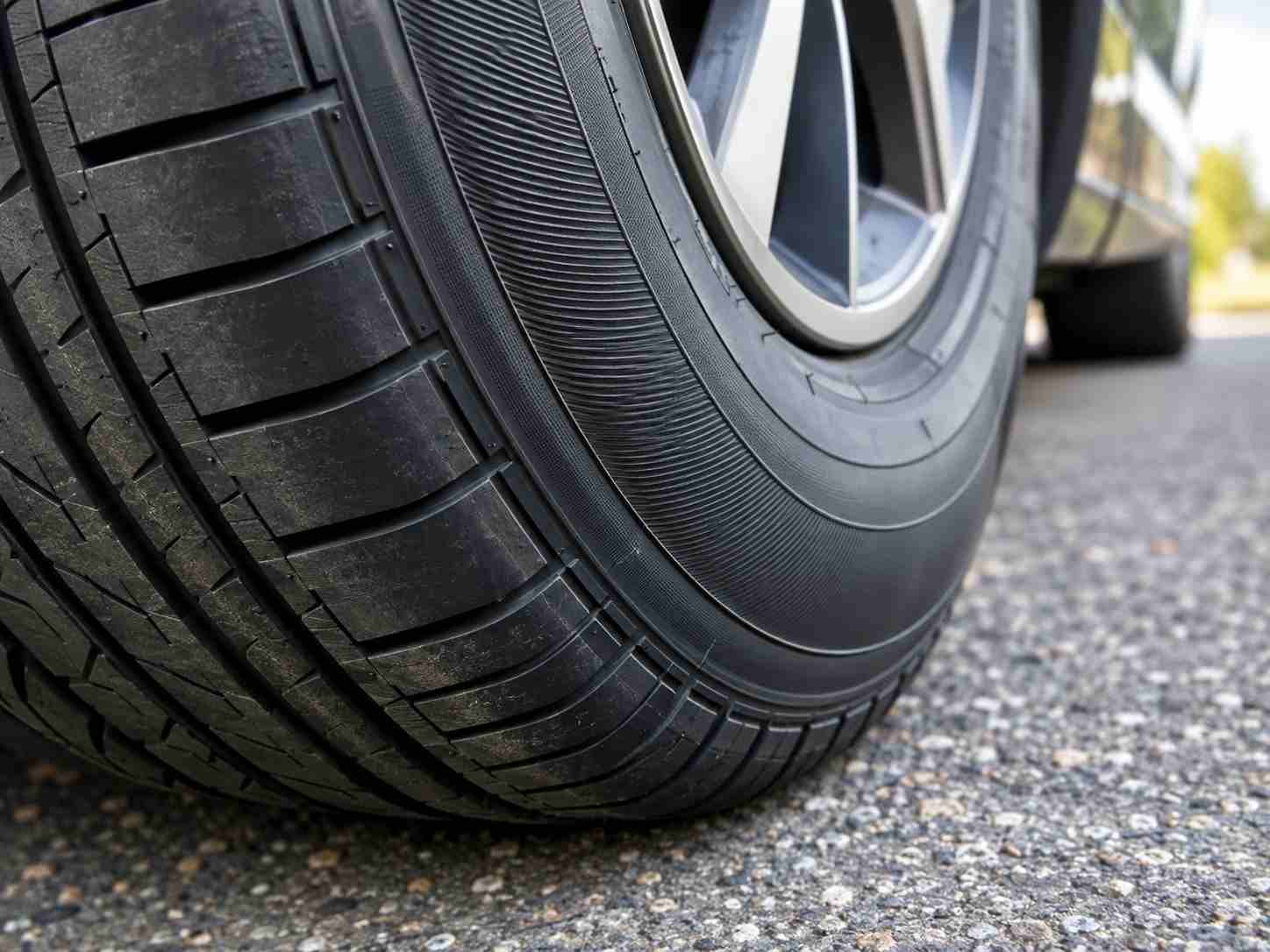
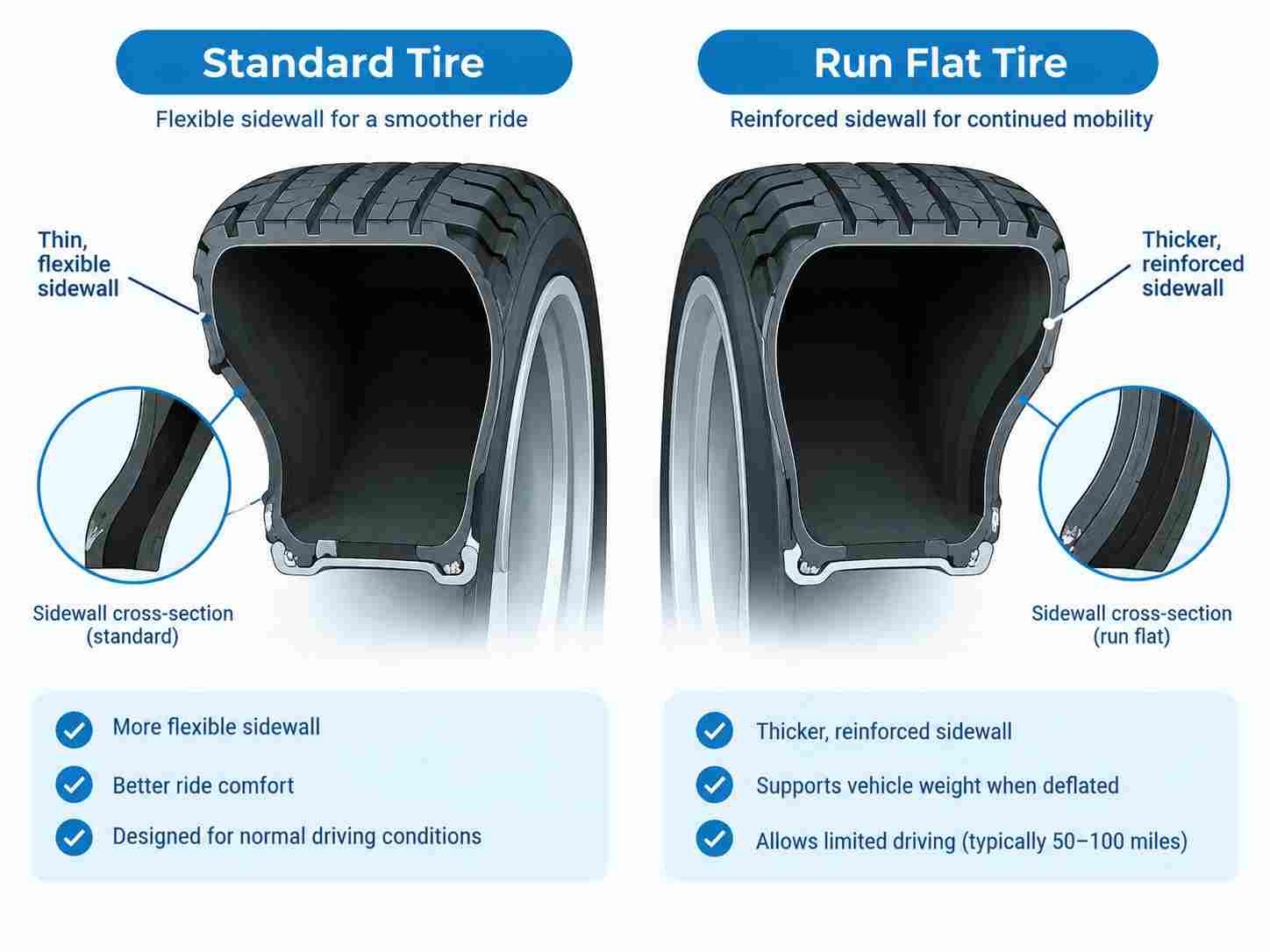
A run flat tire is a tire engineered to support the weight of a vehicle for a limited distance even after it loses all air pressure. Unlike a standard tire, which collapses and can shred within a mile or two of a puncture, a run flat tire’s stiffened sidewall structure keeps its shape long enough for the driver to get off the road safely.
The concept isn’t new — self-supporting run flat designs have existed since the 1930s in various forms — but they became mainstream once German automakers, especially BMW, began fitting them as factory-standard equipment to remove the spare tire and save weight and trunk space.
Run Flat Tires Meaning, In Simple Terms
In plain language, “run flat” means the tire can keep running (rolling and supporting the car) even when it’s flat. It does not mean the tire is immune to punctures — it simply buys time and distance after one happens.
How Do Run Flat Tires Work?
Most run flat tires on the market today use one of two core technologies:
1. Self-Supporting Sidewalls
This is the most common design. The tire’s sidewall is built with extra-thick, heat-resistant rubber compounds and reinforced internal structures. When air pressure drops to zero, the stiffened sidewall itself carries the vehicle’s weight instead of the air inside the tire.
2. Support-Ring Systems
Some manufacturers use a rigid ring mounted on the wheel inside the tire. If the tire deflates, the ring supports the tire’s structure and the vehicle’s load, similar in principle to a run flat “insert.”
The Role of the Tire Pressure Monitoring System (TPMS)
Because run flat tires can look and feel almost normal even when deflated, nearly every vehicle equipped with them also requires a functioning TPMS. Without a dashboard alert, a driver could unknowingly drive on a flat run flat tire well past its safe distance limit and cause permanent, unrepairable damage.
Good to Know
Most run flat tires are rated to travel roughly 50 miles at speeds up to 50 mph after losing pressure — but this varies by brand and model, so it’s always worth checking the tire’s exact rating.
BMW Run Flat Tires
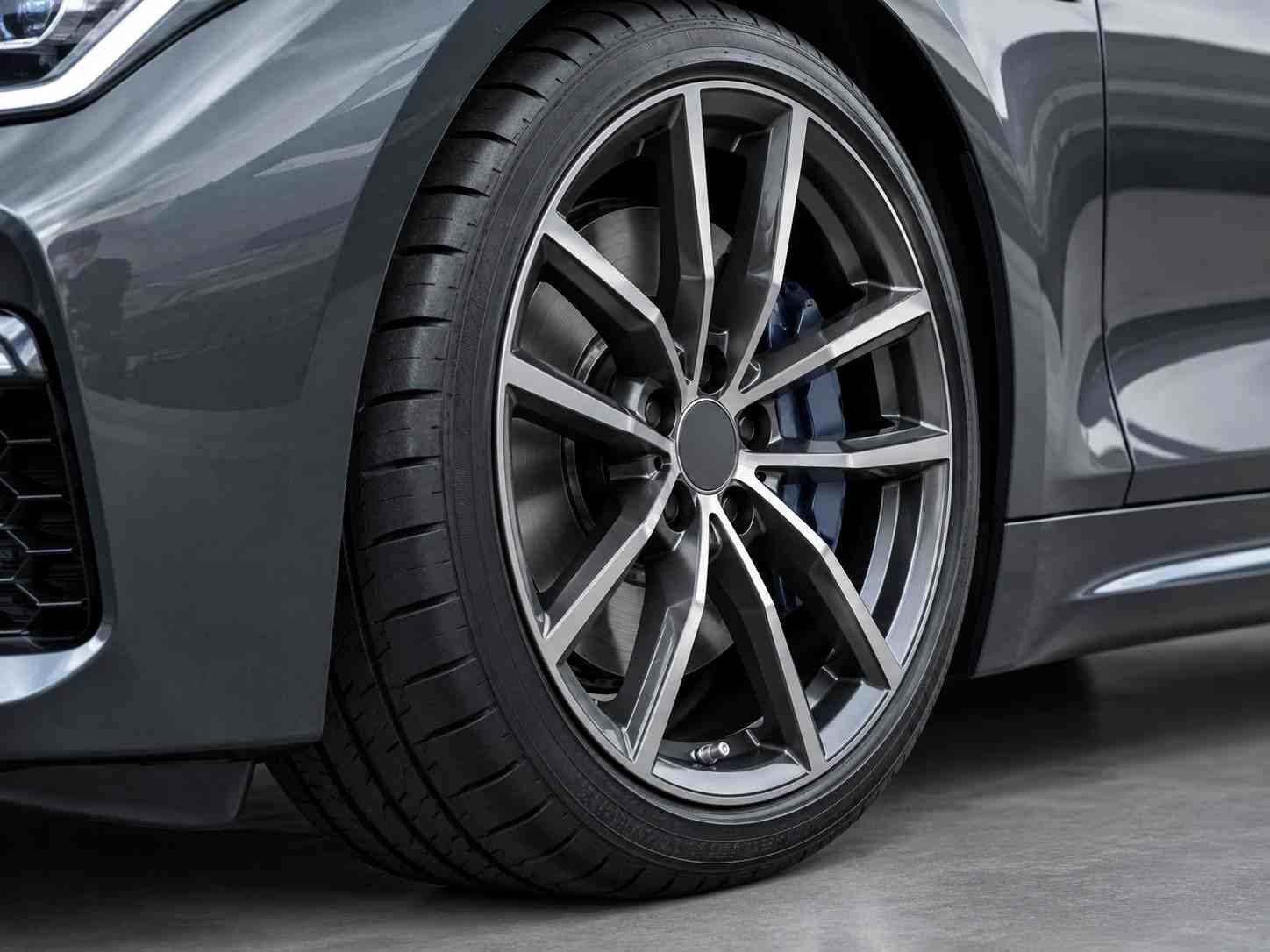
BMW is the automaker most closely associated with run flat technology. Since the mid-2000s, the majority of BMW models — including the 3 Series, 5 Series, and X-series SUVs — have shipped from the factory without a spare tire, relying entirely on run flats instead.
This design choice reduces vehicle weight and frees up trunk space, but it also means BMW owners typically have no spare tire option at all, making the condition of their run flats especially important. When shopping for BMW run flat tires, drivers usually look for OE (original equipment) markings such as a star (BMW), asterisk, or “RSC” designation, which confirms the tire is approved for that specific BMW model.
Top Run Flat Tire Brands Compared
Several major manufacturers produce run flat tires, each with its own branded technology. Here’s how the leading options compare:
| Brand | Technology Name | Best Known For | Common Fitment |
|---|---|---|---|
| Bridgestone | DriveGuard | Comfortable ride quality for a run flat | Sedans, crossovers |
| Michelin | ZP (Zero Pressure) | Long tread life, quiet highway ride | BMW, Mini, Mercedes |
| Pirelli | RFT / Seal Inside | Sporty handling, European luxury OE fitment | BMW, Audi, Mercedes |
| Continental | SSR (Self-Supporting Runflat) | Balanced comfort and durability | BMW, Mini |
| Goodyear | ROF (Run-On-Flat) | Wide availability, competitive pricing | Domestic and European sedans |
Looking for a full brand breakdown? See our Goodyear tires buying guide for pricing and model-specific recommendations.
Run Flat Tire Cost
Run flat tires typically cost more than comparable standard tires because of their reinforced construction. On average, drivers can expect to pay:
| Tire Category | Price Range (Per Tire) |
|---|---|
| Economy run flat | $130 – $190 |
| Mid-range run flat (Bridgestone, Goodyear) | $190 – $280 |
| Premium OE run flat (Michelin, Pirelli, Continental) | $280 – $450+ |
On top of the tire price, installation, mounting, and balancing typically add $20–$40 per tire at most shops. Because run flats generally can’t be repaired (see below), many owners find their overall tire costs run 20–40% higher over the life of a vehicle compared to standard tires with a repairable design.
For general repair cost comparisons, check our flat tire repair cost guide.
Can Run Flat Tires Be Repaired or Patched?
This is one of the most searched questions about run flat tires, and the honest answer is: usually not. Most tire manufacturers and the U.S. Tire Manufacturers Association recommend against patching or plugging a run flat tire, for a few reasons:
- Driving on a deflated run flat — even briefly — can cause internal sidewall damage that isn’t visible from the outside.
- The reinforced sidewall structure that makes the tire “self-supporting” can be compromised by a patch, creating an unpredictable failure point.
- Many manufacturers void the tire’s warranty if it’s patched after being driven flat.
Some shops will repair a very minor tread-area puncture on a run flat tire that was caught immediately and never actually driven on while flat, but this is the exception rather than the rule. In most real-world cases, a punctured run flat tire needs to be replaced entirely.
Pros and Cons: Are Run Flat Tires Worth It?
Advantages
- No roadside tire change needed after most punctures
- No spare tire means more trunk space and less weight
- Improved stability during a sudden blowout at speed
- Peace of mind on long highway drives or remote roads
Drawbacks
- Higher upfront cost than standard tires
- Usually cannot be repaired after a flat
- Stiffer sidewalls can mean a firmer, less cushioned ride
- Fewer size and brand choices than conventional tires
For drivers who prioritize convenience and safety after a puncture — especially those without a spare or without confidence changing a tire themselves — run flats are a strong choice. For drivers focused on minimizing long-term tire costs and ride comfort, standard tires paired with roadside assistance may be the more practical option.
Frequently Asked Questions
What does “run flat tires” mean?
It means the tire is engineered to keep supporting the vehicle for a limited distance after losing all air pressure, thanks to a reinforced sidewall or internal support ring.
How far can you drive on a run flat tire?
Most run flat tires are rated for roughly 50 miles at speeds up to 50 mph after a puncture, though the exact limit varies by brand and model.
Can run flat tires be patched?
Generally no. Most manufacturers advise against patching a run flat tire once it’s been driven while deflated, since the sidewall may have hidden internal damage.
Are run flat tires worth it for everyday driving?
They’re worth it for drivers who value convenience and safety after a flat, but they come with a higher price tag and firmer ride compared to standard tires.
Do all BMW models come with run flat tires?
Most modern BMW models are equipped with run flat tires from the factory and do not include a spare tire, though some older or specialty models may differ.
Related Guides on Tire Near Me Hub
- Flat Tire Repair Cost Guide
- Goodyear Tires: Full Buying Guide
- Tire Speed Rating Chart Explained
- How to Use a Tire Tread Depth Gauge
- Finding Reliable Used Tires Near You
- Discount Tire Direct Review
- Firestone Complete Auto Care Guide
- Browse Tire Services Near You
- Explore All Tire Brands
Conclusion
Run flat tires solve a real problem: the vulnerability of being stranded after a puncture with no safe way to pull over and change a tire. They’re standard on many BMW, Mini, and Mercedes models, offered by every major tire manufacturer from Michelin to Goodyear, and built to keep a car moving for roughly 50 miles after a flat.
That safety and convenience comes at a cost — higher purchase prices, a firmer ride, and tires that usually can’t be patched once they’ve been driven flat. For drivers who want peace of mind and don’t mind paying a premium, run flat tires are a smart investment. For those focused on long-term cost and ride comfort, a quality standard tire paired with a reliable roadside plan may be the better fit.
Whichever route a driver chooses, comparing tire options at a trusted local shop remains the best way to find the right fit for a specific vehicle and driving style. Explore the full tire brand directory on Tire Near Me Hub to compare more options.
Written by Muhammad Naseem
Muhammad Naseem is an SEO strategist and content writer specializing in SEO, AI, and digital marketing, with a focus on producing well-researched, helpful automotive and tire content for drivers. Connect on LinkedIn.
Last Updated: September 20, 2026