Tire Safety Guide
How Long Can You Drive on a Spare Tire? (Mileage & Speed Limits Explained)
A complete, expert-reviewed guide covering donut spares vs. full-size spares, safe mileage, top speeds, and what happens if you push a spare tire too far.

Picture this: you’re halfway through your commute when you feel that dreaded thump-thump-thump under the car. A flat tire. You pull over, swap in your spare, and get back on the road — but a nagging question follows you the rest of the drive: how long can you drive on a spare tire before it becomes dangerous?
The short answer is that a compact “donut” spare is designed for roughly 50 to 70 miles at a maximum speed of 50 mph, while a full-size matching spare can usually be driven like a normal tire for much longer. But the real answer depends on the type of spare you have, its condition, and how it’s used. This guide breaks it all down so you can get back on the road safely and know exactly when to replace your spare with a proper tire.
Quick Answer: Most donut spare tires are rated for about 50–70 miles at speeds under 50 mph. Full-size spares can typically be driven for hundreds of miles, similar to a regular tire — but always check your owner’s manual first.
Types of Spare Tires
Before figuring out how long you can drive on a spare tire, it helps to know which kind is sitting in your trunk. Not all spares are created equal, and the answer to “how long” changes dramatically depending on the type.
1. Donut (Compact/Temporary) Spare
This is the small, narrow tire found in most modern sedans and hatchbacks. It’s lighter and cheaper than a full-size tire, which saves fuel and trunk space — but it’s built strictly for short-term, low-speed use.
2. Full-Size Matching Spare
Common on trucks, SUVs, and some older sedans, this spare is the same size as your regular tires. Some drivers even rotate it into regular use. It behaves much closer to a standard tire and isn’t nearly as restricted.
3. Run-Flat Tires
Many newer vehicles skip the spare entirely and use run-flat tires, which are reinforced to handle a puncture for a limited distance (usually up to 50 miles) at reduced speed — without ever needing a swap.
4. Tire Inflator/Repair Kits
Some automakers replace the spare altogether with a sealant-and-compressor kit. These only work for small punctures in the tread and aren’t a substitute for an actual spare when the sidewall is damaged.
How Far Can You Drive on a Donut Spare Tire?
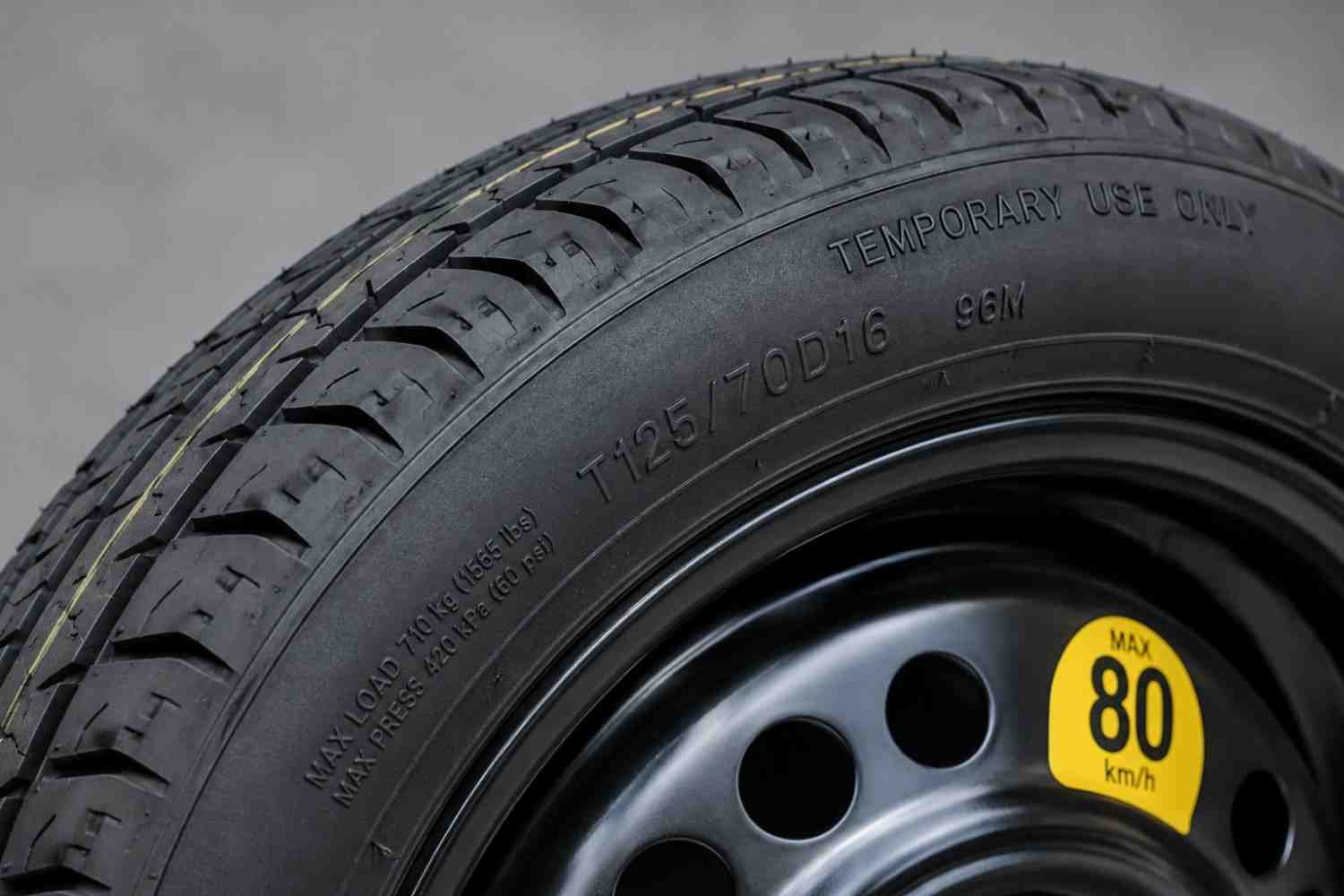
As a general rule, a donut spare is engineered for 50 to 70 miles of total driving. This number comes from tire manufacturers and is usually printed directly on the sidewall of the spare itself, alongside its speed rating.
Donut spares are made with less rubber, a shallower tread, and a smaller diameter than your regular tires. That means they wear out faster, generate more heat, and offer less grip — especially in rain or on uneven roads. Driving 200 miles on a donut, for example, is strongly discouraged by nearly every tire manufacturer and roadside safety organization.
- Most owner’s manuals cap donut spare use at 50 miles.
- Some manufacturers extend this to 70 miles under normal conditions.
- A handful of vehicles (per some driver reports) allow up to 3,000 miles at reduced speed — but this is the exception, not the rule, so always confirm with your manual.
How Long Does a Full-Size Spare Tire Last?
If your vehicle came with a full-size matching spare, you’re in a much better position. These tires can generally be driven the same way as any regular tire — for hundreds or even thousands of miles — as long as the tire itself is in good condition and properly inflated.
The bigger concern with full-size spares isn’t mileage; it’s age. A spare tire that’s been sitting unused in your trunk for years can develop dry rot, even if the tread looks fine. Most tire experts recommend replacing any spare — used or not — after 7 to 10 years from its manufacture date, which you can find printed on the sidewall (a four-digit code showing the week and year it was made).
Spare Tire Comparison Table

| Spare Type | Max Mileage | Max Speed | Best For |
|---|---|---|---|
| Donut (Compact) Spare | 50–70 miles | 50 mph | Getting to the nearest tire shop |
| Full-Size Matching Spare | Similar to a regular tire | Normal driving speeds | Longer trips, everyday driving |
| Run-Flat Tire | Up to 50 miles after puncture | 50 mph | Reaching a repair shop without a swap |
| Sealant/Repair Kit | Temporary fix only | Reduced speed | Minor tread punctures only |
Figures are general industry guidelines. Always check your vehicle owner’s manual and the sidewall of your specific spare for exact ratings.
Safe Speed Limits for Driving on a Spare Tire
Mileage isn’t the only limit — speed matters just as much, if not more. Donut spares are typically rated for no more than 50 mph. Some manuals allow up to 55 mph, but 50 mph is the safest general rule.
Here’s why speed matters so much on a spare:
- Heat buildup: Smaller tires flex more and generate more friction heat, raising blowout risk.
- Reduced traction: Shallower tread means longer stopping distances, especially in rain.
- Handling differences: A donut’s smaller diameter can affect steering response and stability at higher speeds.
- Drivetrain stress: On all-wheel-drive vehicles, mismatched tire diameters can strain the differential.
Safety Tip: Avoid highways when possible while on a donut spare. If you must merge onto one, stay in the right lane and keep well below the posted speed limit.
What Happens If You Drive Too Far or Too Fast on a Spare?
Ignoring the mileage and speed limits on a donut spare doesn’t just risk the tire itself — it can lead to a cascade of expensive problems:
- Tire blowout: Excess heat and stress can cause a sudden failure, especially at highway speeds.
- Wheel bearing or hub damage: Driving on a mismatched tire diameter for too long can wear other components unevenly.
- Transmission strain: On AWD vehicles, prolonged use of a spare can force the drivetrain to compensate for the size difference, potentially damaging the differential.
- Reduced control in emergencies: Shorter stopping distances and stability become critical exactly when you need them most.
For example, a driver who continues on a donut for 150–200 miles at highway speed is significantly increasing the odds of a blowout compared to someone who limits themselves to the recommended 50 miles at 50 mph.
Watch: Spare Tire Safety in 60 Seconds
Practical Tips for Driving Safely on a Spare Tire
- Check the spare’s PSI before use — donut spares typically need around 60 PSI, much higher than standard tires.
- Drive directly to the nearest tire shop rather than running errands first.
- Avoid sudden braking, sharp turns, and potholes while on a spare.
- If possible, mount the donut on the rear axle for better stability, unless your manual says otherwise.
- Replace the punctured tire — or install a matching full set if tread wear is uneven — as soon as possible.
- Inspect your spare’s manufacture date periodically; a spare that’s never been used can still expire from age.
Frequently Asked Questions
How long can you drive on a spare tire for?
A donut spare is generally good for about 50–70 miles at speeds up to 50 mph. A full-size matching spare can usually be driven much farther, similar to a regular tire.
How long can you drive on a spare tire donut specifically?
Donut spares are the most limited type — stick to roughly 50 miles and never exceed 50 mph to avoid overheating or a blowout.
Can I drive 40 miles a day for a week with a spare tire?
Not recommended. That would total around 280 miles, well beyond the 50–70 mile limit most donut spares are rated for. It’s safer to replace the tire within a day or two.
How long can you drive on a full-size spare tire?
A full-size spare that matches your regular tires can typically be driven for an extended period, much like a normal tire — though it’s still wise to replace it if you notice uneven wear or if it’s aged.
Is it safe to drive on the highway with a spare tire?
It’s best avoided with a donut spare, since staying under 50 mph usually isn’t practical on the highway. If you must, stay in the slowest lane and keep well under the posted limit.
Conclusion
So, how long can you drive on a spare tire? For most drivers with a donut spare, the safe window is about 50 to 70 miles at speeds under 50 mph — just enough to reach a nearby tire shop. Full-size matching spares are far more forgiving and can generally handle normal driving for much longer, provided the tire itself is in good condition.
Whatever type of spare you’re driving on, treat it as a temporary fix, not a permanent solution. Get your flat tire repaired or replaced as soon as possible, and check your spare’s pressure and age regularly so it’s ready when you actually need it.
Need a tire shop near you or want to compare tire brands and services? Explore our tire services, browse tires by state, or check out our tire brand guides on TireNearMeHub.
Related Resources on TireNearMeHub
- TireNearMeHub Home — find tire shops and services near you
- Tire Blog — more guides on tire care, safety, and maintenance
- Tire Services — repairs, replacements, and roadside help
- Tire Shops by State — locate trusted shops near you
- Tire Brands — compare top tire manufacturers
- List Your Tire Business — get your shop listed on TireNearMeHub