Blinking Tire Pressure Light: What It Means & How to Fix It
A complete 2026 guide to blinking TPMS lights on Toyota, Subaru, and other vehicles — causes, fixes, and when it’s safe to drive.
Last Updated: August 13, 2026 | Reading time: 9 minutes
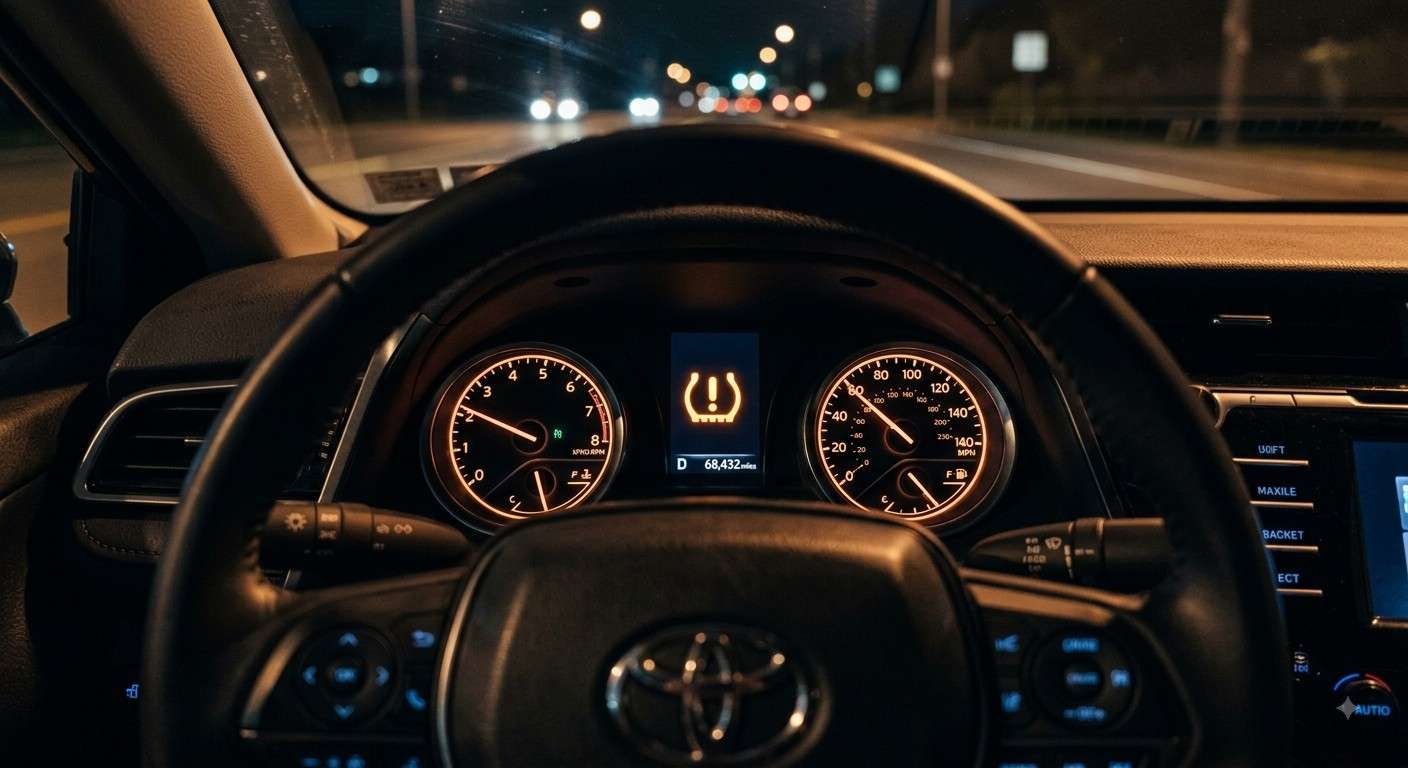
A blinking tire pressure light on the dashboard tends to catch drivers off guard, especially when it starts flashing right after starting the car. Unlike a steady tire pressure warning, which usually just means a tire is low, a blinking light often points to something happening inside the Tire Pressure Monitoring System (TPMS) itself.
This guide breaks down exactly what a blinking tire pressure light means, why it happens more often on certain Toyota and Subaru models, whether it’s safe to keep driving, and the fastest ways to get it fixed — without an unnecessary trip to the dealership.
What Does a Blinking Tire Pressure Light Mean?
Every vehicle built after 2007 in the U.S. is required to have a Tire Pressure Monitoring System, which watches air pressure in each tire using small sensors mounted inside the wheel. When something goes wrong with the system rather than the tires, the dashboard icon starts to blink instead of staying on solid.
In most vehicles, a blinking TPMS light for about 60 to 90 seconds after startup, followed by the light staying solid, is completely normal — it’s simply the system running a self-check. The real concern is when the light keeps blinking continuously while driving.
A continuously blinking light almost always signals one of these situations:
- A TPMS sensor battery has died (sensors typically last 5–10 years)
- A sensor isn’t communicating with the receiver
- The system needs to be “relearned” after a tire rotation or tire change
- A spare tire without a sensor is currently mounted
- The TPMS module itself has an internal fault
Blinking vs. Solid vs. Blinking-Then-Solid: Quick Comparison
| Light Behavior | What It Means | Action Needed |
|---|---|---|
| Solid, stays on | One or more tires are under-inflated | Check & add air to correct PSI |
| Blinks 60–90 sec, then solid or off | Normal startup self-check | None — this is normal |
| Blinks continuously while driving | TPMS system fault or dead sensor | Get sensors scanned/serviced soon |
| Blinks, then goes solid permanently | System detected a fault and switched to a fixed warning | Have TPMS diagnosed at a shop |
Common Causes of a Blinking Tire Pressure Light
1. Dead or Weak Sensor Battery
Each TPMS sensor has a small internal battery that isn’t replaceable on its own — once it dies, the whole sensor typically needs to be swapped. This is the single most common reason for a persistent blink on vehicles older than seven years.
2. Recent Tire Rotation or New Tires
After a tire rotation, the system may need to be manually “relearned” so it recognizes which sensor is in which position. Skipping this step is a very common cause of a blinking light right after a shop visit.
3. Spare Tire in Use
Most spare tires don’t have a TPMS sensor installed. Driving on the spare will almost always trigger a blinking light until the original tire is reinstalled.
4. Extreme Temperature Changes
Sudden cold snaps can cause tire pressure to drop enough to briefly confuse the sensors, particularly if a tire is already close to the low-pressure threshold.
5. Faulty TPMS Receiver Module
Less common, but the receiver unit that collects sensor signals can itself malfunction, especially after electrical work or a battery replacement.
Can You Drive With a Blinking Tire Pressure Light?
Short trips are generally fine, but it’s worth understanding what’s actually happening before continuing to drive for an extended period.
- If it’s just blinking on startup and then turns solid or off within 90 seconds — this is normal and safe.
- If it blinks continuously — the car is safe to drive short distances, but the TPMS isn’t actively monitoring tire pressure, so there’s no automatic warning if a tire actually starts losing air.
- Always physically check tire pressure with a gauge if the TPMS light is blinking, since the system may not be reliable in this state.
Driving with a malfunctioning TPMS isn’t illegal and won’t cause immediate mechanical damage, but it does remove a safety net that’s designed to catch slow leaks and blowout risks before they become dangerous.
How to Fix a Blinking Tire Pressure Light
Step 1: Check Actual Tire Pressure
Use a manual tire pressure gauge on all four tires, including the spare. Compare the readings to the PSI listed on the sticker inside the driver’s door jamb — not the number printed on the tire’s sidewall.
Step 2: Inflate or Deflate to the Correct PSI
Correct any tires that are over or under the recommended pressure. This alone resolves the issue in many cases.
Step 3: Drive at 50+ MPH for 10 Minutes
Many TPMS systems automatically reset once pressure is corrected and the car is driven steadily above 50 mph for about 10 minutes.
Step 4: Perform a Manual TPMS Reset
If the light is still blinking, most vehicles have a TPMS reset button (often located under the steering wheel) that can be held for a few seconds with the key in the “on” position until the light blinks three times.
Step 5: Get the Sensors Scanned
If none of the above works, a tire shop can use a TPMS scan tool to identify exactly which sensor is failing and whether it needs a battery, a full sensor replacement, or a relearn procedure.
Blinking Tire Pressure Light on Toyota Models
Toyota vehicles are especially prone to blinking TPMS lights after tire rotations, since Toyota’s system often requires a specific relearn sequence rather than resetting automatically.
| Model | Common Trigger | Typical Fix |
|---|---|---|
| Corolla | Tire rotation, cold weather | Correct PSI + hold TPMS reset button |
| Camry | Sensor battery age (7+ years) | Sensor replacement + relearn |
| RAV4 | New tire installation | Shop-performed TPMS relearn |
| Highlander | Spare tire in use | Reinstall sensor-equipped tire |
| 4Runner | Off-road pressure changes | Reset PSI to door-jamb spec |
| Sienna | Sensor communication error | Dealer TPMS diagnostic scan |
| Prius | Weak sensor battery | Sensor replacement |
On most modern Toyotas, holding the TPMS reset button (a small button typically located below the steering wheel, sometimes labeled with a tire icon) with the ignition on until the light blinks three times will initiate a reset once tire pressures are corrected.
Blinking Tire Pressure Light on Subaru Models
Subaru’s TPMS behaves a bit differently — on many Subaru models, the light blinks for about a minute after startup any time a door was opened while the car was off, which is completely normal. A continuous blink while driving typically points to:
- A sensor that lost communication after a tire change
- Low battery voltage in one of the wheel sensors
- A pressure reading well outside the normal range in one tire
Subaru owners can usually clear a false alarm by correcting tire pressure and driving for several miles; if the light stays on, the sensors typically need to be scanned with a dedicated TPMS tool, since Subaru doesn’t always support a simple manual relearn like some other brands.
What Does “Blinking Then Solid” Mean?
When the tire pressure light blinks for roughly a minute and then switches to a steady, unblinking light, the vehicle is telling the driver two things at once: the TPMS system found a fault during its check, and it has now settled into a standard low-pressure or malfunction warning. In this case, checking pressure manually and having the sensors scanned is the right next step, since the system has essentially flagged itself as unreliable until repaired.
Frequently Asked Questions
Can I drive with a blinking tire pressure light?
Yes, for short distances it’s generally safe, but the TPMS may not be actively monitoring pressure while it’s in this state, so tires should be checked manually and the issue addressed soon.
What does a blinking tire pressure light mean on a Toyota?
On Toyota vehicles, a continuous blink usually means the TPMS sensors need to be relearned after a tire rotation, or that a sensor battery has weakened and needs replacement.
How do you fix a blinking tire pressure light?
Correct all four tires (plus the spare) to the recommended PSI, drive above 50 mph for about 10 minutes, and use the TPMS reset button if the light hasn’t cleared. A shop scan is the next step if it persists.
Why is my Subaru’s tire pressure light blinking?
It’s often normal after the doors have been opened while parked, clearing within about a minute. A continuous blink while driving usually points to a sensor communication issue.
Does a blinking tire pressure light mean I need new tires?
Not necessarily. A blinking light points to a TPMS system issue rather than tire condition. Tread depth and tire age should be checked separately to determine if replacement is actually needed.
Conclusion
A blinking tire pressure light is the vehicle’s way of saying the monitoring system itself needs attention — not necessarily the tires. In most cases, it comes down to a weak sensor battery, a missed relearn after a tire rotation, or a spare tire without a sensor installed. Checking tire pressure manually, performing a reset, and getting the sensors scanned when needed will resolve the vast majority of cases quickly and affordably. Staying on top of it keeps the TPMS doing its real job: catching a dangerous slow leak before it becomes a roadside emergency.
Need a professional to check tire pressure sensors or handle a full tire service? Browse trusted tire services near you or explore tire brand guides on TireNearMeHub.
About the Author
Muhammad Naseem Shahadat Ali
Muhammad Naseem Shahadat Ali is an SEO strategist and digital marketing specialist with hands-on experience in content optimization, AI-assisted research, and technical SEO for automotive and local service websites. He focuses on creating accurate, helpful, search-optimized content that follows Google’s E-E-A-T and Helpful Content guidelines.
Connect on LinkedIn →