Why Is My Tire Pressure Light Blinking? (And How to Stop It)
A clear, step-by-step guide to what a flashing TPMS light really means and how to fix it — for Toyota, Honda, and every major brand.
A blinking tire pressure light on the dashboard tends to grab attention fast — and for good reason. Unlike a steady warning light, a flashing one usually points to something happening with the tire pressure monitoring system (TPMS) itself, not just low air. This guide breaks down exactly why the light blinks, what it means on different car brands, and the fastest way to get it to stop.
What a Blinking Tire Pressure Light Actually Means
The tire pressure light is part of the TPMS, a system required on nearly all vehicles sold in the U.S. since 2007. It uses small sensors inside each wheel to track air pressure and send that data to the car’s computer.
When that light blinks — often for 60 to 90 seconds after starting the car — it’s typically signaling a malfunction in the monitoring system itself, rather than a simple low-pressure reading. This could mean a sensor battery has died, a sensor isn’t communicating properly, or the system needs to be reset after a tire rotation or tire change.
Blinking vs. Solid TPMS Light — The Key Difference
Understanding this distinction saves a lot of guesswork at the gas station air pump.
| Light Behavior | What It Usually Means | What To Do |
|---|---|---|
| Solid, stays on | One or more tires are underinflated | Check pressure with a gauge and inflate to spec |
| Blinks for ~60-90 sec, then solid | System detected a fault, then confirms low pressure | Check pressure first; if fine, sensor issue likely |
| Blinks continuously, never stops | TPMS malfunction (sensor, battery, receiver) | Have the system scanned by a shop |
| Blinks only at startup, then off | Normal self-check cycle | No action needed |
Common Causes of a Blinking Tire Pressure Light
- Dead or dying TPMS sensor battery — sensor batteries typically last 5-10 years and aren’t replaceable individually.
- A tire was rotated, replaced, or repaired without relearning the sensor positions.
- Extreme temperature swings causing rapid pressure changes the system flags as a fault.
- A damaged or corroded sensor from a pothole hit or curb strike.
- Spare tire without a sensor currently mounted on the vehicle.
- Aftermarket wheels or tires installed without compatible sensors.
Why Is My Tire Pressure Light Blinking? (Toyota)
Toyota owners — especially Corolla, Camry, RAV4, and Highlander drivers — commonly see this light blink for about a minute after starting the car, even when tire pressure is perfectly fine. This is often just Toyota’s TPMS completing its warm-up self-check, particularly in colder weather when pressure temporarily reads low.
On many Toyota models, if the light blinks for roughly 60-90 seconds and then goes solid or turns off, it’s simply confirming pressure across all four tires. If it blinks continuously on every drive, that typically points to a sensor that needs replacement or a system reset after service work.
Toyota-Specific Notes
- Corolla and Camry: blinking often resolves after driving a few minutes once tires warm up.
- RAV4 and Highlander: check the spare — some trims include a sensor on the spare that can trigger a fault if damaged.
- 4Runner and Sienna: a recent tire rotation without a relearn procedure is a frequent trigger.
Why the Light Blinks, Then Turns Solid
This specific pattern is common and usually has a straightforward explanation. The TPMS blinks while running its diagnostic check across all four sensors. Once that check completes, if it confirms at least one tire is genuinely low, the light switches to solid to signal “check your tires now.”
In this case, the fix is simple: check and correct tire pressure on all four tires, plus the spare if it has a sensor, using the pressure listed on the driver’s door jamb sticker — not the number printed on the tire sidewall.
How to Fix a Blinking Tire Pressure Light
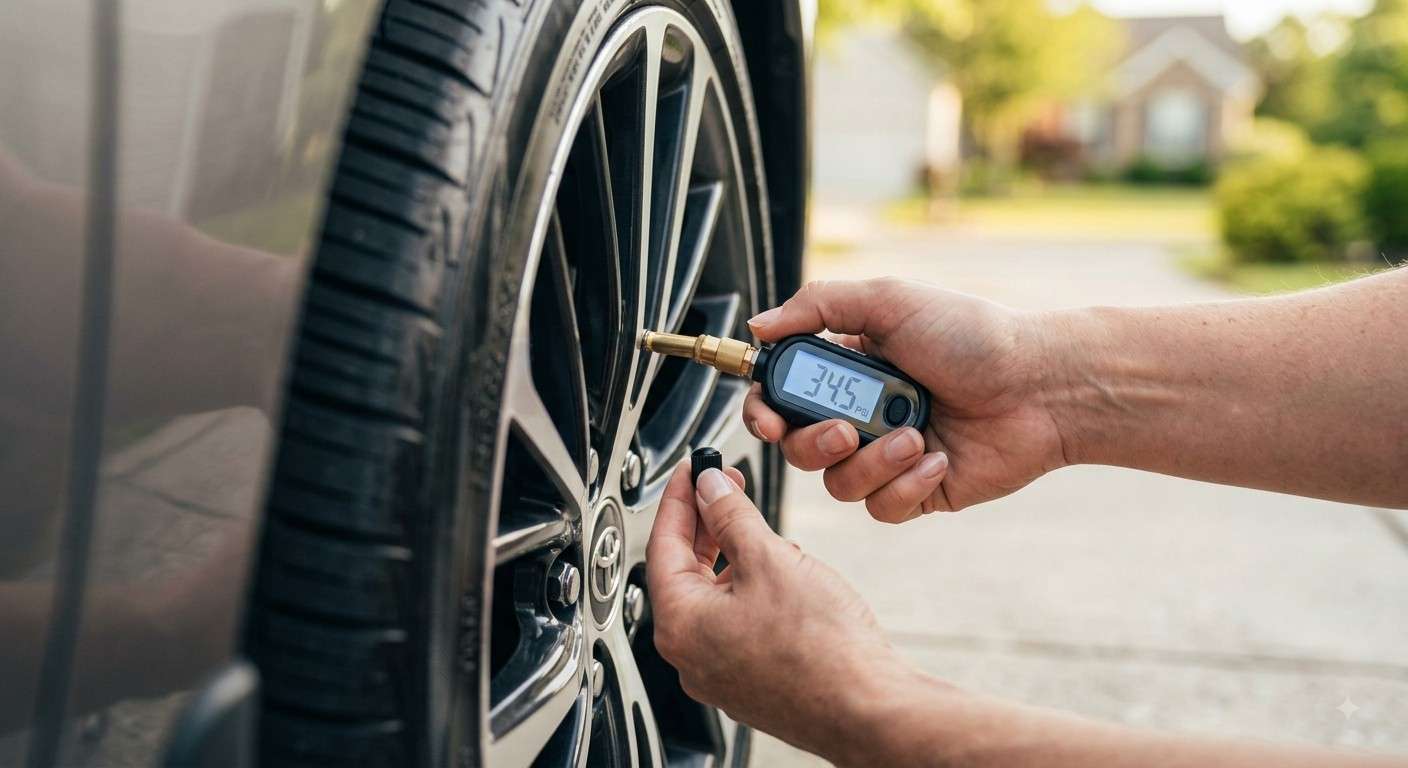
- Check actual tire pressure on all four tires with a reliable gauge, comparing to the door jamb sticker (not the tire sidewall).
- Inflate any low tires to the recommended PSI, including the spare if equipped with a sensor.
- Drive for 10-15 minutes at speeds above 15 mph — many systems need this to recalibrate automatically.
- Check for a TPMS reset button, usually located under the steering wheel, and hold it for a few seconds with the key in the “on” position.
- Inspect for sensor damage if the light keeps blinking after inflation and driving — a shop can scan each sensor’s battery and signal strength.
- Have sensors replaced if one or more are confirmed dead — typically a quick in-and-out service.
How to Reset the Light After Fixing the Issue
Once pressure is corrected, most vehicles need one of these three approaches:
| Method | How It Works | Best For |
|---|---|---|
| Drive reset | Drive 10-15 min above 15 mph | Most modern vehicles |
| Reset button | Hold TPMS button under steering wheel with ignition on | Toyota, Honda, Ford, many others |
| Menu reset | Navigate dashboard settings to TPMS reset option | Newer touchscreen-equipped models |
For a full brand-by-brand walkthrough with menu screenshots and button locations, see the internal guide on how to reset a tire pressure light below.
When a Blinking Light Means a Bigger Problem
Most causes are minor, but a blinking light deserves a shop visit if:
- It blinks continuously on every single drive, regardless of pressure checks.
- A tire is losing air repeatedly within days, suggesting a slow leak or puncture.
- The light appeared right after hitting a pothole or curb.
- It started after new tires or wheels were installed and never stopped.
A quick scan at a tire shop can confirm whether it’s a sensor battery, a signal issue, or something needing a full relearn procedure — usually a fast, low-cost fix.
Tire Blog Home How to Reset a Tire Pressure Light What the Tire Pressure Light Means Tire Pressure Sensor Fault Guide Service Tire Monitor System Guide How to Check Tire Pressure Best Tire Pressure Gauges Tire Services Find Tire Shops by State Tire Brands List Your Tire Shop
Frequently Asked Questions
Why is my tire pressure light blinking even after I filled the tires?
This usually means the system hasn’t recalibrated yet. Drive for 10-15 minutes above 15 mph, or use the TPMS reset button if the vehicle has one, since simply adding air doesn’t always clear the light instantly.
Why is my tire pressure light blinking on my Toyota specifically?
Toyota vehicles often blink the light for about a minute during a normal startup self-check, especially in cold weather. If it blinks on every drive without stopping, a sensor battery or a needed relearn after service is the more likely cause.
Why does my tire pressure light blink then turn solid?
The blink is the system running its diagnostic cycle across all sensors; once it confirms a tire is actually low, it switches to a solid light as a direct warning to check pressure.
Can a blinking tire pressure light mean a sensor is bad?
Yes. Continuous blinking that never resolves, even after correcting pressure and driving, commonly points to a dead sensor battery or a damaged sensor that needs replacement.
Is it safe to keep driving with a blinking tire pressure light?
It’s generally safe short-term, but tire pressure should be checked as soon as possible since the light can indicate either a real air-loss issue or reduced ability to detect one, both worth addressing quickly.
Conclusion
A blinking tire pressure light is rarely an emergency, but it’s not something to ignore either. In most cases, it points to a TPMS sensor issue, a needed reset after service, or a temporary self-check triggered by cold weather. Checking actual tire pressure first, driving a short distance to let the system recalibrate, and using the reset button when needed clears the light in the vast majority of cases. If it keeps blinking after all that, a quick sensor scan at a tire shop is the next step — and getting it read into the underlying cause now can prevent a bigger surprise on the road later.