How to Read Tire Date Codes: Find Your Tire’s Age in 30 Seconds
A simple, step-by-step guide to the DOT stamp, the four-digit week and year code, and when old tires need replacing.
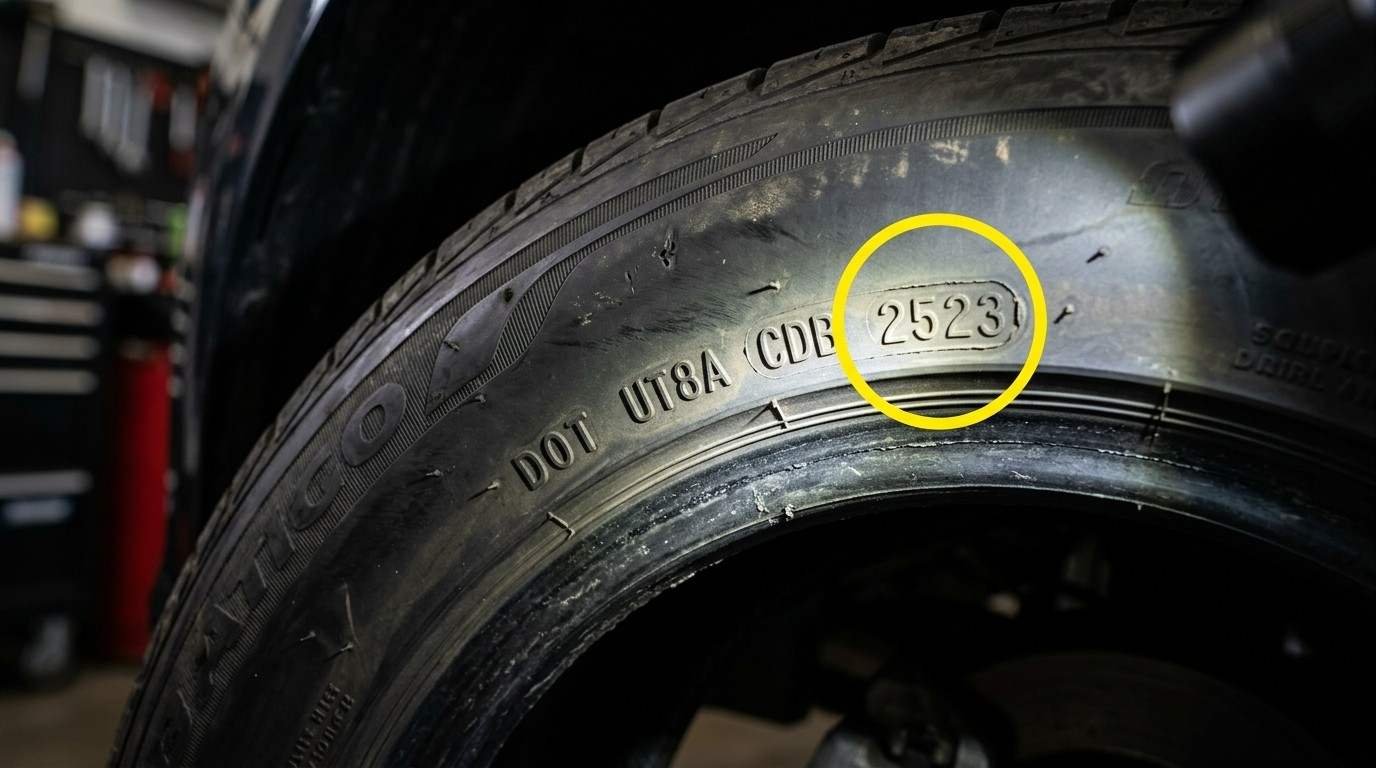
Most drivers check tread depth and air pressure. Far fewer check how old their tires are. Yet rubber ages whether a tire is driven or not, and a tire with deep tread can still be unsafe if it has been aging for a decade.
Knowing how to read tire date codes takes less than a minute. It helps when buying new or used tires, inspecting a used car, or deciding if the spare in the trunk is still trustworthy. This guide walks through the process with clear examples.
What Is a Tire Date Code?
A tire date code is part of the DOT (Department of Transportation) tire identification number molded into the sidewall. In the United States, tire makers are required to include this number so that tires can be traced if a safety recall happens.
The full DOT number is usually 11 to 13 characters after the letters “DOT”. It holds several pieces of information:
- Plant code: the first two characters show which factory made the tire.
- Tire size code: the next two characters identify the tire size.
- Manufacturer’s option: a few characters the brand uses for its own tracking.
- Date code: the last four digits, showing the week and year of manufacture.
Only the last part matters for tire age, which keeps the job simple.
Where to Find the Date Code on a Tire
Look for the DOT Stamp
Crouch beside the wheel and scan the sidewall for the letters DOT. The number follows right after. A flashlight helps, because the characters are molded in the same black rubber as the tire.
Check Both Sidewalls
Many tires show the full DOT number on only one side. The other side may show a shortened version with no date. If the outer sidewall has no four-digit date, the full code is likely on the inner sidewall, facing the car.
Where the Code Sits on a Spare
The spare is the most overlooked tire. It may be many years old with almost no wear. Pull it out and read the same DOT stamp. A spare made over ten years ago deserves replacement.
How to Read Tire Date Codes: Step by Step
Step 1: Find the Last Four Digits
Take the DOT number, for example DOT 7J3R 8Y2M 2521. Ignore everything except the final four digits: 2521.
Step 2: Split the Digits Into Two Pairs
- First two digits (25): week of the year
- Last two digits (21): year
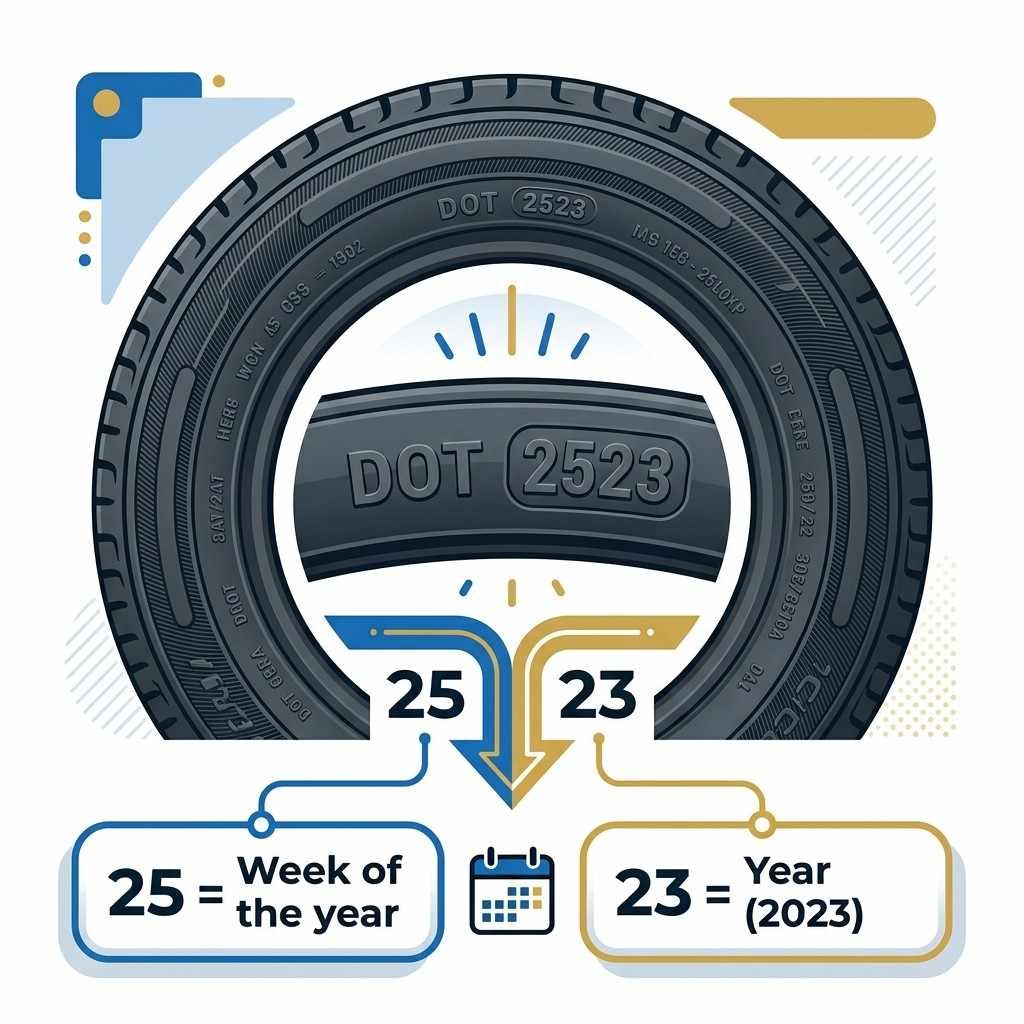
Step 3: Translate the Numbers
Week 25 of 2021 falls in mid-to-late June 2021. In this case, the tire was made in June 2021.
More Examples
| Date Code | Week | Year | Approximate Month |
|---|---|---|---|
| 0124 | 1 | 2024 | Early January 2024 |
| 2219 | 22 | 2019 | Late May 2019 |
| 3518 | 35 | 2018 | Late August 2018 |
| 4816 | 48 | 2016 | Late November 2016 |
| 5125 | 51 | 2025 | Mid-December 2025 |
Quick Mental Shortcut
Divide the week number by about four to estimate the month. Week 26 is roughly month six, so late June or early July.
How to Read Date Codes on Tires Made Before 2000
Before the year 2000, the date code had three digits rather than four. The first two digits are the week and the final digit is the year within the decade. A code of 329 means week 32 of a year ending in 9.
The decade is not stated, so 1989 and 1999 look identical. Many 1990s tires carry a small triangle (▲) after the code to mark that decade. Either way, a three-digit code means the tire is more than 25 years old. It belongs on a classic car display or in the recycling bin, not on a road.
| Feature | Modern Code (2000 onward) | Older Code (before 2000) |
|---|---|---|
| Number of digits | 4 | 3 |
| Format | WWYY | WWY |
| Decade clear? | Yes | No (triangle sometimes used) |
| Example | 1823 = week 18, 2023 | 189 = week 18, 1989 or 1999 |
How Old Is Too Old for a Tire?
Tire rubber slowly hardens and cracks as it ages. Heat, sunlight, ozone, and low driving frequency speed this up. Internal damage can also hide behind a tire that looks fine.
Guidance varies slightly by source:
- Many vehicle manufacturers recommend replacing tires at about six years, regardless of tread.
- Most tire manufacturers, including Michelin and Goodyear, advise that tires should not remain in service beyond ten years from the date of manufacture.
- The National Highway Traffic Safety Administration (NHTSA) advises that tire age matters as well as tread depth, and that drivers should check their tires regularly.
Always check the vehicle owner’s manual and the tire maker’s guidance for your specific tires.
A Simple Age Guide
| Tire Age | Status | What to Do |
|---|---|---|
| 0–3 years | Fresh | Maintain pressure and rotate on schedule |
| 4–5 years | Good, watch closely | Inspect every few months for cracks and bulges |
| 6–9 years | Aging | Get a professional inspection at least once a year |
| 10+ years | Replace | Replace, even if tread looks deep |
As of October 2026, any tire with a date code ending in 16 or earlier (for example, 4216) has reached or passed its tenth birthday.
Warning Signs That Matter More Than the Date
- Tiny cracks in the sidewall or between tread blocks
- Bulges, bubbles, or uneven bumps
- Tread worn to the 2/32-inch wear bars
- Vibration or pulling that appeared with no obvious cause
- Repeated air loss
If any of these appear, replace the tire at once, even if it is quite young.
Why Checking the Date Code Matters When Buying Tires
Buying New Tires
New does not always mean freshly made. A tire can sit in a warehouse for months or years. Ask to see the date code before the tires are mounted. A tire made within the last year or two is a safe target.
Buying Used Tires
Used tires often have good tread but unknown history. Check the date code first. A used tire six or more years old is rarely a bargain, however cheap.
Buying a Used Car
Matching, newer tires suggest a well-kept car. Four tires with different ages, or tires near ten years old, mean a replacement cost to factor into the price.
Matching Tires to Your Vehicle
Age is only one part of choosing tires. Size matters too. If you drive a pickup, our Tacoma tire size guide shows how to match the right fitment. For off-road builds, see our review of the Mickey Thompson Baja Boss A/T tire. You can also browse by maker on our tire brands page.
How to Help Your Tires Last Longer
You cannot stop rubber from aging, but good habits slow the process and keep tires safe up to their age limit.
- Check pressure monthly. Underinflation builds heat and wears tires faster. A portable unit such as the Milwaukee M18 tire inflator makes this quick.
- Rotate regularly. Even wear extends tire life. Read about free tire rotation offers and what tire rotation and balance cost.
- Park out of direct sun when possible. UV light dries out rubber.
- Keep tires clean. Remove road salt and chemicals, and avoid harsh solvent-based dressings.
- Store spares and seasonal tires properly, in a cool, dry, dark place, away from electric motors that produce ozone.
- Drive regularly. Tires on a car that sits for months can develop flat spots and dry out.
Need professional help? Browse tire services or find shops in your state.
Date Code vs. Other Sidewall Markings
The sidewall holds a lot of numbers. Here is how to tell them apart.
| Marking | Example | What It Tells You |
|---|---|---|
| Size | P225/65R17 | Width, aspect ratio, and wheel diameter |
| Load index and speed rating | 102H | Maximum load and speed capability |
| DOT date code | 2523 | Week 25 of 2023 |
| UTQG | Treadwear 600, A, A | Treadwear, traction, and temperature grades |
| M+S / 3PMSF | M+S or snowflake symbol | Mud and snow rating, or severe snow service |
Only the four digits at the end of the DOT stamp show the age. The rest describe construction and performance.
Visit the Tire Near Me Hub blog or find tire shops near you. Own a tire business? Submit it here.
Frequently Asked Questions
How do you read a tire date code?
Find the DOT stamp on the sidewall and read the last four digits. The first two are the week and the last two are the year. For example, 2523 means week 25 of 2023.
Where is the date code on a tire?
It is the last four digits of the DOT serial number on the sidewall. If the outer sidewall shows no date, check the inner sidewall.
How old is too old for a tire?
Many vehicle makers suggest replacement around six years, and most tire makers say tires should not stay in service beyond ten years, regardless of tread depth.
What does a three-digit tire date code mean?
It means the tire was made before 2000. The first two digits are the week and the last digit is the year in the decade. Such a tire is more than 25 years old and should not be used.
Are new tires sold with old date codes safe?
A tire a few years old that was stored well is not automatically unsafe, but fresher is better. Check the code before buying and ask for newer stock if it is older than you like.
Conclusion
Learning how to read tire date codes is one of the quickest safety checks a driver can do. Find the DOT stamp, read the last four digits, and treat the first two as the week and the last two as the year. A three-digit code means the tire predates 2000 and must go.
Remember the key points: check both sidewalls, inspect the spare, consider professional inspection from year six, and replace tires at ten years at the latest. Tread depth alone does not prove a tire is safe. Add a date-code check to every tire purchase and every used-car inspection, and you will avoid hidden risks and wasted money.
For more guides, explore the blog, compare options on the tire brands page, and see manufacturer guidance from Goodyear and Michelin.