AirMoto Tire Inflator Review: Is It Worth Buying in 2026?
By Muhammad Naseem · Last updated: · 9 min read
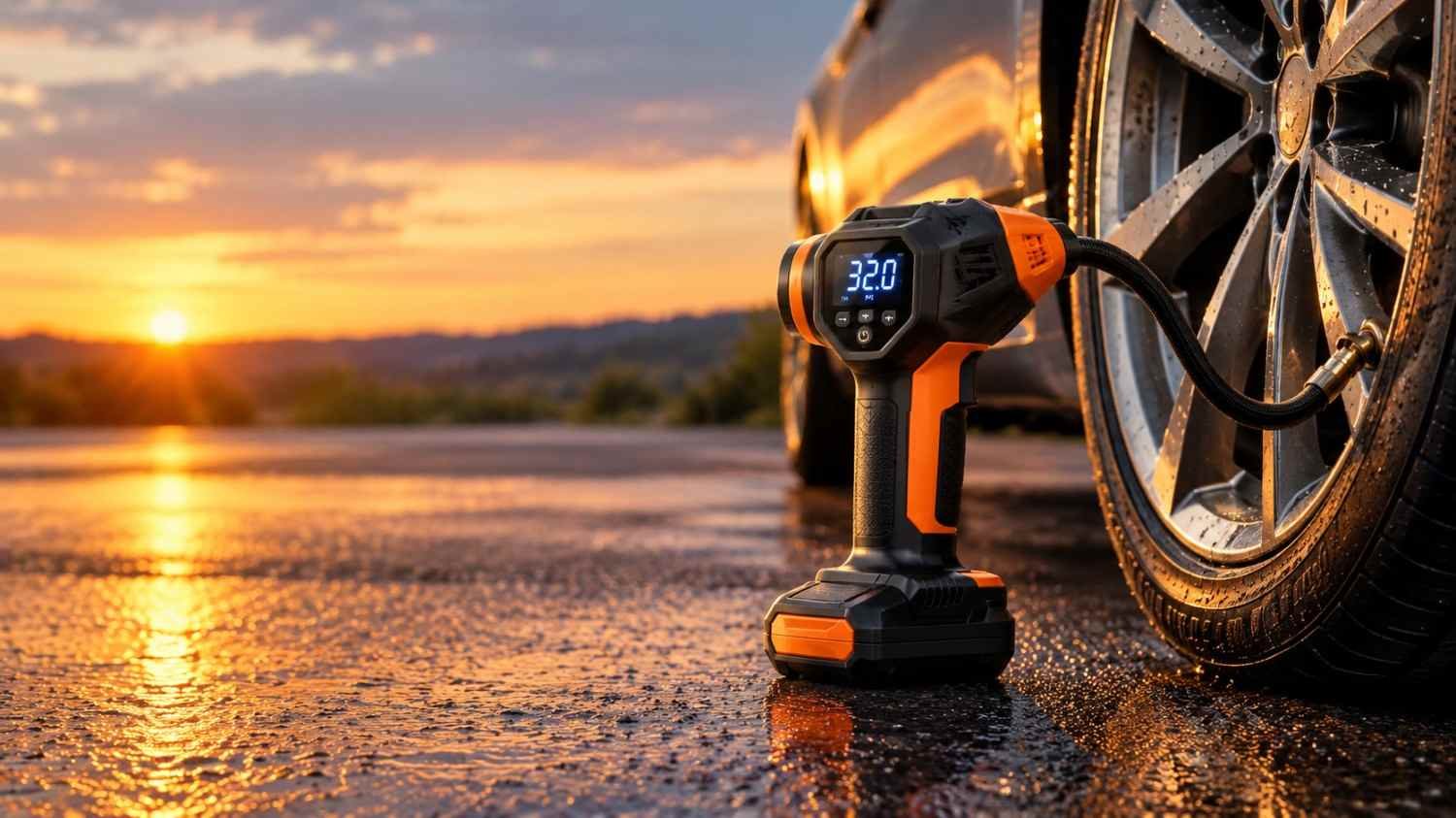
A flat or low tire never picks a convenient moment. That is why the AirMoto tire inflator, a small cordless pump that fits in a glove box, has become such a popular search. Drivers want to know one thing: does it actually work, or is it just good advertising?
This guide answers that honestly. It covers the advertised specs, how the AirMoto works, how to use it, what to do when it is not charging, where to buy it, and who should skip it. It also explains why so many AirMoto reviews online are hard to trust.
What Is the AirMoto Tire Inflator?
The AirMoto is a handheld, battery-powered air compressor. It is sold as a portable tire inflator with a digital pressure display, a built-in LED light and an automatic shut-off. You charge it by USB-C, attach a nozzle to the valve, set the target pressure and press start.
Because it is cordless, there is no need to find a power outlet or a gas-station air machine. That matters most at night, in bad weather or when a station charges for air or has a broken hose.
Most listings describe it as suitable for:
- Passenger car tires
- Motorcycle and scooter tires
- Bicycle tires, including higher-pressure road tires
- Sports balls, pool toys and other inflatables
AirMoto Tire Inflator Specifications at a Glance
The figures below are the ones the brand and common retailer listings advertise. Treat them as manufacturer claims rather than lab-tested results.
| Feature | Advertised detail |
|---|---|
| Maximum pressure | Up to 120 PSI |
| Battery | 2000 mAh rechargeable (about 7.2V) |
| Charging | USB-C; roughly 90 minutes to 2 hours on retailer listings |
| Weight | About 1.25 lb (0.57 kg) |
| Display | Digital pressure gauge with preset PSI |
| Extras | LED light, auto shut-off, nozzle adapters |
| Typical use | Car, motorcycle and bike tires, balls, inflatables |
Note that “120 PSI” is a maximum pressure. It says nothing about how fast the pump moves air. Speed depends on the motor, the battery and the tire volume.
How Does the AirMoto Tire Inflator Work?
Inside the housing, a small electric motor drives a piston that compresses air and pushes it through the hose into the tire. A pressure sensor feeds the digital display. When the sensor reads your preset value, the control board cuts power to the motor.
The three parts that matter
- Motor and piston: create the airflow. Small units work harder and heat up faster than large compressors.
- Pressure sensor and display: let you read the tire’s current pressure and set a target.
- Lithium battery: stores the energy. A 2000 mAh pack is compact but limits total runtime.
Why the preset function is useful
Setting a target PSI means you do not have to stand over the gauge. Pick the number from your car’s door-jamb sticker, press start and let the inflator stop itself. That reduces the risk of over-inflation.
How to Use the AirMoto Tire Inflator (Step by Step)
People often search “how to use an AirMoto tire inflator” in a hurry, usually beside a low tire. Here is the short version.
- Charge it first. Make sure the battery is charged before you need it. Leaving it dead in the glove box is the most common mistake.
- Find the correct pressure. Check the sticker on the driver’s door jamb or the owner’s manual. Do not use the number printed on the tire sidewall, which is the maximum, not the recommendation.
- Park safely and remove the valve cap. Keep the cap somewhere you will not lose it.
- Screw or clamp the nozzle onto the valve. A hissing sound means it is not seated properly.
- Set the target PSI. Use the buttons until the display shows the pressure you want.
- Press start. The motor runs until the target is reached, then stops.
- Remove the nozzle and refit the cap. Repeat for each tire that needs air, and recheck pressure with a separate gauge occasionally.
How to turn off the AirMoto tire inflator
Press the power button once to stop inflation. If you set a preset pressure, the unit also shuts off by itself when it reaches that value. Unplug the nozzle only after the motor has stopped.
AirMoto tire inflator manual
The manual or quick-start guide ships in the box. If you lose it, check the product page where you bought it, since button layouts can differ slightly between versions. Always follow the instructions that came with your unit.
Real-World Performance and Battery Life
This is where reviews diverge, and where buyers should be realistic.
What it does well
- Tops up a slightly soft car tire in a few minutes.
- Handles bike tires and balls easily, since they need little air volume.
- Fits in a glove box, backpack or motorcycle storage.
- Gives a quick readout, so it doubles as a basic pressure check.
Where it struggles
One independent comparison quoted a reviewer who needed about 22 minutes to bring a tire to 34 PSI before the battery ran out. Others reported the battery seemed to lose capacity over time. Results depend on starting pressure, tire size and temperature, so treat these as individual experiences rather than a rule.
Retailer listings suggest that a full charge can top up about four standard car tires from 28 to 35 PSI, and that one tire takes roughly 3 to 5 minutes. That is a fair estimate for small top-offs, not for inflating a fully flat tire.
Heat and duty cycle
Compact compressors heat up during long runs. If the unit feels very hot, pause and let it cool. This protects both the motor and the battery.
AirMoto Tire Inflator Pros and Cons
Pros
- Very compact and light
- Cordless, USB-C charging
- Digital display with preset PSI
- Auto shut-off helps prevent over-inflation
- LED light for night use
- Works for cars, bikes, motorcycles and balls
Cons
- 2000 mAh battery limits runtime
- Slow for large SUV or truck tires
- Some owners report battery wear over time
- Not suited to repeated full inflations
- Price and bundles vary widely by seller
- Many online “reviews” are promotional
AirMoto vs Other Portable Tire Inflator Types
Rather than chasing one brand, it helps to compare the categories. This makes it easier to pick the right tool for your situation.
| Type | Best for | Strength | Weakness |
|---|---|---|---|
| AirMoto-style compact cordless (2000 mAh) | Glove-box emergencies, top-offs, bikes, balls | Tiny, easy, no cables | Limited air per charge |
| Larger cordless (4000 mAh and up) | Multiple tires, light SUVs | More runtime, often higher max PSI | Bigger and usually costs more |
| 12V plug-in compressor | Frequent use, bigger tires | Runs as long as the engine does | Cord and a bulkier case |
| Gas-station air machine | Occasional full fills | Powerful and fast | May cost money, may be broken |
If you drive an SUV or truck, or you want one tool for the whole family’s vehicles, a larger battery or 12V model is worth considering. If you simply want peace of mind in a small car, the AirMoto’s size is its selling point.
AirMoto Tire Inflator Not Charging? Try These Fixes
Charging problems are one of the most searched issues. Work through this list before assuming the unit is faulty.
- Swap the cable. Cheap or damaged USB-C cables are a frequent culprit. Use the one supplied in the box if possible.
- Try another power source. Use a different wall adapter or a computer port.
- Clean the port. Dust and lint can block the connection. Switch the device off and gently clear it with a dry wooden toothpick.
- Let it cool. A hot battery may refuse to charge until it returns to room temperature.
- Charge longer. Allow at least 90 minutes to 2 hours.
- Contact the seller. If nothing works, ask about the warranty or return policy.
AirMoto Tire Inflator Price and Where to Buy It Safely
Pricing varies by seller, bundle and promotion. Older promotional pages quoted tiered multi-unit pricing, while current retail listings differ. Check the current price on the seller’s page rather than trusting any number in an article.
Where to buy
- Official AirMoto website: usually offers bundles and the brand’s own return terms.
- Large marketplaces: Amazon and Walmart list AirMoto inflators, which can be convenient if you want established returns.
Checklist before you pay
- Confirm the exact model name and the stated specs.
- Read the return and warranty policy.
- Prefer sellers with verifiable contact details.
- Be wary of countdown timers, “only today” claims and unusually low prices.
AirMoto tire inflator near me?
If you want to see a unit before buying, check local big-box stores or auto-parts retailers, since stock varies by area. If your tire needs more than a top-off, a professional can help. Use our tire shop open today guide to find one, or browse tire shops by state. Need a store with Sunday hours? See whether Walmart Tire Center is open on Sundays.
Can You Trust AirMoto Reviews? (Including “Consumer Reports”)
Many pages titled “AirMoto reviews” are press releases or affiliate pages written to sell. Common warning signs include identical wording across sites, no mention of drawbacks and urgent “buy now” language.
For a balanced view, look for:
- Verified-purchase feedback on retailer pages, including the 1 to 3 star ratings
- Owner discussions on forums, where people describe battery life and durability honestly
- Independent comparisons that name specific limits
Searchers also ask about “AirMoto tire inflator reviews Consumer Reports.” No dedicated Consumer Reports test turned up in the research for this article, so check their website directly for the latest information. One owner write-up on Reddit summed the product up as handy but not a powerhouse, which matches the pattern above.
Tire Pressure Tips That Save Money and Improve Safety
Whichever inflator you choose, correct pressure matters more than the tool.
- Safety: The U.S. National Highway Traffic Safety Administration notes that a tire pressure warning light usually comes on when pressure is 25% or more below the recommended level. See the NHTSA tire safety page for more.
- Fuel economy: The U.S. Department of Energy says keeping tires properly inflated can improve gas mileage by up to about 3%. Details are at fueleconomy.gov.
- Temperature: Tire pressure typically drops around 1 PSI for every 10°F fall in air temperature, so check more often as the weather cools.
- Monthly check: Measure all four tires, plus the spare, once a month.
Typical pressure ranges
| Vehicle or item | Common range (PSI) |
|---|---|
| Passenger cars | 30 to 35 |
| SUVs and light trucks | 35 to 45 |
| Mountain bikes | About 30 and up |
| Road bikes | Often 80 to 130 |
These are general ranges. Your vehicle’s door-jamb label is the authority.
When to see a professional instead
If a tire keeps losing air, wears unevenly or looks damaged, a shop visit is the right move. Browse trusted tire brands, compare tire services, or read about Big O Tires. Planning an upgrade for off-road use? Our Nitto Ridge Grappler tire guide covers a popular choice.
Who Should Buy the AirMoto Tire Inflator?
Good fit
- Commuters who want an emergency top-off tool
- Cyclists and motorcyclists who need a compact pump
- Parents inflating balls and toys
Look elsewhere
- Owners of large SUVs, vans or trucks
- Anyone inflating several tires from low pressure regularly
- Drivers who want a long-term workshop tool
AirMoto Tire Inflator FAQ
Is the AirMoto tire inflator worth buying?
It is a reasonable emergency and top-off tool for cars, bikes and balls. The small battery means it is not ideal for frequent heavy use or large tires.
How do I turn off the AirMoto tire inflator?
Press the power button once to stop it. If a preset PSI is set, it also stops automatically when it reaches that pressure.
Why is my AirMoto tire inflator not charging?
Try another USB-C cable and adapter, clean the port, let the unit cool and charge for at least 90 minutes. If the problem continues, contact the seller about the warranty.
Where can I buy an AirMoto tire inflator safely?
Use the official AirMoto website or a major retailer such as Amazon or Walmart, and check the return policy first.
How many PSI does the AirMoto tire inflator reach?
The manufacturer advertises up to 120 PSI, which covers most car, SUV, motorcycle and bicycle tires.
Conclusion: Is the AirMoto Tire Inflator Right for You?
The AirMoto tire inflator does what it promises in a narrow but useful way: it is a small, cordless, easy-to-use pump with a digital gauge, preset pressure and a claimed 120 PSI maximum. It suits glove-box emergencies, quick top-ups, bikes and balls.
Its limits are equally clear. The 2000 mAh battery restricts how much air it can move, some owners report battery wear, and it is not the best pick for big tires or heavy use. Buy from a reputable seller, check the return policy and read critical reviews as carefully as the glowing ones.
Keep your tires at the recommended pressure, charge the unit before you need it and see a professional for any tire that will not hold air. For more guidance, explore our tire blog or visit the Tire Near Me Hub homepage. Run a tire business? You can submit your business to be listed.